The 60-Second Overview
Private water access is the most expensive amenity in Florida real estate — except here. Ira Bea’s Oasis is a quiet, roughly 400-resident community a road back from the Santa Fe River outside Branford, and the neighborhood collectively owns what most communities only dream about: a five-acre waterfront park with a covered pavilion and stage, volleyball and horseshoe setups, picnic grounds, a freshwater spring, and a private boat ramp. The known cost of all of it is a voluntary homeowners association that listings cite at about $50 a year.
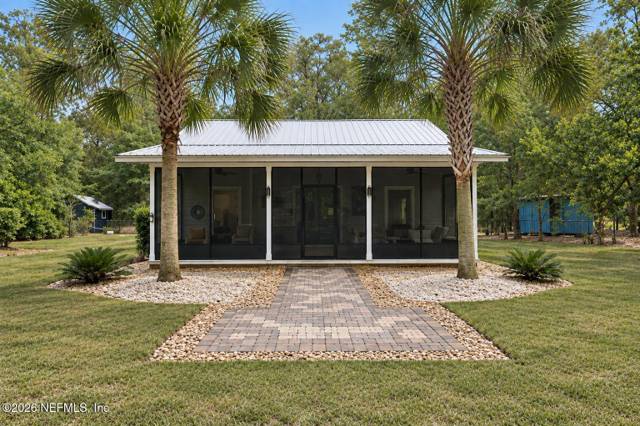
The real estate underneath is honest rural Florida: lots around three-quarters of an acre to two-plus acres, a mix of site-built homes, newer manufactured homes and river cabins, built out gradually over decades. Recent inventory framed the market well — a 2020-built manufactured 3/2 on three-quarters of an acre at $169,900, a two-acre corner with an original home and cabin at $150,000, and interior lots from about $90,000. You will also see the community called Santa Fe Oasis in records; it is the same place.
The caveats are the standard river-country trio, and we take all three seriously: flood zones vary parcel by parcel and change the insurance math; manufactured homes carry different financing and appraisal rules than site-built (verify title, tenure and foundation per lot); and a voluntary HOA means the park’s upkeep runs on participation rather than assessments — ask how it is actually funded before you count on it.
A private boat ramp, a spring and five waterfront acres — for a voluntary fifty dollars a year. Nothing else we cover comes close on access-per-dollar.
The Fee Stack: What You Actually Pay
The mandatory stack is as light as Florida gets: Suwannee County property taxes and your insurance. There is no CDD and no mandatory association. The HOA is voluntary — most references show about $50 per year, one shows $175, and the difference likely reflects timing or membership tiers. Get the current arrangement in writing: what the contribution is, what park access requires, and whether ramp keys or gate codes depend on membership.
The number that actually moves your budget here is insurance. River-proximate parcels can sit in or near FEMA flood zones, and the same house can carry meaningfully different total costs two streets apart. Pull the flood panel for the exact parcel, get an elevation certificate if one exists, and price flood coverage before you write — not during your inspection period.
Want the real monthly math? We will run taxes, the right insurance quotes for the specific parcel, and the financing picture for site-built versus manufactured — before you fall for a listing.
Run my numbers →The River Park: What the Neighborhood Owns
The park is the community’s whole argument: roughly five acres on the water with a covered pavilion and stage for community events, volleyball, horseshoes, picnic areas, water views, a freshwater spring for everyday swims, and the private boat ramp that turns the Santa Fe into your backyard launch. The Suwannee River Water Trail maps list the ramp — it is real infrastructure, not marketing.
Practical notes: ask the association how ramp access works for members versus non-members, what events run through the pavilion calendar, and who handles mowing and maintenance. Volunteer-run amenities are usually well-loved and occasionally under-resourced — knowing which you are buying into takes one conversation with a board member, and we make that call with you.
The Homes: A Genuine Mix
There is no builder and no plan book here. The stock runs from original river cottages and cabins to conventional site-built homes to newer manufactured housing — the 2020-built 3/2 on NE 127th Street is typical of the newer end. Lots mostly run three-quarters of an acre to two-plus acres, wooded, level and quiet.
What that mix means for you as a buyer: every parcel needs its own verification. For manufactured homes — title status (real property versus titled vehicle), foundation type, HUD tags and age all drive financing and insurance; for older site-built homes — roof, electrical and septic eras need a real inspection; for cabins — confirm permitted use and what the county recognizes. None of this is a reason to avoid the community; it is the reason to bring representation that does rural property for a living.
River-Country Diligence: The Three Checks
Every river community we cover gets the same three checks, and Ira Bea’s is no exception. One: flood. Pull the FEMA panel for the parcel, ask for any elevation certificate, and price flood insurance even where it is not mandatory — the Santa Fe has flooded in living memory, and the river does not care about zone lines. Two: water and waste. These are wells and septic systems; get the septic inspected and pumped at sale, test the well, and know where both sit relative to the flood picture. Three: access. Some streets here are unpaved — confirm county versus private maintenance for the specific road, and what wet-season access looks like.
Want the three checks run before you offer? Send us the parcel — we will pull the flood panel, the property record and the road status the same day.
Check a parcel →Schools: The Honest Version
This side of Suwannee County is served by the Branford schools — Branford Elementary and Branford High — under the Suwannee County School District. These are small rural schools, and like most of the district their published ratings sit below the state average on test measures. The counterweight is what small schools do well: everyone knows your kid, and the community shows up. Verify the current assignment for the specific parcel with the district, and tour the schools rather than trusting a number either direction.
Weighing schools against river access? We will give you the unvarnished comparison with the High Springs / Fort White corridor — including what the same money buys across the county line.
Ask us straight →Daily Life at Ira Bea’s Oasis
The rhythm is springs-country Florida: morning swims at the park spring, jon boats and kayaks off the community ramp, Ichetucknee runs in summer, Branford for the school run and basics. The texture buyers actually ask about:
What does a normal week look like?
Work-from-home or a commute to Branford, Lake City or Gainesville; groceries in Branford or a bigger run to Lake City; evenings at the park or on the water; weekends rotating the springs — Ichetucknee, Little River, Ruth B. Kirby Gilchrist Blue. It is unhurried on purpose.
Who lives here?
A settled mix of families and retirees — roughly 400 residents per census data. Some properties are weekend river places; most are full-time. The park’s event pavilion does real duty for gatherings.
How is connectivity and cell service?
Variable, like all rural Suwannee County. Check coverage for your carrier on the specific street and ask neighbors about internet options — fixed wireless and satellite fill gaps where cable does not reach. Verify before you commit if you work remotely.
What about summer crowds on the rivers?
The public springs get busy June through August — that is exactly why the private park and ramp matter. Your launch and your swim spot stay neighborhood-only while the state parks queue.
Five Mistakes Ira Bea’s Buyers Make
Rural river property has its own failure modes. Here is the local edition:
Skipping the flood panel
Two parcels a street apart can carry completely different insurance realities. Pull the FEMA map and price coverage before you offer — the payment you calculated without it is fiction.
Financing a manufactured home like a site-built one
Title status, foundation, age and HUD compliance decide what loans exist. Get lender clarity on the specific home before you write — not after the appraisal surprises everyone.
Assuming the park is guaranteed
A voluntary HOA runs on participation. Ask how the park and ramp are funded, who maintains them, and what membership requires — then join and participate. The amenity is the community.
Ignoring well and septic
Test the well, inspect and pump the septic, and map both against the flood picture. The county does not run utilities out here — these systems are yours.
Buying the river without checking the road
Unpaved roads have owners — the county or the neighbors. Confirm maintenance responsibility and wet-season condition for your specific street before you commit to a daily commute on it.
Want a second set of eyes before you sign? Send us the listing — rural diligence is exactly what we do.
Get the review →Lots & Position: Where the Value Hides
Choosing between two parcels? Send us both — we will overlay the flood panels and tell you which one holds value.
Ask about a lot →The Ira Bea’s Due-Diligence Checklist
- Pull the FEMA flood panel for the exact parcel. And price flood insurance even where optional.
- Confirm the HOA’s current terms. Voluntary ~$50/yr per listings — verify the amount, membership benefits and park/ramp access rules.
- Verify manufactured-home specifics where applicable. Title status, foundation, HUD tags, age — financing depends on all four.
- Test the well, inspect and pump the septic. Both at the seller’s table, not after closing.
- Confirm road ownership and maintenance. County or private — and wet-season condition.
- Walk the park and ramp. See the amenity you are buying into, and meet a board member.
- Check connectivity for your carrier and ISP options. Before you commit to remote work from here.
- Verify school assignment with the district. Branford schools serve this side of the county.
Ira Bea’s Oasis is what people imagine when they say they want to get out of the city and onto a river — except most of what gets sold under that dream is a bare lot an hour from a public ramp. Here the neighborhood owns the ramp, the spring and five acres of waterfront, and the buy-in is a voluntary fifty bucks. On pure access-per-dollar, nothing in our coverage beats it.
The discipline is parcel-level: flood panel, well and septic, title type, road status. Rural property rewards buyers who verify and punishes buyers who assume. Bring us the listing before you offer and we will have the unglamorous answers the same day — that is the whole game out here.
Ira Bea’s vs. The Alternatives
Nobody shops one community. Here is how Ira Bea’s stacks against the regional alternatives we already cover — the honest version:
| Community | Typical price | Fees / structure | The honest one-liner |
|---|---|---|---|
| Ira Bea’s Oasis | $90K lots / $150K–$170K homes | Voluntary ~$50/yr HOA | Private ramp, spring and park on the Santa Fe for the lowest buy-in in the region |
| High Springs | Wide range | Mostly no HOA | The springs-country town with restaurants and Alachua schools — no private water access |
| Oak Ridge (High Springs) | $200s–$300s | Modest | Established High Springs value — town life over river life |
| Canyon Vistas (Live Oak) | $245K–$265K (new) | No advertised HOA | New construction and walkable groceries — the opposite trade |
| The Preserve at Laurel Lake (Lake City) | High $300s–$440s | ~$715–$785/yr HOA | Pool-and-tennis suburbia — double the price, none of the river |
| Riverwoods at ACV (Dowling Park) | $190K–$309K | $127/mo HOA + membership | The 55+ village answer — services instead of self-reliance |
The verdict: if the decision is private river access at the lowest entry cost, Ira Bea’s wins outright. If the decision is town conveniences, newer construction or services, every alternative above beats it on exactly that axis. Know which buyer you are and the choice makes itself.
Cross-shopping two of these? We work all of them — ask for the side-by-side with real current numbers.
Compare for me →The Unvarnished Pros & Cons
What Ira Bea’s gets right
- Private 5-acre river park: ramp, spring, pavilion, games
- Voluntary ~$50/yr HOA — the lightest fee stack we publish
- Acreage lots from ~$90K; homes from ~$150K
- Minutes from Ichetucknee and the springs corridor
- Settled, quiet, ~400-resident community
- No CDD, no mandatory association, rural taxes
What to go in eyes-open about
- Flood zones are parcel-specific — insurance can reshape the math
- Manufactured/site-built mix complicates financing and appraisal
- Voluntary HOA means participation-funded amenities
- Wells, septic and some unpaved roads — self-reliant living
- Below-average district school ratings
- Thin, slow resale market
Our Ira Bea’s Buyer Playbook
When a client targets Ira Bea’s Oasis, this is the sequence we actually run:
- Week one: live inventory plus two years of closings across the NE 127th grid — and the flood panel for anything you like.
- The parcel pass: property record, title type, road status, well/septic permits — the unglamorous file that decides everything.
- The community pass: a conversation with the HOA about the park, the ramp and the membership terms — in writing where it matters.
- The inspection pass: systems-focused inspection scoped to the home type, plus well test and septic pump.
- The negotiation: anchored to closed rural comps and condition — not to waterfront wishful thinking.
Questions We Ask Before You Offer
The seller’s side answers what you ask — so we ask the questions that change the deal:
- What flood zone is the parcel in, and is there an elevation certificate? The insurance answer comes first.
- What are the current HOA terms and park-access rules? Voluntary structures vary — get this one in writing.
- For manufactured homes: title status, foundation, year and HUD tags? Financing lives or dies here.
- When were the well and septic last serviced, and where do they sit? Relative to each other and the flood picture.
- Who maintains the road, and what does it look like in a wet February? Ask a neighbor, not just the seller.
- What have comparable parcels closed at in 24 months? Thin markets reward patience and real comps.
Is Ira Bea’s Oasis Right for You?
No community fits everyone — and river country sorts people fast. The honest sort:
Consider elsewhere if you want
- City utilities, sidewalks and paved everything — look at Canyon Vistas in Live Oak
- New construction and warranties — same answer
- Strong school ratings — the High Springs / Alachua corridor
- Services and amenities run by staff, not volunteers — Riverwoods at ACV
- A liquid resale market — this is a hold-long, lifestyle purchase
- Zero flood-zone homework — stay off the rivers entirely
Ira Bea’s fits if you want
- A private boat ramp and spring you can walk to
- Acreage and quiet at the lowest entry price in springs country
- Essentially zero mandatory fees
- A real neighborhood with a park calendar, not an HOA invoice
- The Santa Fe and Ichetucknee as your weekend default
- Self-reliant rural living, eyes open