The 60-Second Overview
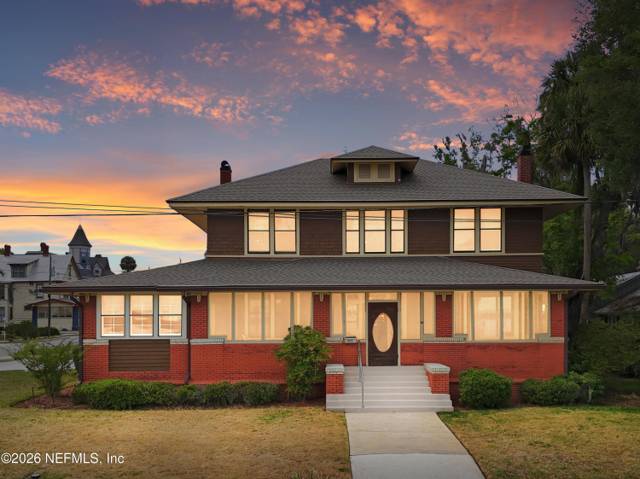
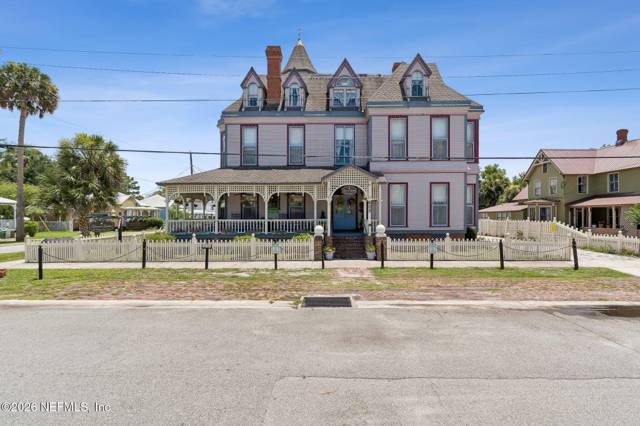
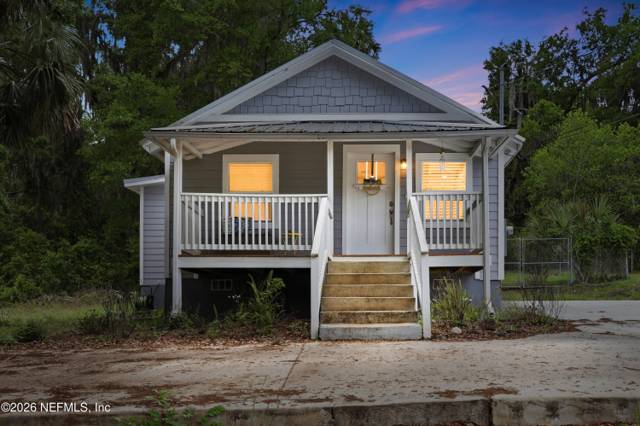
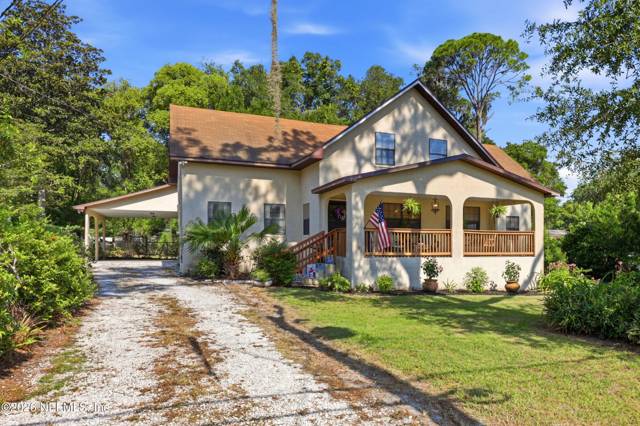
When Palatka was a river port and winter-resort town in the late 1800s, its merchants and captains built south of downtown — and those 23 blocks survived intact enough that the National Register listed the Palatka South Historic District in 1983. Within its boundaries — the St. Johns River, Oak, South 9th and Morris Streets — stand 243 historic buildings: Queen Anne and Colonial Revival landmarks among the district's signature two-story frame houses with their simple, honest massing.
What makes the district matter to buyers in 2026 is the arithmetic. The same architecture that costs $700K-$1M+ in historic St. Augustine trades here for $200K-$400K, with a recent district median near $249K — in a neighborhood where the marina, Riverfront Park, the Memorial Bridge boardwalk and a working downtown are sidewalk trips. There is no HOA and no CDD; the rulebooks are city code and the historic guidelines that protect the streetscape.
You are not buying a house here. You are buying an 1890s building, a walkable river town, and a renovation thesis — price all three.
The honest catches: these are century-old frame houses, so wiring, plumbing, roofs and insurance decide whether a bargain is real; Putnam school ratings trail the state; and the district's appreciation story depends on Palatka's downtown revival continuing its slow burn. For buyers who underwrite those facts instead of ignoring them, this is the best walkable-historic value in Northeast Florida.
The Real Cost Stack: Insurance, Systems and the Grant Math
No dues, no CDD — so the district's cost stack hides in the building itself and the policies that protect it.
Insurance is the decider. Premiums on historic frame construction swing dramatically with roof age, updated wiring and plumbing, and elevation near the river. On an unrenovated house, insurance can rival a small mortgage payment; on a documented, updated one, it normalizes. We insist clients get binding quotes during inspection — a beautiful house you cannot affordably insure is not a bargain.
The incentive layer is real but conditional. City renovation-grant support — figures up to $50,000 have been cited for qualified south-district projects — plus FHA 203(k) purchase-and-rehab financing can turn a $180K project house into a $350K home with manageable cash in. Programs change and eligibility is specific: confirm the current grant offering with the City of Palatka before underwriting around it.
Taxes are Putnam-modest, and the absence of dues means your reserves are self-managed. Budget like the building is 130 years old, because it is.
Want the full cost picture on a district home? We will pull permits, ballpark insurance with local agents, and run the three-column math with you.
Run the cost pictureThe District: 23 Blocks, Read Block by Block
The National Register boundary is precise — river to Oak to South 9th to Morris — but the experience varies block by block. The easternmost streets carry the river-proximity premium and the strongest restoration activity. The core blocks hold the deepest Victorian stock. The western and southern edges mix historic homes with infill and more deferred maintenance — which is exactly where the project-house opportunities cluster.
Walk it before you buy — at different hours. The district rewards block-level knowledge: two streets apart can mean different conditions, different neighbors and a different thesis. The constant everywhere is the grid itself: sidewalks, mature trees, porches addressing the street, and the river always a few minutes east on foot.
Around the edges sit the anchors: downtown's shops and restaurants north, the marina and Riverfront Park east, and Ravine Gardens State Park — the WPA's 1933 azalea masterpiece, NRHP-listed in its own right — minutes south. Festival weekends (azaleas in spring, blue crabs in early summer) put the whole town on the district's doorstep.
Want the block-by-block read? We will walk the district with you and tier every street honestly.
Walk the districtThe Homes: 243 Buildings, No Two Alike
The district's signature is the 2-to-2.5-story frame dwelling of the late nineteenth century — simple plan, generous porch, heart-pine bones — punctuated by showpiece Queen Annes and Colonial Revivals. Originality varies: some houses keep their windows, siding and floor plans; others carry decades of well-meaning remuddling that a restoration can reverse.
Price tracks condition in three tiers. Project houses (roughly $120K-$220K) need systems and sweat — the grant-and-203(k) play. Move-in historic (roughly $220K-$350K) is the owner-occupant core: updated enough to insure and finance conventionally, character intact. Showpieces and the river blocks (roughly $350K-$500K+) are the ceiling — full restorations whose sellers can document every system.
The inspection list is its own discipline: roof age, knob-and-tube wiring, galvanized plumbing, sills and foundations, termite history. We scope historic-literate inspectors for clients — a standard new-build checklist misses what matters in 1890s construction.
The Renovation Math: Grant + 203(k), Played Straight
The district's most interesting trade is the financed restoration. The pieces: a project house bought under $200K; an FHA 203(k) loan wrapping purchase and renovation into one mortgage at 3.5% down for qualifying credit; and the city's renovation-grant support where a project qualifies. Stacked carefully, a buyer with modest cash controls a full restoration that appraises well above all-in cost.
Played straight, three rules apply. First, verify the grant before you count it — funding cycles and criteria change, and only the City of Palatka's current answer matters. Second, bid the construction realistically: historic restoration runs over time and over budget when scoped optimistically, and 203(k) draws demand discipline. Third, protect insurability — sequence roof, wiring and plumbing first, because they unlock the policy that unlocks everything else.
Thinking about the restoration play? We will model a real project with current program guidance, local contractor reality and honest comps.
Model my projectSchools: Check Current, and Know the Buyer Pool
District homes zone to Putnam County schools in Palatka — Jenkins Middle and Palatka High among them — and the county's ratings have historically run below state averages. Families should pull current GreatSchools numbers and confirm zoning by address, and weigh the charter and choice options Palatka parents actually use. It is equally honest to note who buys here: a large share of district purchasers are empty-nesters, restorers, second-home owners and remote workers, for whom the walkable river town is the point and school lines are not the binding constraint.
Schools in your equation? We will pull current ratings and zoning for any address — and tell you what local families actually do.
Get the school pictureWhat It Is Actually Like to Live Here
Porch culture, river light, festival weekends, and neighbors who know the history of your house better than you do. What new owners ask us most:
Is downtown actually usable day to day?
Increasingly yes — restaurants, coffee, the riverfront and events cover the daily-pleasure layer, while big-box runs go to the US-17 corridor minutes away. It is a working small downtown, not a boutique district — and improving each year.
How is safety in the district?
Block-dependent, like most revival districts. Owner-occupied blocks are stable and tight-knit; transitional edges deserve evening walk-throughs before you commit. We talk specifics street by street rather than averages.
Can I run a short-term rental?
Some owners do, and festival demand exists — but verify current City of Palatka rules before underwriting STR income. We will pull the current ordinance position for any address.
What is the social fabric?
Old-house people: restoration advice flows over fences, the historical society is active, and the festival calendar does the rest. If you want neighbors who care about your porch brackets, you have found them.
The Five Expensive Mistakes Buyers Make Here
Historic-district mistakes compound, because the fixes are regulated and the buildings do not forgive shortcuts.
Quoting insurance after closing
On 1890s frame construction, the premium can remake the budget. Binding quotes during inspection — non-negotiable.
Underwriting the grant before verifying it
Cited programs change with funding cycles. The city's current written answer is the only number that belongs in your math.
Comping across condition tiers
A restored sale does not price your fixer, and vice versa. Condition-adjusted comps only — the spread between tiers is six figures.
Inspecting like it is a 2005 house
Knob-and-tube, galvanized lines, sill rot and termite history hide from standard checklists. Use historic-literate inspectors.
Planning exterior changes without the guidelines
Windows, siding and additions go through district review. Designing first and asking later costs months and money.
Buying in the district? We run all five checks before you are emotionally committed.
Run the five checksBlock Quality: What Moves Price in the District
Wondering where a specific house sits? Send the address — we will tier it honestly with the comps to back it.
Tier this houseThe District Buyer Checklist
- Bind insurance quotes during inspection. Roof, wiring, plumbing documentation in hand first.
- Verify the city grant program in writing. Current funding, criteria and process — from the city, not a blog.
- Use condition-adjusted comps only. Tier the house, then comp inside the tier.
- Hire a historic-literate inspector. Scope for 1890s frame construction explicitly.
- Read the historic guidelines before planning exteriors. Windows and siding decisions live there.
- Walk the block at night and on a weekend. Block-level reality beats district averages.
- Pull the permit history. What was done right, wrong, or without asking.
- Confirm STR rules if income matters. Current ordinance position, in writing.
I tell clients the South Historic District is the last honest arbitrage in our markets: St. Augustine architecture at Palatka prices, with a riverfront you can walk to. The arbitrage exists because the diligence is real — insurance, systems, block selection — and most buyers will not do it.
Do it, and you own something genuinely scarce: a National Register Victorian on a walkable river grid, bought below replacement cost. That is a position, not just a purchase.
The District vs. the Alternatives
District shoppers usually weigh new-build Palatka, other historic districts, and the lake country. The honest comparison:
| South Historic District | Nobles Crossing | Davis Shores | |
|---|---|---|---|
| Product | 1880s-1920s Victorians | New gated Century builds | Mid-century island stock |
| Typical price | ~$200K-$400K | Entry new-construction $200Ks | $400Ks-$1M+ |
| Walkability | Downtown + riverfront on foot | Drive-everywhere | Bridge walk to old city |
| Maintenance | Century-old systems, real diligence | Warranty-new | Flood-zone era stock |
| Best for | Restorers, walkability buyers | Easy-button new home | St. Augustine island life |
The verdict: Nobles Crossing wins on zero-maintenance simplicity, Davis Shores wins on St. Augustine address strength — and the district wins whenever architecture, walkability and price per character-foot drive the decision.
Cross-shopping old and new? We will price both paths for your budget, honestly.
Compare my pathsThe Honest Pros & Cons
What the district gets right
- Real Victorian stock at NE Florida's lowest historic prices
- Walkable downtown, marina and riverfront
- NRHP protection of the streetscape investment
- Grant + 203(k) paths for financed restoration
- No HOA/CDD; fee-simple simplicity
- Ravine Gardens and the festival calendar next door
What to go in eyes-open about
- Insurance on old frame houses can remake budgets
- Century-old systems demand real inspection rigor
- Block-by-block variance in condition and feel
- School ratings historically below state average
- Appreciation tied to Palatka's gradual revival
- Exterior changes run through district review
Our District Offer Playbook
Thin inventory, wide condition spread — preparation wins. How we run district offers:
- Tier first, then comp. Condition tier decides the comp set before any number gets written.
- Offer with insurance reality priced in. Quotes in hand convert to negotiating leverage on systems.
- Make sellers document systems. Permits and updates surfaced now, not discovered in week three.
- Sequence renovation financing early. 203(k) and grant timelines run parallel to the contract, not after it.
- Mine the off-market layer. District owners talk — estate and pre-list opportunities surface through the old-house network.
Questions We Ask Before You Offer
Six questions we put to every district listing — answered before you commit:
- What is the roof's documented age, and what will an insurer say about it?
- Wiring and plumbing: what generation, what updates, what permits?
- Which condition tier is this house, and which comps actually match it?
- What would the historic guidelines say about the changes you are imagining?
- What does the block tell us at 8am, 6pm and Saturday night?
- If the renovation thesis matters, do the grant and 203(k) numbers survive current-program reality?
Is the South Historic District Right for You?
The honest fit test — the district rewards a specific buyer and punishes the wrong one:
Consider elsewhere if you want
- Warranty-new construction and zero projects
- Predictably low insurance without homework
- Top-rated schools as a given
- HOA-enforced uniformity
- Suburban retail at the doorstep
- A hands-off, maintenance-free lifestyle
The district fits if you want
- Real Victorian architecture you can afford
- River, marina and downtown on foot
- A restoration project with financing paths
- Fee-simple freedom with streetscape protection
- Old-house neighbors and festival-town life
- A value thesis on Palatka's revival