
Data Analysis
The Federal Reserve reported on September 2, 2026 that home sales improved modestly across most markets in the Sixth District, which includes Florida, with discounts and incentives driving the activity while elevated mortgage rates and declining affordability weighed on buyers.
The Beige Book found national economic activity increased modestly since early July and residential construction declined. Realtor.com data published the same day show Florida inventory falling faster than almost anywhere in the country, with list prices falling too.
The Federal Reserve released its Beige Book on September 2, 2026, and reported that "home sales improved modestly across most markets in the Sixth District, with discounts and incentives driving activity." The Sixth District is the Atlanta district, and it covers all of Florida. The same passage found that "elevated mortgage rates and declining affordability continued to weigh on buyer sentiment, while falling inventory levels in many geographies contributed to upward pressure on home prices." Nationally the Fed reported that "economic activity increased modestly since early July," with ten of twelve districts seeing slight to moderate growth and two seeing no change, and that residential construction declined while nonresidential construction increased.
The Beige Book is qualitative. It reports what business contacts told each reserve bank, and it publishes no statistics of its own.
What did the Beige Book say about housing in Florida's district?
The Sixth District section describes a market being moved by seller concessions rather than by improving affordability. Home sales rose modestly, and the report attributes that directly to discounts and incentives.
Underneath the headline the district report splits the market by price tier. Entry-level demand faced qualification challenges, meaning buyers at the bottom of the market are struggling to qualify at current rates. Luxury demand softened. Mid-tier properties experienced the better conditions of the three. Speculative inventories moderated, and contacts expected aggressive incentives to continue through the slower season, which in Florida runs through the autumn.
On the rental side, the report found that "throughout the District, multifamily vacancy rates improved slightly, supported by ongoing rent concessions and reduced inventory." Vacancy improved partly because landlords are discounting.
Commercial real estate expanded in aggregate. Demand outpaced supply in Class A office space as the flight to quality continued, and Atlanta contacts described projects converting underperforming B and C office space into multifamily.
Does the Fed's read match Florida's own housing data?
On inventory, yes. On prices, no.
The Beige Book describes falling inventory putting upward pressure on prices across the district. Realtor.com's August 2026 Monthly Housing Trends report, published the same day, shows that the inventory half of that description fits Florida closely. Active listings fell 16.9 percent over the year in Jacksonville and 15.0 percent in Miami-Fort Lauderdale-West Palm Beach, the two steepest declines among the nation's 50 largest metros, while national inventory rose 3.6 percent. Tampa-St. Petersburg-Clearwater fell 6.4 percent and Orlando-Kissimmee-Sanford fell 2.5 percent. Days on market fell in all four.
The price half does not fit. Realtor.com's median list price fell over the year in all four Florida metros in August, by 6.0 percent in Tampa, 4.8 percent in Jacksonville, 2.0 percent in Miami and 1.9 percent in Orlando, all steeper than the 1.3 percent national decline. The FHFA house price index for the second quarter of 2026 put Florida home price growth at 0.96 percent over the year, ranking the state 41st of 51 jurisdictions. Supply is tightening in Florida's large metros without prices responding, at least so far.
Florida Realtors reported 4.5 months of supply for single-family homes in July 2026 and 7.8 months for condos. Months of supply measures inventory against the pace of sales, so it can stay elevated while the count of active listings falls if sales are also slow. The two figures are not in conflict.
The Beige Book never names Florida. The Sixth District also covers Alabama, Georgia, and parts of Louisiana, Mississippi and Tennessee. The Realtor.com figures are what connect the district's inventory description to Florida specifically.
Editor's note: this section was revised on the day of publication. An earlier version argued that Florida inventory pointed the opposite way from the Beige Book's description, citing months of supply. Realtor.com's active-listing counts, published the same afternoon, showed that was wrong. The full figures are in Momentum Research's Realtor.com August report coverage.
What did the Beige Book say about the national economy?
Employment "rose very slightly overall, with three Districts showing modest gains in employment, four reporting slight gains, and five Districts experiencing no change." Prices "increased moderately in eight Districts, with two Districts reporting modest increases, one slight increases, and one robust increases."
Consumer spending "grew slightly on balance," and the Fed described "both heightened price sensitivity on the one hand and solid high-end purchases on the other." That two-track pattern shows up in the Sixth District as well, where consumer spending expanded modestly on robust luxury activity while retailers noted a continued "flight to value."
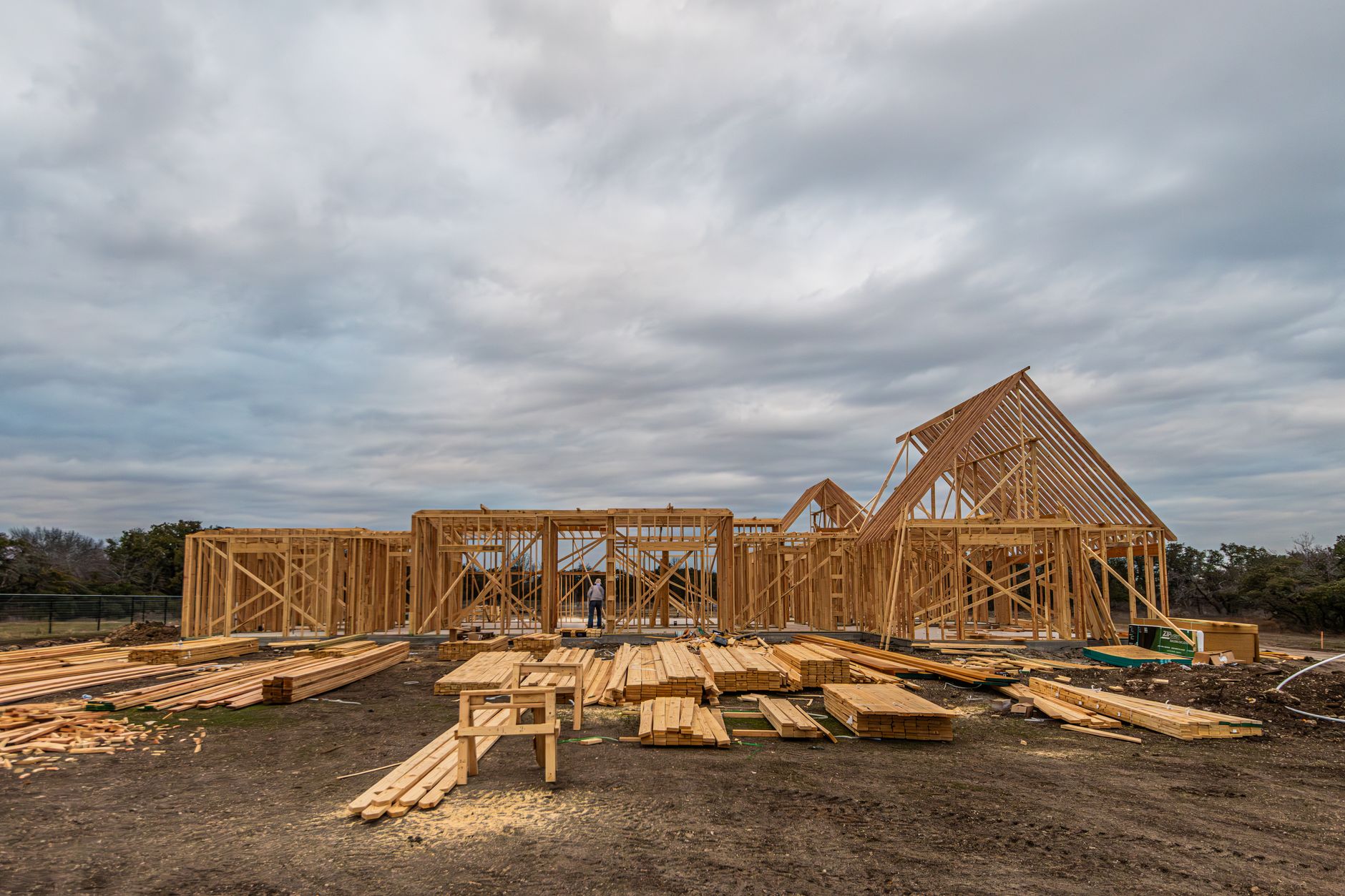
The residential construction line is the one housing readers should mark. Residential construction declined nationally while nonresidential construction increased, with several districts noting heavy concentration in data center projects.
What is happening to costs in the Southeast?
Two cost lines in the Sixth District report matter for Florida housing.
Insurance costs increased robustly, alongside healthcare. The Beige Book groups them together as nonlabor costs rising at a moderate to strong pace. For a Florida market where property insurance has been a central affordability problem, a Fed report flagging robust insurance cost growth in September 2026 is a data point worth logging even without a number attached.
Wage growth was contained. Most contacts reported moderate annual wage increases in the 2 to 3 percent range, with continued pressure for technical roles. Construction and advanced manufacturing still faced shortages for specialized positions, electricians among them. Wages rising 2 to 3 percent while insurance and healthcare rise robustly is a squeeze on the household budgets that carry mortgages.
The district's community perspectives section reported worsening financial strain among low- and moderate-income households, with social services providers seeing more requests for assistance, and noted that many individuals and families have increasingly relied on debt, including credit cards, payday loans and buy now pay later services, to cover essentials.
What does this mean for the September FOMC meeting?
The Beige Book is prepared ahead of each Federal Open Market Committee meeting, and this edition lands before the September 15 and 16 meeting. The committee's decision will be announced on September 16, with a press conference at 2:30 p.m. ET.
Nothing in this report resolves the rate question on its own. The Fed described a general outlook for the coming months that was positive, with mixed sentiment across sectors and "heightened uncertainty surrounding the effects of higher energy prices, policy, and international conflict."
For Florida housing the transmission is straightforward even if the decision is not. Mortgage rates follow the ten-year Treasury more than the federal funds rate, and the Beige Book itself named elevated mortgage rates as a drag on buyer sentiment in the Southeast. Momentum Research covers the weekly rate print in its mortgage rates reporting, and market-level conditions on the Tampa, Miami, Orlando and Jacksonville hub pages.
Limitations
The Beige Book is anecdotal. It summarizes interviews with business contacts and publishes no statistics, no sample sizes and no margins of error. Its characterizations are not measurements, and the Federal Reserve says as much.
The Sixth District covers Alabama, Florida, Georgia, and parts of Louisiana, Mississippi and Tennessee. This edition contains no specific mention of Florida. Every district-level statement quoted here describes that whole region, and applying any of it to Florida alone is an inference, not something the report states.
This edition covers the period since early July 2026. It does not describe conditions in the last several weeks before publication, and it is not a forecast.
Comparisons here to Realtor.com, FHFA and Florida Realtors figures are drawn from those publishers' own releases for the periods named. Realtor.com reports active listings and list prices from its own database, not closed sales; FHFA is a repeat-sales index; Florida Realtors reports closed-sale medians and months of supply. Each measures something different over a different window than the Beige Book's contact interviews, and a disagreement between them is not evidence that any is wrong.
Sources
Federal Reserve Board, The Beige Book: Summary of Commentary on Current Economic Conditions by Federal Reserve District, released September 2, 2026. National summary at https://www.federalreserve.gov/monetarypolicy/beigebook202608-summary.htm and the Sixth District (Atlanta) report at https://www.federalreserve.gov/monetarypolicy/beigebook202608-atlanta.htm.
Federal Reserve Board, calendar of meetings and events, September 2026, at https://www.federalreserve.gov/newsevents/2026-september.htm.
Realtor.com, August 2026 Monthly Housing Trends Report, by Jake Krimmel, published September 2, 2026, at https://www.realtor.com/research/August-2026-data/.
Federal Housing Finance Agency, House Price Index report for the second quarter of 2026, released August 25, 2026.
Florida Realtors, July 2026 monthly market detail, released August 17, 2026.
Disclosure: Jon Brooks is a co-founder of Momentum Realty, a Florida real estate brokerage that owns and funds Florida Housing Intelligence. Momentum has a financial interest in Florida real estate transactions, including in markets named here. See our editorial standards.
Figures in this article are published by the Federal Reserve and are current as of the date shown. Data may be preliminary and subject to revision by its source. This article is general information, not advice about any specific property, transaction, or financial decision, and is not a representation about any specific property, community, builder, or association.
Equal Housing Opportunity. Editorial standards · Corrections · About