
Amelia Island
Homes for Sale in Fernandina Beach, FL
All 269 homes for sale in Fernandina Beach, FL · median $695,000 · 265 homes for sale in 32034 · Nassau County homes for sale
True comps, carrying-cost math, and listings before the portals.
Market Heat
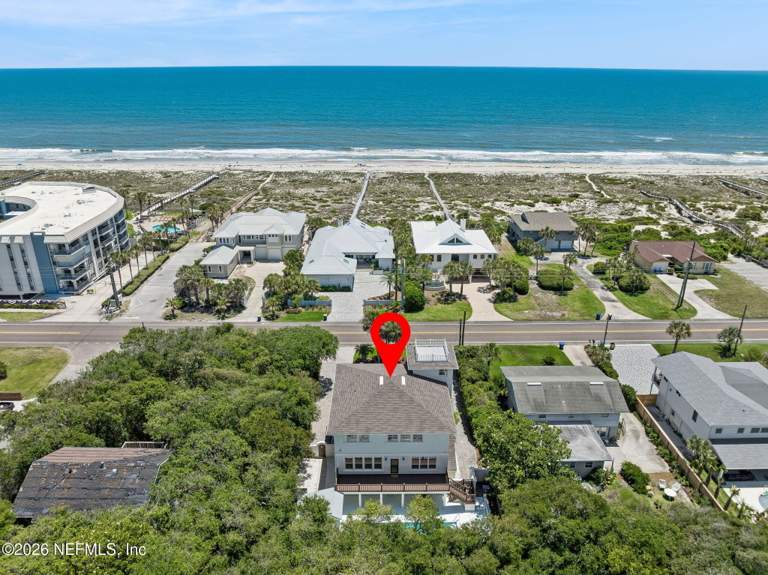
Photo courtesy of BERKSHIRE HATHAWAY HOME SERVICES HEYMANN WILLIAMS · via realMLS
As of October 2026, Amelia Island in Fernandina Beach, FL has 5 homes for sale and 1 pending, asking from $499,000 to $3,229,000 (median $1,149,000). Over the 12 months ending 2026-10-20, 9 recorded sales closed at a median of $1,350,000, $524 per square foot, a median 10 days on market, sellers accepting 97% of original asking (+51% versus the prior year). Homes listed or recently sold were built 1891–2024; 8 of 13 report an HOA (median $208/mo); none of the 13 geocoded homes sit in a FEMA special flood hazard zone (median elevation 15 ft). At the median price and Nassau County's FY2025-26 rate of 13.28 mills, annual property tax runs about $17,920 ($17,420 with the full homestead exemption).
Last 30 days in Amelia Island: 1 under contract right now, 1 closed sale (median $570,000). As of October 20, 2026, realMLS.
Homes For Sale Right Now in Amelia Island
Live MLS inventory for Amelia Island. Every active listing, what is under contract right now, and the last 12 months of closed sales, refreshed twice a day. Closed comps beat an algorithm's guess every time.
 Active · 147 daysTop listing
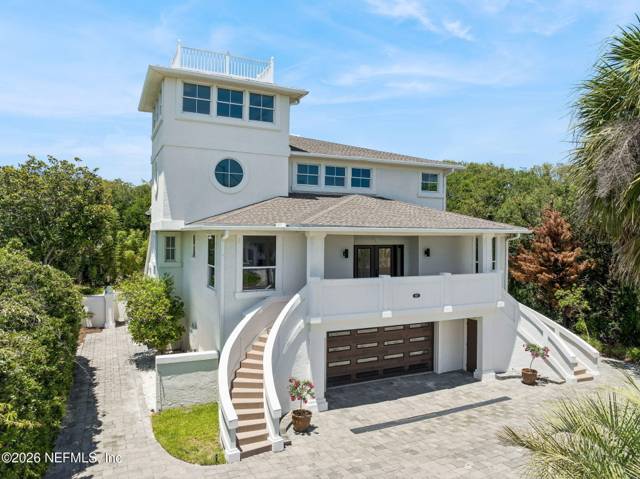
 Active · 231 days
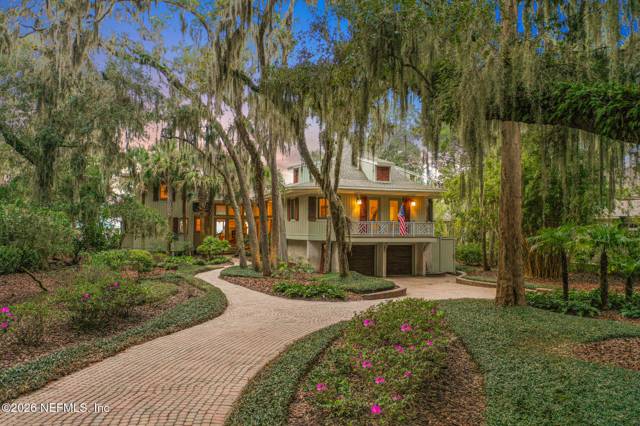
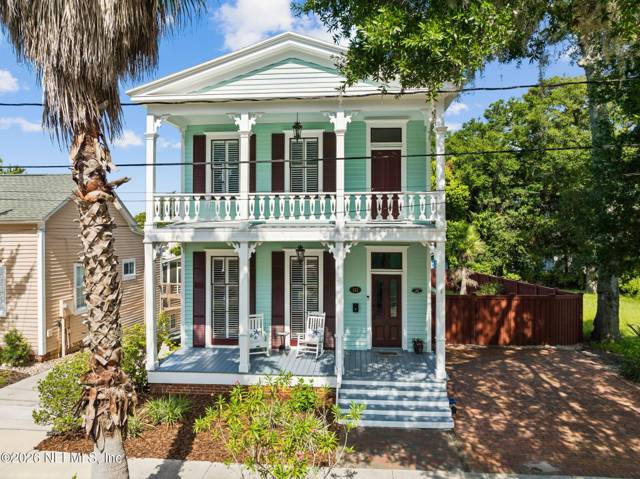 Active · 90 days
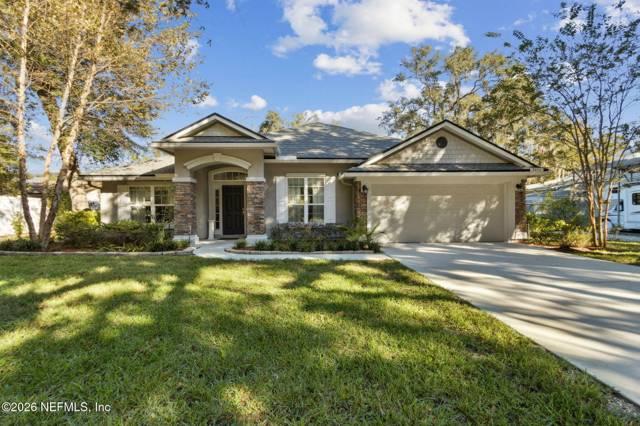 Active · 161 days
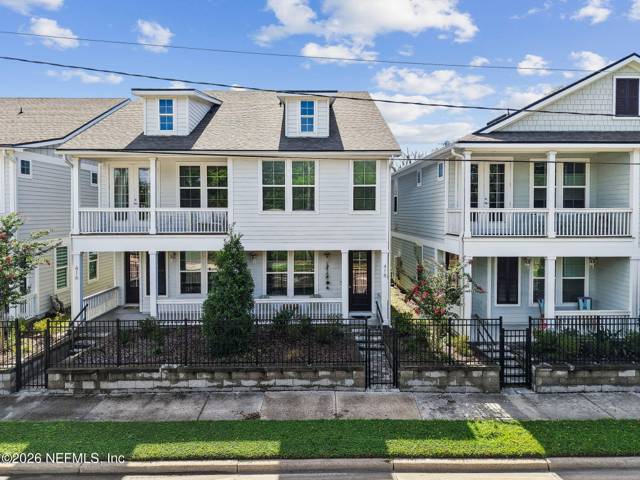 Active · 102 days
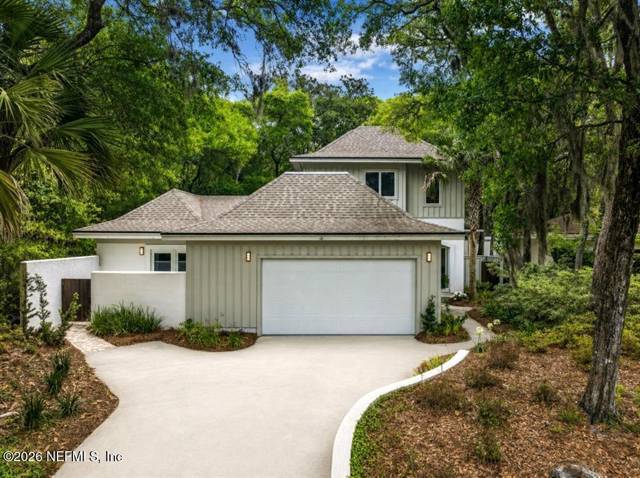 Pending · 103 days
Active and pending Amelia Island listings as of 2026-10-20, priced high to low. Source: Data provided by realMLS. Tap any home to ask about it.

Amelia Island's median sale price sits at $1,600,000, with per-square-foot pricing running $523.70 — the built environment ranges from 1887 through 2024, with a median build year of 1986 and typical living space near 2,362 square feet. That spread in vintage and size means the price tag is doing real work: condition and rebuild status, not just location, separate the low end of this range from the high end.
With only 7 active listings against 2,443 total homes and 14 months of supply, this reads as a buyer-leaning market — the market heat score sits at 51, a middle reading rather than an overheated one. Median days on market is 48, and prices are still up 56.1% year over year and 181% since 2012 (that yoy figure is drawn from a window of 7 recent closings, so treat it as directional). Sellers who have held through this stretch have room, but the current posture favors buyers willing to negotiate against a thin, slow-moving pool of listings.
Figures in this note are as of July 14, 2026. The live market numbers elsewhere on this page update nightly and are newer.
Amelia Island right now
🟢 Buyer-leaning market. 8.6 months of supply and 17% of the inventory already under contract give buyers above-average negotiating leverage.Why it matters: months of supply is how long today's inventory would last at today's sales pace; under-contract share is the portion of homes for sale that already have a buyer.Momentum Research analysis of realMLS records, as of October 20, 2026. Confidence: High (6 active and pending listings, 9 closed sales in 12 months).
🟢 Still climbing. The trailing-12-month median ($1.35M) is up 50.8% from the prior 12 months ($895K) and up 335% since 2012. With about a dozen sales a year, a single closing can swing this number, so read the level and the decade, not one year's move.Momentum Research, record-level realMLS closed sales, 12-month windows ending October 20. Confidence: Medium (9 and 10 sales in the two windows).
What's unique here: the median sale price is about 3x the typical Nassau County sale ($1.35M vs $450K, trailing 12 months, realMLS records).
Jump to: Price history & scorecard · Homes for sale · Schools · FAQ
· Updated October 20, 2026 · Live data: realMLS, refreshed twice daily · MLS facts carry their source; interpretation lines are Momentum Research · Data sources & freshness
The 60-Second Overview
Amelia Island market snapshot (as of October 20, 2026): the median sale price is about $1.35M ($524 per sq ft over the trailing 12 months of closed sales), a median 10 days on market for closed sales, and 8.6 months of supply, a buyer-leaning market. The trailing-12-month median is up 51% from the prior 12 months and up 335% since 2012, computed from record-level realMLS closed sales (9 closings in the current window).
In ZIP 32034 (Fernandina Beach), 1,033 homes closed in the last 12 months at a median of $441K ($200/sq ft), up 0.4% year over year, with a median 51 days on market. Right now 226 active and 76 pending listings put supply at about 4.8 months — a balanced market. See the live ZIP 32034 housing market and the Nassau County market.
realMLS (Northeast Florida) sales records identify 159 homes in Amelia Island that have changed hands since 2001, built between 1891 and 2025 (median 1993), with a median living area of about 2,128 sq ft and a typical 3-bedroom, 3-bath layout; 62% are single-family homes. Source: realMLS (Northeast Florida) closed-sale history compiled by Momentum Research; counts reflect homes with a recorded MLS sale, not every home in the community.
Flood zones in Amelia Island: of 12 listing addresses checked against the FEMA National Flood Hazard Layer, 100% sit outside the FEMA Special Flood Hazard Area (Zone X). Individual parcels vary - verify any specific address at msc.fema.gov. See flood zones by neighborhood in Fernandina Beach.
Amelia Island in Fernandina Beach (Nassau County) covers 2,443 homes spanning a wide construction era — from 1887 to 2024 — with a typical home built around 1986 and roughly 2,362 square feet of living space.
The setting & the homes.
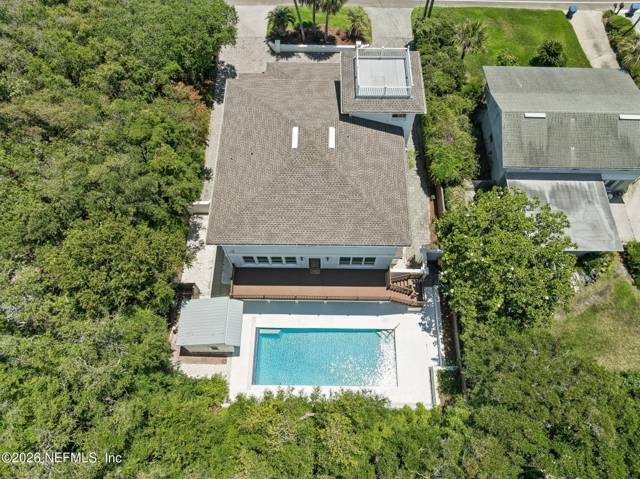
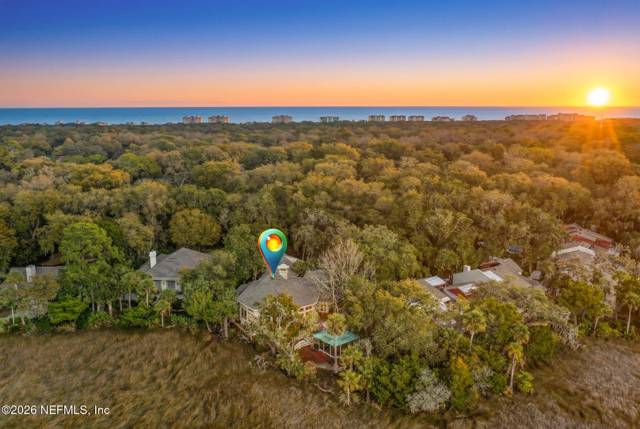
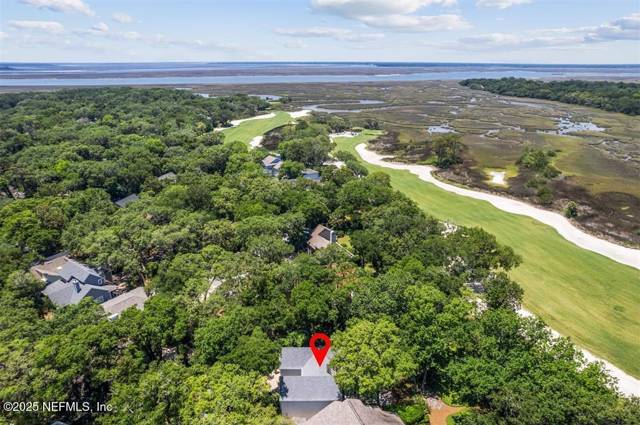
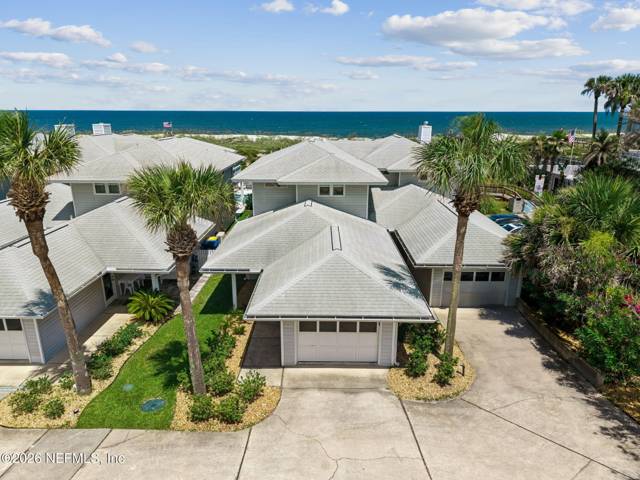
Aerial and on-site photos of Amelia Island. Swipe to explore the community.
Swipe or use the arrows → tap any photo to enlarge
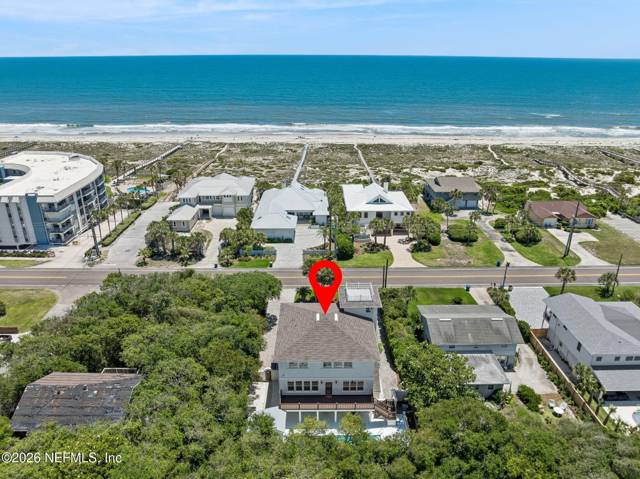 Amelia Island
 Amelia Island
 Amelia Island
 Amelia Island
 Amelia Island
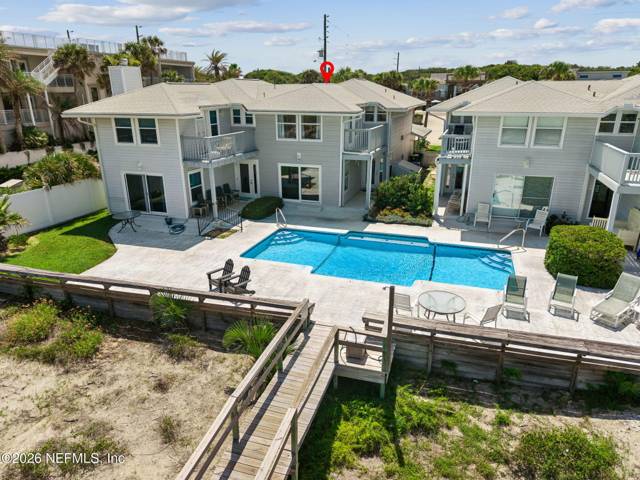 Amelia Island
Photos from realMLS listings in Amelia Island; content deemed reliable but not guaranteed.
Who Amelia Island is best for.
Best for
- Buyers with budgets near the $1.6M median who want gated, amenity-rich coastal living with beach access and a golf course on-site.
- Buyers comfortable evaluating a wide range of home vintages (1887 to 2024) and prioritizing condition over new construction alone.
- Buyers who can move deliberately in a buyer-leaning market and negotiate rather than needing to win a bidding war.
Probably not for
- Buyers who need a large, deep pool of comparable listings to choose from — only 7 are active right now.
- Buyers on a budget well under the $1.6M median with no flexibility on price point.
- Buyers who need to close in a hurry — median time on market runs 48 days and inventory is thin.
Price History: What Homes Here Have Actually Sold For
Median sale price over the trailing 12 months ending October 20 of each year, from record-level realMLS closed sales. Same methodology as every appreciation figure on this page: the 2026 point ($1.35M) IS the median in the snapshot above, and the move from 2025 ($895K) IS the +50.8% one-year change.
Windows contain 1 to 18 sales each (9 in the current window); every figure carries its sample size, and thin markets swing on single closings. Source: Data provided by realMLS. Deemed reliable but not guaranteed.
23% of homes for sale in ZIP 32034 are already under contract (under contract ÷ under contract + active listings) — a read on how much of the available inventory buyers have already claimed. Source: MLS data (2026-10-20).
Amelia Island & Fernandina Market Scorecard
Amelia Island & Fernandina is currently a buyer's market. About 8.6 months of supply, a median asking price of $1,149,000, and homes go under contract in about 145 days.
Typical home value in the 32034 ZIP is $617,328, about 27.5% above the Florida norm (Zillow Home Value Index).
Go deeper: ZIP market scorecard · county scorecard · true cost calculator · affordability calculator.
Live data: realMLS, refreshed twice daily. Typical value: Zillow Research. Market metrics only; these describe homes for sale and recent sales, not residents.
Amelia Island on the map.
Every active, pending, and recently sold home, plotted. Toggle the layers and tap a home for the details.
Listing locations from realMLS. Map data © OpenStreetMap contributors.
Life at Amelia Island

- Gated · reported on 4 of 8 listings
- Park · reported on 3 of 8 listings
- Security · reported on 3 of 8 listings
- Jogging Path · reported on 2 of 8 listings
- Playground · reported on 2 of 8 listings
- Fishing · reported on 2 of 8 listings
- Security Gate · reported on 2 of 8 listings
- Management - Full Time · reported on 1 of 8 listings
- Pool · reported on 1 of 8 listings
- Beach Access · reported on 1 of 8 listings
- Boat Slip · reported on 1 of 8 listings
- Clubhouse · reported on 1 of 8 listings
Community amenities as reported across realMLS listings in this community; deemed reliable but not guaranteed. Verify current amenities and access with the HOA.
How far is everything?
Everyday stops around Amelia Island are close: the nearest groceries is about 1 minutes away.
- Marché Côtier · Groceries1 min
- Hola Cuban Cafe · Coffee1 min
- Central Park · Parks2 min
- Amelia Village Shoppes · Shopping5 min
- Baptist Nassau Emergency Room · Health6 min
Approximate drive times via Mapbox Search + Directions, 2026-07-03. Verify for a specific address.
Nearby Communities
Explore more neighborhoods near Amelia Island with Momentum Realty’s local guides.
Schools
- Nassau County Public Schools
- Verify the zoned schools by address
- Magnet and choice options may be available
- Southside Elementary SchoolFLDOE grade A · PK-2
- Emma Love Hardee Elementary SchoolFLDOE grade A · 3-5
- Fernandina Beach Middle SchoolFLDOE grade A · 6-8
- Fernandina Beach High SchoolFLDOE grade A · 9-12
Grades are official Florida Department of Education school grades for 2025-26. Assignments are reported as of the 2025-26 year and can change; always confirm with Nassau County Public Schools for a specific address.
Buying with schools in mind? We can confirm the exact zoned schools for any Amelia Island address.
Shop the zone: Homes zoned for Emma Love Hardee Elementary School · Homes zoned for Fernandina Beach Middle School
Recent Developments in Amelia Island
Development, infrastructure, retail, and school activity affecting Amelia Island, tracked by our team and summarized from public reporting and official sources, with links to the original coverage. Last updated July 2026.
- July 2026Retail & Dining
The Little Gym franchise scheduled to open July 18 at 96032 Victoria's Place
A Little Gym franchise is scheduled to open July 18 at 96032 Victoria's Place in Fernandina Beach. The location offers movement and gymnastics classes for ages 4 months through 12 years and is owned and operated by Karen and Josh Womack. It is a franchise of the national children's movement and development program.
What it may mean for the marketService and recreation tenants taking commercial space may reflect steady leasing activity around Fernandina Beach, though one franchise opening is a thin indicator on its own.
Source: Jacksonville Daily Record - July 2026Retail & Dining
Fernandina Beach Publix reopens after year long renovation
The Publix supermarket in Fernandina Beach reopened following roughly a year of renovations. The island had operated with reduced grocery options during the closure, which overlapped with a separate Winn Dixie closure dating to 2025.
What it may mean for the marketRestored grocery service on the island could improve everyday retail convenience for nearby homes after an extended gap.
Source: Jacksonville Today - June 2026Parks & Amenities
Seaside Park overhaul near Sadler Road advancing toward fall construction
Fernandina Beach and Nassau County are advancing a roughly $3.9 million overhaul of Seaside Park in the Sadler Road beach access area, funded through a proposed mix of city and county tourist development dollars. The project is expected to move into procurement this summer with construction beginning in fall 2026, the first of seven locations in an island-wide beach parks plan.
What it may mean for the marketUpgraded public beach amenities can enhance neighborhood appeal near the island's south end, though funding and timeline still depend on finalizing an interlocal agreement.
Source: Fernandina Observer - April 2026Parks & Amenities
Amelia River Waterfront Park opens at Fernandina Harbor Marina
The City of Fernandina Beach held a grand opening for its new Amelia River Waterfront Park at the marina's south basin on April 11, 2026, after more than a year of construction. Features include a play structure funded by a T-Mobile hometown grant and a relocated anchor and shrimping industry monument. The park sits adjacent to downtown parking lots C and D.
What it may mean for the marketA new public waterfront amenity adjacent to the historic downtown may strengthen the appeal of the marina district and could support nearby commercial activity.
Source: City of Fernandina Beach - March 2026Development
Historic District Council approves Brett's demolition and new pier plan
Fernandina Beach's Historic District Council cleared a certificate of approval for a two-phase project to demolish the former Brett's Waterway Cafe and build a new pier at the marina. The 37-year-old building's lease ended in late 2025, and demolition was estimated for May or June 2026. The city had solicited public input on replacement designs.
What it may mean for the marketRedevelopment of a prominent marina-front structure may reshape the downtown waterfront over the coming years, with the final program still subject to city decisions.
Source: Fernandina Beach News-Leader - February 2026Infrastructure
Final segments of Amelia Island Parkway multiuse trail head to construction
Nassau County commissioners approved contracts for the remaining phases of the 3.2-mile Amelia Island Parkway Trail, with all three remaining segments set to build simultaneously and open by late July. Segment one, from South Fletcher to Jamestown Road, was finished in 2024. The county also secured funding for additional connecting paths toward Sadler Road and beyond.
What it may mean for the marketCompleting a continuous parkway trail may improve non-vehicle connectivity across the island, which could enhance access to nearby destinations.
Source: Fernandina Observer - December 2025Civic
Fernandina Beach OKs first reading of annexation near Amelia Island Parkway
City commissioners unanimously approved first readings of an annexation agreement and a future land use map change for an 18-acre property near the Bailey Road and Amelia Island Parkway roundabout. The parcels, owned by Amelia Island Holdings, include a wooded tract and an existing stormwater pond. Officials cited stricter city development standards, including a vegetative buffer and lower impervious-surface limits.
What it may mean for the marketBringing the property under city standards may influence how it is eventually developed, with future use still subject to additional hearings and approvals.
Source: Florida NewsLine - November 2025Development
Omni Amelia Island Resort & Spa launches multi-phase renovation
Omni Amelia Island Resort & Spa began a sweeping renovation touching dining, the lobby, spa, golf course, guest rooms, and conference center. Phase one debuted in November 2025 with new and reopened restaurants including Palmetto Press, Surfcaster, and Nonna Mia, plus a restored Oak Marsh golf course. Full completion, including all guest rooms and the conference center, was anticipated by spring 2026.
What it may mean for the marketMajor reinvestment in a flagship oceanfront resort may bolster the island's hospitality positioning and could sustain visitor and group-travel demand.
Source: Hotel Online - July 2025Infrastructure
Beach renourishment places sand along Fernandina shoreline
The U.S. Army Corps of Engineers and the Navy carried out shore protection work in 2025 placing sand along Fernandina Beach from the north end of Amelia Island down to the Sadler Road access. Marinex Construction was awarded a contract of roughly $19.8 million for the renourishment. Work ran through summer and was reported completed in July.
What it may mean for the marketPeriodic renourishment helps maintain the protective beach buffer, which historically supports shoreline resilience for coastal property along the island.
Source: Amelia Island Living - July 2025Development
Riverside marina-front restaurant and shops proposed downtown
Osteen Company LLP proposed a marina-centered commercial complex called Riverside on a long-vacant North Front Street riverfront parcel, seeking early city technical guidance. Plans describe roughly 28,000 square feet including marina docks, a restaurant, and specialty retail. The site was being reviewed by the city's Technical Review Committee and could require later public hearings.
What it may mean for the marketA new mixed commercial use on a vacant waterfront lot may add to the downtown marina district if it advances, though approvals were still pending.
Source: Fernandina Observer - May 2025Development
Ritz-Carlton, Amelia Island debuts 30th-anniversary transformation
The Ritz-Carlton, Amelia Island unveiled a transformation marking its 30th anniversary, including renovated guest rooms and suites, refreshed meeting and event spaces, and new restaurants. The reimagined Salt restaurant reopened with an oceanfront dining room, and upgrades extended to pool, recreation, and family amenities. The project added a new oceanfront ballroom.
What it may mean for the marketReinvestment in a second flagship luxury resort may reinforce the island's high-end hospitality market and could support continued destination demand.
Source: Hospitality Net
Summaries reflect public reporting and official sources linked above as of the dates shown. Project details, timelines, and approvals can change. Commentary on potential market effects is general observation, not investment advice or a prediction for any specific property. For the freshest items across the whole region, see This Week in Northeast Florida.
The Amelia Island buying strategy.
If we were buying in Amelia Island today, this is the order of operations we would run for our clients.
Underwrite the condition first. Price the roof, HVAC, and systems honestly before judging any list price; condition swings value here more than square footage alone.
Match the home to real comps. Recent sales of similar condition and lot, not the asking price, tell you what a home is worth.
Use your leverage. With inventory sitting, there is room to negotiate on anything dated or overpriced and to ask for repairs or a rate buydown.
Line up financing and inspection early. A pre-approval and an inspection plan let you act fast and negotiate from evidence.
Keep an agent in your corner. The listing agent works for the seller; we represent you and prepare a hand-built valuation before any offer in Amelia Island.
What Amelia Island Buyers Are Actually Buying
Listings across this community report a gated entry with security and a security gate, a clubhouse, pool, golf course, pickleball, boat slip and beach access, plus a jogging path, playground, park, fishing access and full-time management. Amenities are reported across this community's MLS listings — verify current amenities and access with the HOA before counting on any one of them.
Just under half of homes here — 48.9% — carry a homestead exemption, pointing to a meaningful share used other than as a primary residence. Combined with 14 months of supply and only 7 active listings, the pool of available inventory is genuinely thin — 2,443 total homes filter down to a small subset transacting in any given window.
The location and the amenities are priced into every listing in Amelia Island. The deal is won or lost on condition, the comps, and the renovation math.
Momentum Buy Score.
Our proprietary 0 to 10 read across the factors that decide how a home in Amelia Island buys, holds, and resells. Momentum Research; not an appraisal.
Momentum Intelligence Scores are our proprietary, qualitative assessment on a 0 to 10 scale, built from the record-level market data on this page. They are a framework for comparing communities, not a guarantee of future value and not advice on a specific home; unlike an automated value estimate they do not price your home, they grade the community on evidence you can inspect. Composite is the plain average of the 4 factors (7.3). Basis: Long-Term Appreciation +335% since 2012; Recent Direction +50.8% year-over-year; Liquidity & Demand 8.6 months of supply; Pricing Power 96.5% sale-to-list. Refreshed with each data update.
Why work with Momentum here
With only 7 active listings and a data window built from 7 closings, generic online estimates lose meaning fast in a market this thin. Momentum tracks each listing directly against Amelia Island's own price-per-square-foot band ($523.70) and vintage mix (1887–2024) to price and negotiate against real comparables rather than a market-wide average, and to confirm which HOA amenities are actually attached to a given listing before you write an offer.
Amelia Island in 15 seconds.
What it really costs to own in Amelia Island
The parts of the monthly number a mortgage calculator leaves out, from the tax roll, the MLS, Citizens and FEMA. Property facts only.
| Property tax | Current owners' bills run a median of $10,587/yr across 6 listings here (MLS tax records, 2026-10-20). Buy at today's median asking price of $1,149,000 and the first-year bill resets to about $14,700 with homestead (Nassau County total millage 13.2757 mills, FY2025-26, Nassau County Property Appraiser, FY2025-26 adopted budget); municipal and district millage vary within the county. |
|---|---|
| HOA dues | Median $2,500/year (about $208/month) across 5 MLS listings (most billed annually; 2026-10-20). Dues cover what the documents say they cover; ask for the budget and reserve study. |
| Home and flood insurance | The average Citizens Property Insurance premium in Nassau County is $1,159/yr (389 policies, Citizens detail by county, April 2026); private-market quotes depend on roof age, wind mitigation and construction. Flood: of 12 listing addresses checked against the FEMA flood map, 100% sit outside the high-risk zone. Statewide, a Zone X flood policy runs about $500-$700/yr and a high-risk zone $1,200-$2,500/yr (FEMA Risk Rating 2.0 averages, not quotes). |
| Roof and age | Median build year 1994 across 7 listings. An original roof here would be about 32 years old; under Florida's 2022 reform (SB 2-D) carriers may require an inspection past 15 years, so budget for a roof report, and for replacement where it fails. |
Estimated carrying cost at the median asking price, before the mortgage: about $1,530/month (tax $1,225, HOA $208, insurance $97). An estimate from the sources above, not a quote.
Email me new listings in Amelia Island
One e-mail a day, only when a home lists here, with price, beds, baths and a link to every listing. Straight from the MLS feed; no account needed.
Ask an agent about Amelia Island
Have a question about the homes, fees, rules or commute here? A Momentum agent who works Amelia Island will answer, and the answer is published on this page for the next buyer.
HOA, CDD & Fees
- No CDD
- HOA reported ~$2169/year
Confirm the current HOA dues, exactly what they cover, and any CDD bond or special assessment for a specific address before you offer.
Page states no CDD.
Flood & Insurance Context
Of 12 sampled listing addresses in this community: 100% outside the FEMA Special Flood Hazard Area (Zone X/B/C).
Address-sampled; individual parcels vary - verify any specific address at msc.fema.gov. Check any address at FEMA's Flood Map Service Center, and see average home-insurance costs by Florida county.
Source: FEMA National Flood Hazard Layer, address-level lookups (n=12) · as of 2026-10
Tools for a Amelia Island buy.
Free calculators to pressure-test the real cost before you tour.
Selling here is won on condition and pricing to real comps, not an automated estimate. The right number comes from closed Amelia Island sales matched to your home.
Price it to the comps and condition, not an automated estimate.
If you are thinking about selling in Amelia Island, the right list price comes from recent comparable sales matched to your home's condition and location, not an automated estimate.
What is your Amelia Island home worth?
Get a no-obligation home value based on real comparable sales in Amelia Island, not an automated guess. Tell us about your home and we will personally prepare your numbers and a pricing strategy. No obligation, no spam.
See all homes for sale in Fernandina Beach →
Recently off market in Amelia Island
Homes in Amelia Island that recently left the market. Each address opens its public-record profile: county-recorded value, property taxes, the last recorded sale, community sales history, and what is for sale nearby now. 10 on record.
- 1 Marsh Hawk Road · off market
- 1535 Clinch Drive · off market
- 1615 Highland Dunes Way · off market
- 17 Harrison Creek Road · off market
- 3024 S Fletcher Avenue #A · off market
- 318 Sandcastles Court · off market
- 4634 Whimbrel Lane · off market
- 532 Sea Island Drive · off market
| Location | Fernandina Beach, Nassau County, FL · ZIP 32034 |
|---|---|
| Home types (current listings and sales) | single-family 85%, condos 8%, townhouses 8% |
| Amenities listed by sellers | Gated, Curbs, Park, Security, Security Gate, Beach Access |
| Sale prices, last 12 months | $1,350,000 median across 9 closed sales · $524 per sq ft · +50.8% vs the prior 12 months |
| Days on market (closed sales) | 10 median |
| For sale right now | 5 active, 1 pending · median asking $1,149,000 · 8.6 months of supply |
| Zoned public schools | Southside Elementary School (A, FLDOE 2025-26); Emma Love Hardee Elementary School (A, FLDOE 2025-26); Fernandina Beach Middle School (A, FLDOE 2025-26) |
Data as of October 20, 2026. Data provided by realMLS. Market figures describe homes, not residents. Cite as: Momentum Realty, “Amelia Island key facts,” movewithmomentum.com/neighborhoods/amelia-island-fernandina-beach, data as of October 20, 2026.
Just listed in Amelia Island
The newest homes for sale in Amelia Island right now, newest first. Each link opens the full listing with every photo, the price history and a tour request.
- 111 S 5Th Street $1,149,000 · 3 bd · 2 ba · 2,204 sq ft · 90 days on market Courtesy of SUMMER HOUSE REALTY
- 418 S 8Th Street $499,000 · 2 bd · 2.5 ba · 1,454 sq ft · 102 days on market Courtesy of SUMMER HOUSE REALTY
- 3523 S Fletcher Avenue $3,229,000 · 5 bd · 5 ba · 5,673 sq ft · 147 days on market Courtesy of BERKSHIRE HATHAWAY HOME SERVICES HEYMANN WILLIAMS
- 5012 Karen Street $862,900 · 3 bd · 2 ba · 2,172 sq ft · 161 days on market Courtesy of FERNANDINA BEACH REALTY
- 98 Sea Marsh Road $2,795,000 · 3 bd · 3.5 ba · 5,177 sq ft · 231 days on market Courtesy of CHRISTIE'S INTERNATIONAL REAL ESTATE FIRST COAST
Checked against the MLS Oct 20, 2026. All new listings in this market.
Every Home for Sale in Amelia Island Fernandina Beach Right Now (6)
All 6 active and pending Amelia Island Fernandina Beach listings with a detail page, newest first, refreshed twice a day from the MLS.
- 5012 Karen Street · $862,900 · 3 bd / 2 ba · listed Aug 26, 2026 · listed by Fernandina Beach Realty
- 3523 S Fletcher Avenue · $3,229,000 · 5 bd / 5 ba · listed Aug 2, 2026 · listed by Berkshire Hathaway Home Services Heymann Williams
- 111 S 5th Street · $1,149,000 · 3 bd / 2 ba · listed Jul 23, 2026 · listed by Summer House Realty
- 418 S 8th Street · $499,000 · 2 bd / 2.5 ba · listed Jul 22, 2026 · listed by Summer House Realty
- 98 Sea Marsh Road · $2,795,000 · 3 bd / 3.5 ba · listed Jul 22, 2026 · listed by Christie'S International Real Estate First Coast
- 7 Green Winged Teal Road · $1,975,000 · 4 bd / 3.5 ba · pending · listed Jul 22, 2026 · listed by Christie'S International Real Estate First Coast
Recently sold in Amelia Island Fernandina Beach
- 1535 Clinch Drive · sold $570,000
- 17 Harrison Creek Road · sold $2,100,000
- 4634 Whimbrel Lane · sold $530,000
- 3024 S Fletcher Avenue #A · sold $1,350,000
- 318 Sandcastles Court · sold $665,000
- 1615 Highland Dunes Way · sold $839,000
- 532 Sea Island Drive · sold $1,900,000
Closed sales from the MLS; each page shows the sold price, taxes and value history.
More Fernandina Beach home searches
- All homes for sale in Fernandina Beach, FL
- Homes for sale in Nassau County, FL
- Fernandina Beach pool homes for sale
- Fernandina Beach waterfront homes for sale
- Gated communities in Fernandina Beach
- Fernandina Beach golf course homes
- Homes under $300K in Fernandina Beach
- Homes from $300K to $500K in Fernandina Beach
- 4-bedroom homes for sale in Fernandina Beach
- Fernandina Beach home values: what is my house worth?
Fernandina Beach guides & data
- Market data
- Cost of living
- Best neighborhoods
- Flood zones
- Property taxes (Nassau County)
- Homestead exemption (Nassau County)
- Home insurance cost
- New construction
Florida buyer guides
- Florida home insurance rates by county
- Florida property tax by county
- Florida property tax calculator
- What flood zone X means
- The 4-point inspection, explained
- Florida flood insurance calculator
Real estate agent in Fernandina Beach? Join Momentum in Fernandina Beach: 100% commission, one $12K cap.
Streets in this community
Street-level pages: every home on record, what sold and what is for sale on each street.
- S Fletcher Avenue (5 homes on record)
- Beachwood Road (5 homes on record)
- Sea Marsh Road (3 homes on record)
- Beach Wood Road (3 homes on record)
- Boxwood Lane (2 homes on record)
- Shipwatch Circle (1 homes on record)
- 1St Avenue (1 homes on record)
- N Fletcher Avenue (1 homes on record)
- Long Point Drive (1 homes on record)
Frequently Asked Questions
What is the median home price in Amelia Island?
How long do homes in Amelia Island take to sell?
Is Amelia Island a buyer's or seller's market right now?
Have Amelia Island home prices gone up?
What schools serve Amelia Island?
Who is the best real estate agent for Amelia Island?
How do I find a top Fernandina Beach real estate agent who knows Amelia Island?
Can Momentum Realty connect me with an agent for Amelia Island?
Where is Amelia Island, and what county is it in?
How far is Amelia Island from downtown Jacksonville and the beach?
Is Amelia Island in a flood zone?
Is Amelia Island a good place to live?
Should you buy in Amelia Island?
An honest fit check. We will tell you when it is not your community.
Data sources & freshness
| Live listings | realMLS, refreshed twice daily (last: October 20, 2026) |
| Community market stats | realMLS closed sales, 12-month windows ending October 20, 2026 |
| Under-contract shares | realMLS records, as of 2026-10-20 |
| Schools | 2025-26 district assignments + FLDOE school grades; verify with the district |
| Historical depth | Closed-sale records back to 2001 (207 transactions analyzed) |
Verify the primary sources yourself: Florida DOR · U.S. Census · FEMA flood maps · Citizens Property Insurance.
Momentum Research figures are our own analysis of realMLS records; MLS data is deemed reliable but not guaranteed. Methodology: how Momentum market scores are computed. Market metrics describe homes for sale and recent sales, not residents.
Own a home here?
You just read the data. Now see what your home is worth.
The numbers on this page move markets in the aggregate. The number that matters to you is what a buyer pays for your address. Momentum sells for 1.25% above the realMLS member average and 8 days faster, and we’ll price yours against live local comps.
Looking to buy here? Search homes for sale →
What’s your home worth in your area?
A real valuation with real comps from a local listing agent, not an instant algorithm. Response within one business day.
See how Amelia Island fits the bigger picture — live prices, inventory, and Momentum Scores:
More on Amelia Island
- Home values · What homes in Amelia Island actually sell for
- Find an agent · How to choose the best real estate agent in Amelia Island