
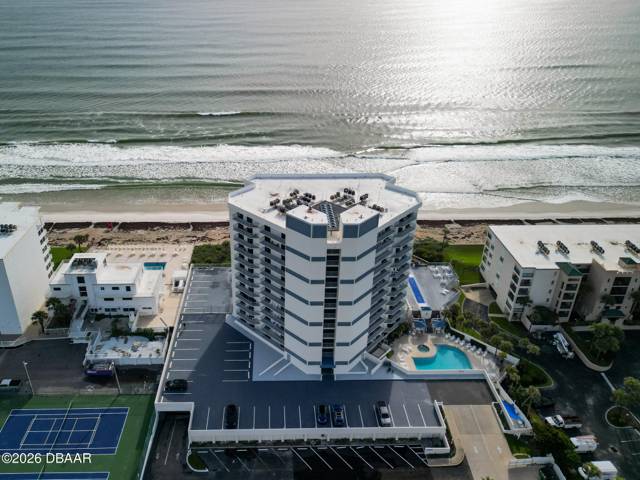
Seascape Towers
Condos for Sale in New Smyrna Beach, FL
All 605 homes for sale in New Smyrna Beach, FL · median $535,000 · 218 condos for sale in New Smyrna Beach · Volusia County homes for sale
True comps, carrying-cost math, and listings before the portals.
Photo courtesy of Gwendolyn Schwoerer, Land And Sea Realty · via DBAMLS
As of October 2026, Seascape Towers in New Smyrna Beach, FL has 2 homes for sale. Seascape Towers is a community in New Smyrna Beach, Volusia County, FL. Across New Smyrna Beach as a whole, 146 homes closed in the last 12 months at a median of $497,000, 106 median days on market, with 824 homes for sale today. At that median and Volusia County's FY2025-26 rate of 19.21 mills, annual property tax runs about $9,550 ($8,720 with the full homestead exemption).

Seascape Towers is a single condominium building on the New Smyrna Beach coast, and in a building this small, price is set unit by unit rather than by any neighborhood trend. Floor, view orientation, and interior condition drive value here more than any headline number, and with the median as your only benchmark, expect a wide spread between a dated unit and a renovated one.
The posture as of mid-2026 is decidedly slow: 24 months of supply against just 2 active listings. That reading is buyer-leaning, but with so few units on the market it takes very little to swing the numbers. Buyers have time and leverage to negotiate; sellers should price to condition and prepare for a long marketing window rather than a quick sale.
Figures in this note are as of July 13, 2026. The live market numbers elsewhere on this page update nightly and are newer.
Seascape Towers right now
🟢 Buyer-leaning market. 24.0 months of supply and 0% of the inventory already under contract give buyers above-average negotiating leverage.Why it matters: months of supply is how long today's inventory would last at today's sales pace; under-contract share is the portion of homes for sale that already have a buyer.Momentum Research analysis of DBAMLS records, as of July 12, 2026. Confidence: Low (2 active and pending listings, 0 closed sales in 12 months).
Jump to: Price history & scorecard · Homes for sale · Schools · FAQ
· Updated October 20, 2026 · Live data: DBAMLS, refreshed twice daily · MLS facts carry their source; interpretation lines are Momentum Research · Data sources & freshness
The 60-Second Overview
Seascape Towers is a compact beachside condo community in New Smyrna Beach where inventory is thin and turnover is slow, so each listing tends to stand on its own merits rather than trade on comparable volume.
Pre-construction details are compiled from public records, builder announcements and builder listings, and are subject to change without notice; figures are deemed reliable but not guaranteed. Momentum Research figures are our own analysis. This page describes homes, pricing and community attributes, not residents.
The setting & the homes.
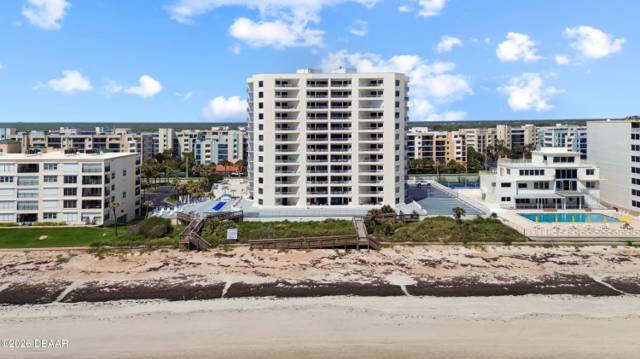
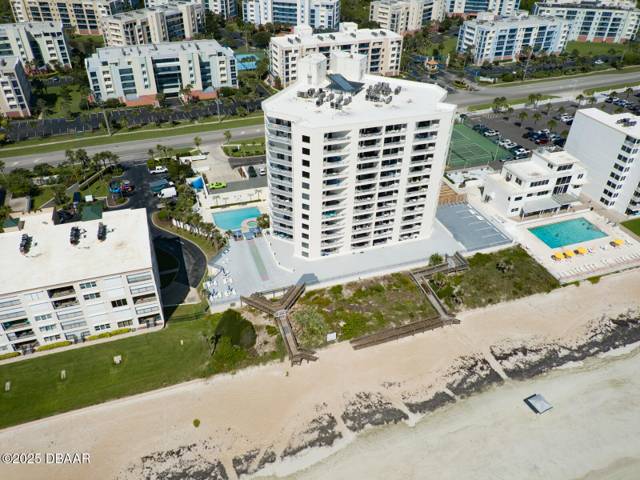
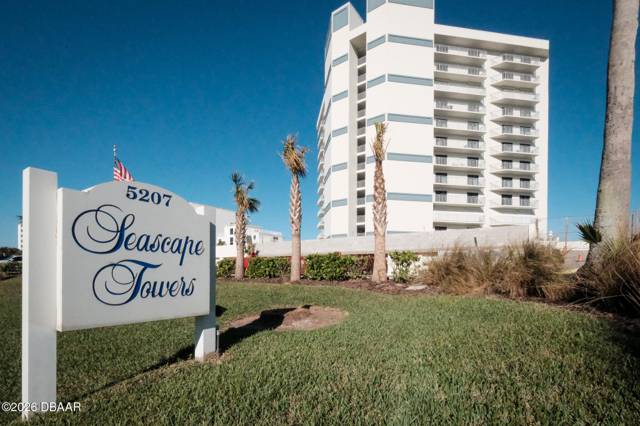
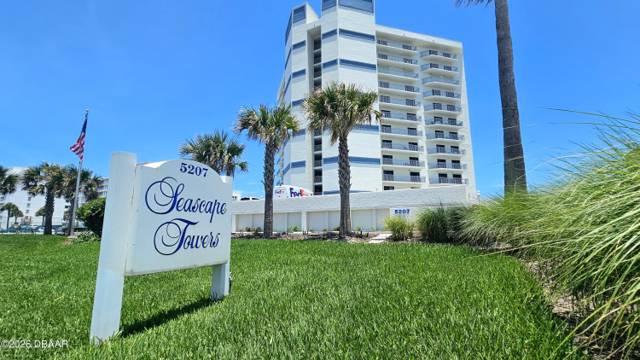
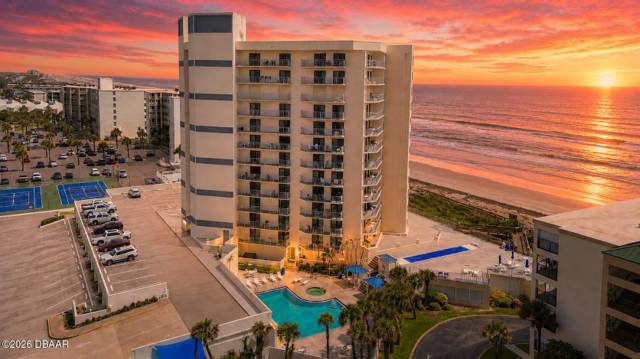
Aerial and on-site photos of Seascape Towers. Swipe to explore the community.
Swipe or use the arrows → tap any photo to enlarge
Seascape Towers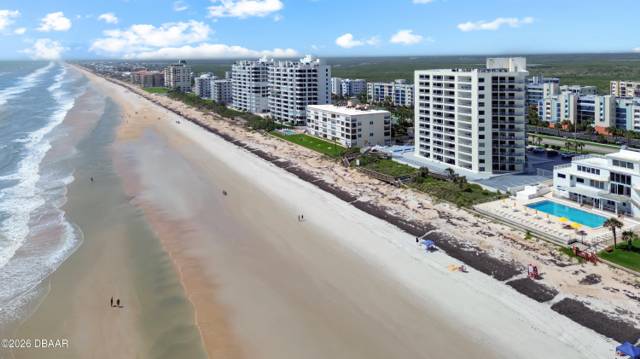 Seascape Towers
 Seascape Towers
 Seascape Towers
 Seascape Towers
 Seascape Towers
Photos from DBAMLS listings in Seascape Towers; content deemed reliable but not guaranteed.
Who Seascape Towers is best for.
Best for
- Buyers seeking a beachside condo who can move deliberately and wait out limited inventory
- Second-home or seasonal buyers comfortable with condo ownership and association obligations
- Value-minded buyers willing to renovate a dated unit and negotiate in a slow market
Probably not for
- Sellers who need a quick, predictable exit
- Buyers who want a large selection to compare before deciding
- Anyone uneasy with condo assessments, reserves, and coastal-structure due diligence
The market around Seascape Towers
Seascape Towers is too small for its own price trend, so here is the market around it.
Across Volusia County, 4,230 homes are active and 1,084 pending (20% under contract).
ZIP and county figures describe the wider market, not Seascape Towers specifically. Momentum Research analysis of MLS records.
Homes For Sale Right Now in Seascape Towers
Live MLS inventory for Seascape Towers. Every active listing, what is under contract right now, and the last 12 months of closed sales, refreshed twice a day. Closed comps beat an algorithm's guess every time.
Active and pending Seascape Towers listings as of 2026-10-19, priced high to low. © 2026 Daytona Beach Area Association of REALTORS®, Inc. Tap any home to ask about it.
Life at Seascape Towers
- Beach Access · reported on 3 of 3 listings
- Elevator(s) · reported on 3 of 3 listings
- Spa/Hot Tub · reported on 3 of 3 listings
- Pool · reported on 3 of 3 listings
- Barbecue · reported on 2 of 3 listings
- Clubhouse · reported on 2 of 3 listings
- Cable TV · reported on 2 of 3 listings
- Management - On Site · reported on 2 of 3 listings
- Sauna · reported on 2 of 3 listings
- Shuffleboard Court · reported on 2 of 3 listings
- Security · reported on 2 of 3 listings
- Secured Lobby · reported on 2 of 3 listings
Community amenities as reported across DBAAR listings in this community; deemed reliable but not guaranteed. Verify current amenities and access with the HOA.
Schools
- Volusia County Public Schools
- Verify the zoned schools by address
- Magnet and choice options may be available
- Coronado Beach · Elementary
- New Smyrna Beach · Middle
- New Smyrna Beach · High
Zoned schools reflect the assignments reported on recent Seascape Towers listings and can change; always confirm with Volusia County Public Schools for a specific address.
Buying with schools in mind? We can confirm the exact zoned schools for any Seascape Towers address.
Shop the zone: Homes zoned for New Smyrna Beach High School
The Seascape Towers buying strategy.
If we were buying in Seascape Towers today, this is the order of operations we would run for our clients.
Underwrite the condition first. Price the roof, HVAC, and systems honestly before judging any list price; condition swings value here more than square footage alone.
Match the home to real comps. Recent sales of similar condition and lot, not the asking price, tell you what a home is worth.
Use your leverage. With inventory sitting, there is room to negotiate on anything dated or overpriced and to ask for repairs or a rate buydown.
Line up financing and inspection early. A pre-approval and an inspection plan let you act fast and negotiate from evidence.
Keep an agent in your corner. The listing agent works for the seller; we represent you and prepare a hand-built valuation before any offer in Seascape Towers.
A thin-inventory building on the coast
With only 2 active listings and 24 months of supply, this is a low-liquidity market. Any single sale materially changes the statistics, so trailing averages here should be read as directional at best. The practical takeaway is that both sides need to underwrite the specific unit in front of them: layout, floor, exposure, and the state of the interior.
Because it is a coastal condominium, the usual condo-ownership questions carry extra weight — reserves, assessments, insurance, and the physical condition of the structure and its systems. None of that is captured in a median price, and it is where the real due diligence sits. Budget for that review before you fall for a view.
The location and the amenities are priced into every listing in Seascape Towers. The deal is won or lost on condition, the comps, and the renovation math.
Why work with Momentum here
In a building with a handful of listings and slow turnover, comps are scarce and stale, and the numbers alone will mislead you. We work the actual unit — its position in the building, its condition relative to the median, and the association's financial and structural health — and we pace the negotiation to a market where buyers currently hold the clock.
Seascape Towers in 15 seconds.
HOA, CDD & Fees
- HOA status not on record. Verify any dues before you offer
- Any club/amenity membership is billed separately
Confirm the current HOA dues, exactly what they cover, and any CDD bond or special assessment for a specific address before you offer.
Tools for a Seascape Towers buy.
Free calculators to pressure-test the real cost before you tour.
Selling here is won on condition and pricing to real comps, not an automated estimate. The right number comes from closed Seascape Towers sales matched to your home.
Price it to the comps and condition, not an automated estimate.
If you are thinking about selling in Seascape Towers, the right list price comes from recent comparable sales matched to your home's condition and location, not an automated estimate.
What is your Seascape Towers home worth?
Get a no-obligation home value based on real comparable sales in Seascape Towers, not an automated guess. Tell us about your home and we will personally prepare your numbers and a pricing strategy. No obligation, no spam.
See all homes for sale in New Smyrna Beach →
Just listed in Seascape Towers
The newest homes for sale in Seascape Towers right now, newest first. Each link opens the full listing with every photo, the price history and a tour request.
- 5207 S Atlantic Avenue #426 $645,000 · 2 bd · 2 ba · 1,213 sq ft · 140 days on market Courtesy of Land And Sea Realty
- 5207 S Atlantic Avenue #323 $549,000 · 2 bd · 2 ba · 1,213 sq ft · 143 days on market Courtesy of The Keyes Company
Checked against the MLS Oct 20, 2026. All new listings in this market.
Every Home for Sale in Seascape Towers New Smyrna Beach Right Now (2)
All 2 active and pending Seascape Towers New Smyrna Beach listings with a detail page, newest first, refreshed twice a day from the MLS.
- 5207 S Atlantic Avenue #426 · $645,000 · 2 bd / 2 ba · listed Jul 22, 2026 · listed by Land And Sea Realty
- 5207 S Atlantic Avenue #323 · $549,000 · 2 bd / 2 ba · listed Jul 22, 2026 · listed by The Keyes Company
More New Smyrna Beach home searches
- All homes for sale in New Smyrna Beach, FL
- Homes for sale in Volusia County, FL
- New Smyrna Beach pool homes for sale
- New Smyrna Beach waterfront homes for sale
- Gated communities in New Smyrna Beach
- New Smyrna Beach golf course homes
- Homes under $300K in New Smyrna Beach
- Homes from $300K to $500K in New Smyrna Beach
- 4-bedroom homes for sale in New Smyrna Beach
- New Smyrna Beach home values: what is my house worth?
New Smyrna Beach guides & data
- Market data
- Cost of living
- Best neighborhoods
- Flood zones
- Property taxes (Volusia County)
- Homestead exemption (Volusia County)
- Home insurance cost
- New construction
Florida buyer guides
- Florida home insurance rates by county
- Florida property tax by county
- Florida property tax calculator
- What flood zone X means
- The 4-point inspection, explained
- Florida flood insurance calculator
Real estate agent in New Smyrna Beach? Join Momentum in New Smyrna Beach: 100% commission, one $12K cap.
The real cost & risk here
Before the list price, the Florida math the portals skip. These are Volusia County typicals — your exact home, flood zone, and insurance quote will vary, so verify each before you offer.
Check it for your address: look up your flood zone (FEMA) · insurance by county · true-cost calculator · Volusia County scorecard.
County typicals from Momentum’s Florida housing data (Zillow & Realtor.com aggregates, Census, FRED), updated monthly; insurance modeled. Flood zone is property-specific — always confirm via FEMA.
11% of homes for sale in ZIP 32169 are already under contract (under contract ÷ under contract + active listings) — a read on how much of the available inventory buyers have already claimed. Source: MLS data (2026-10-20).
Seascape Towers Market Scorecard
Seascape Towers is currently a buyer-leaning market (limited data). Limited supply, a median asking price of $597,000, and homes go under contract in about 141.5 days.
Typical home value in the 32169 ZIP is $552,925, about 12.6% above the Florida norm (Zillow Home Value Index).
Go deeper: ZIP market scorecard · county scorecard · true cost calculator · affordability calculator.
Live data: © 2026 Daytona Beach Area Association of REALTORS®, Inc. Refreshed twice daily. Market metrics only; these describe homes for sale and recent sales, not residents.
Email me new listings in Seascape TowersCondos for Sale
One e-mail a day, only when a home lists here, with price, beds, baths and a link to every listing. Straight from the MLS feed; no account needed.
Ask an agent about Seascape TowersCondos for Sale
Have a question about the homes, fees, rules or commute here? A Momentum agent who works Seascape TowersCondos for Sale will answer, and the answer is published on this page for the next buyer.
Frequently Asked Questions
Is Seascape Towers a buyer's or seller's market right now?
Who is the best real estate agent for Seascape Towers?
How do I find a top New Smyrna Beach real estate agent who knows Seascape Towers?
Can Momentum Realty connect me with an agent for Seascape Towers?
Where is Seascape Towers, and what county is it in?
Should you buy in Seascape Towers?
An honest fit check. We will tell you when it is not your community.
Data sources & freshness
| Live listings | DBAMLS, refreshed twice daily (last: October 19, 2026) |
| Under-contract shares | DBAMLS records, as of 2026-07-12 |
Verify the primary sources yourself: Florida DOR · U.S. Census · FEMA flood maps · Citizens Property Insurance.
Momentum Research figures are our own analysis of DBAMLS records; MLS data is deemed reliable but not guaranteed. Methodology: how Momentum market scores are computed. Market metrics describe homes for sale and recent sales, not residents.
Own a home here?
You just read the data. Now see what your home is worth.
The numbers on this page move markets in the aggregate. The number that matters to you is what a buyer pays for your address. Momentum sells for 1.25% above the DBAMLS member average and 8 days faster, and we’ll price yours against live local comps.
Looking to buy here? Search homes for sale →
What’s your home worth in your area?
A real valuation with real comps from a local listing agent, not an instant algorithm. Response within one business day.
More New Smyrna Beach & Volusia County / Daytona Beach Area guides
Compare before you commit - every guide covers pricing, HOA/CDD, insurance posture, and fit. Browse all of Volusia County / Daytona Beach Area or the full Neighborhood Finder.
See how Seascape Towers fits the bigger picture — live prices, inventory, and Momentum Scores:
Nearby Communities
Explore more neighborhoods near Seascape Towers with Momentum Realty’s local guides.