
Springfield
Homes for Sale in Jacksonville, FL
All 4,522 homes for sale in Jacksonville, FL · median $300,000 · 106 homes for sale in 32206 · Duval County homes for sale
True comps, carrying-cost math, and listings before the portals.
Market Heat
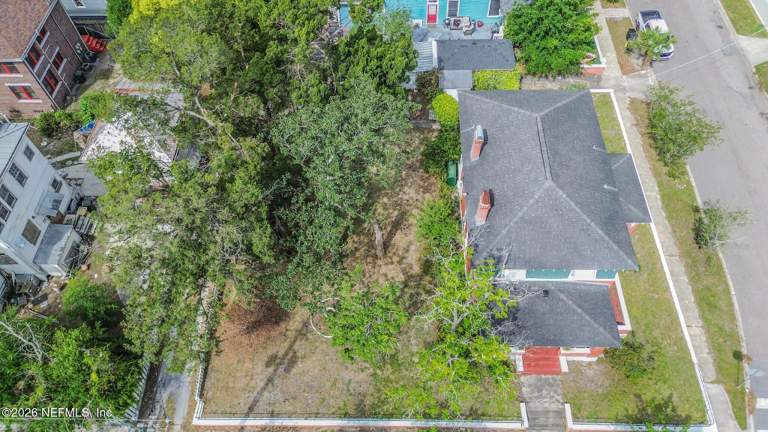
Photo courtesy of PREMIER HOMES REALTY INC · via realMLS
Homes For Sale Right Now in Springfield
Live MLS inventory for Springfield. Every active listing, what is under contract right now, and the last 12 months of closed sales, refreshed twice a day. Closed comps beat an algorithm's guess every time.
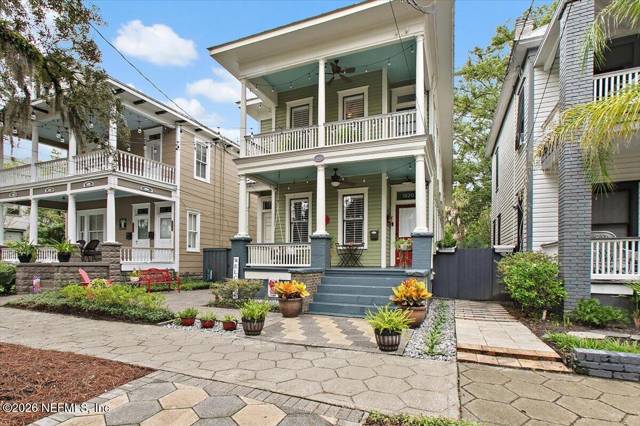 Active · 15 daysTop listing
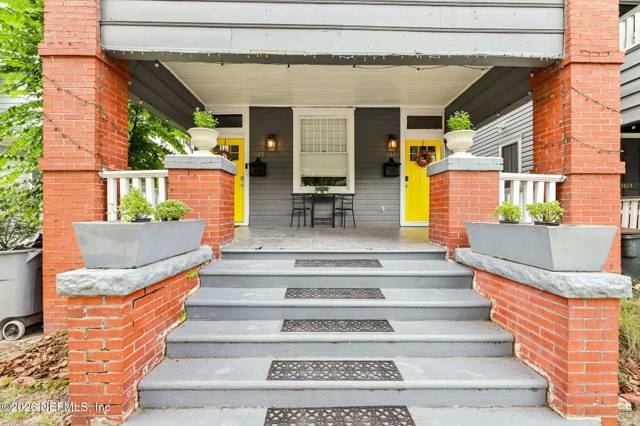 Active · 34 days
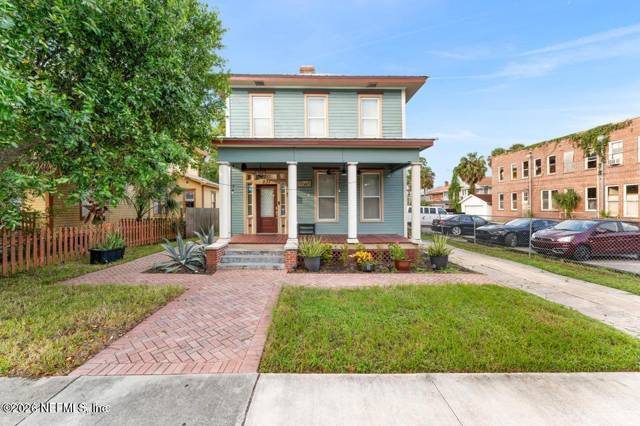 Active · 182 days
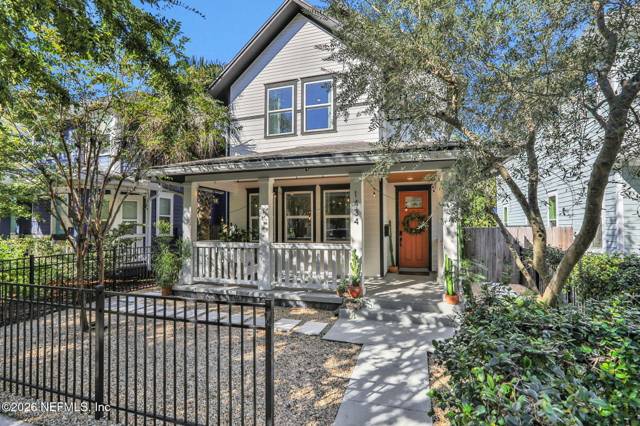 Active · 9 days
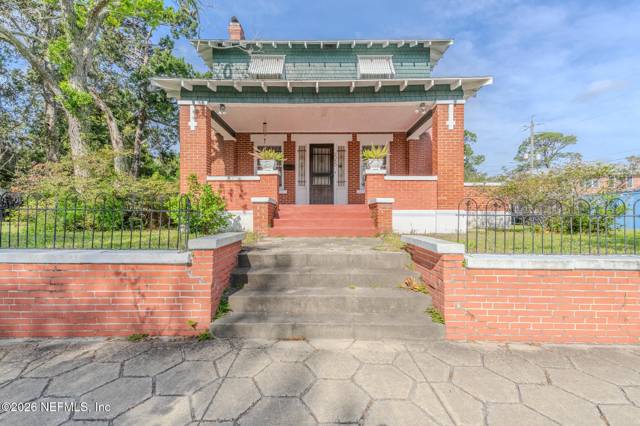 Active · 184 days
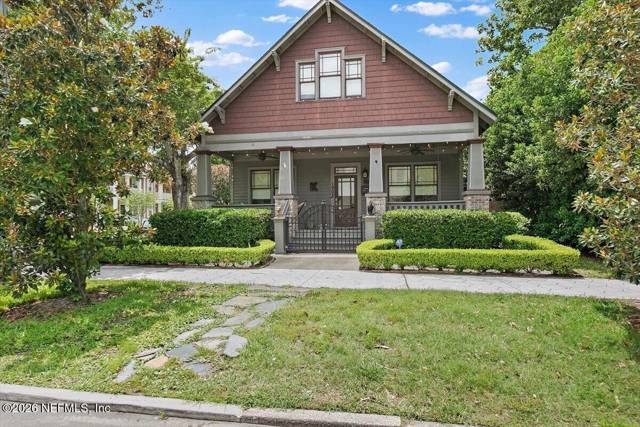 Active · 134 days
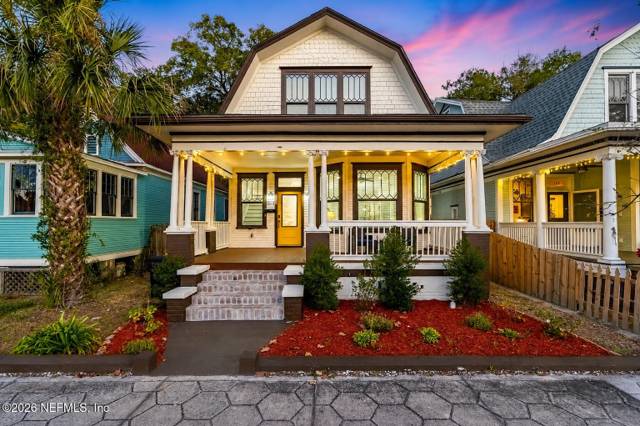 Active · 103 days
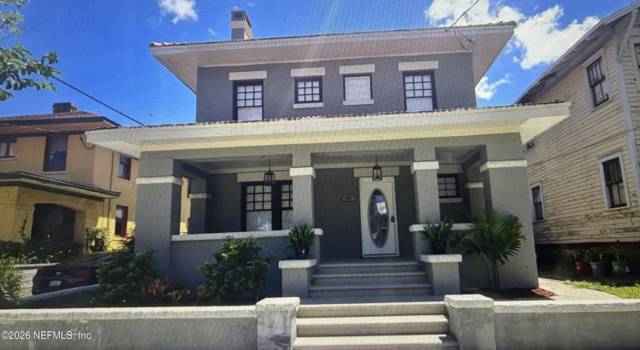 Active · 5 days
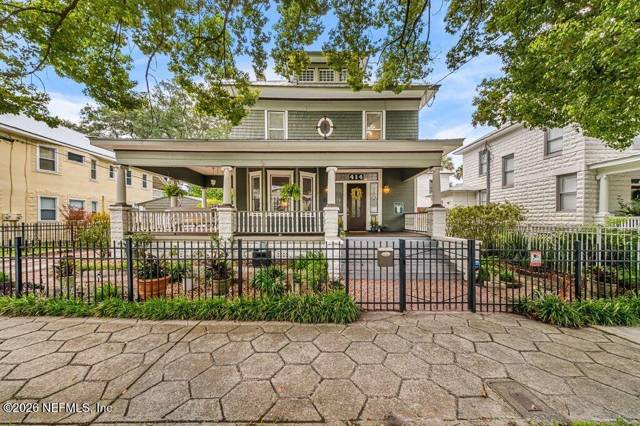 Active · 91 days
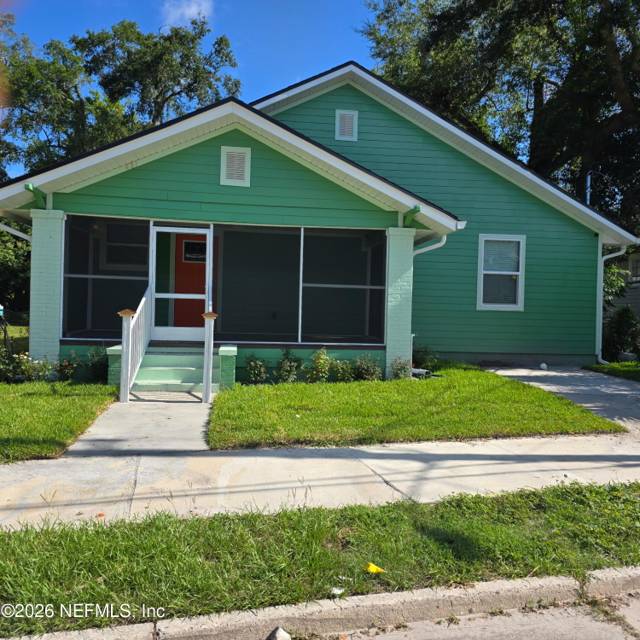 Active · 46 days
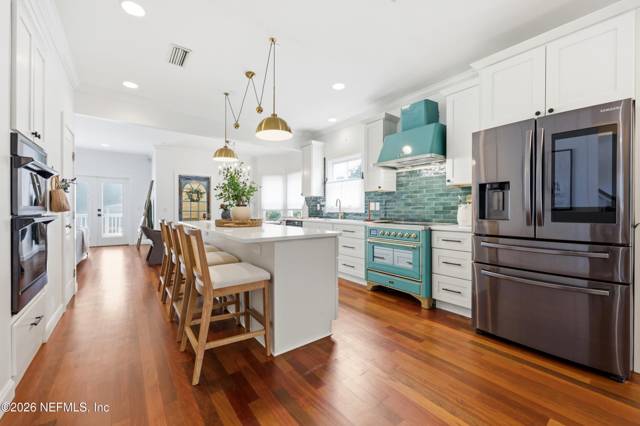 Active · 79 days
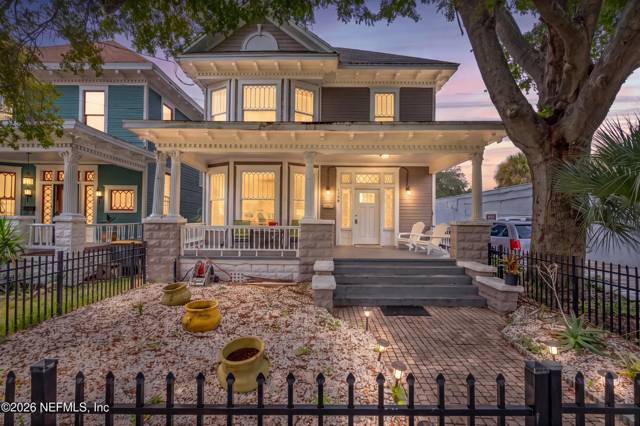 Active · 33 days
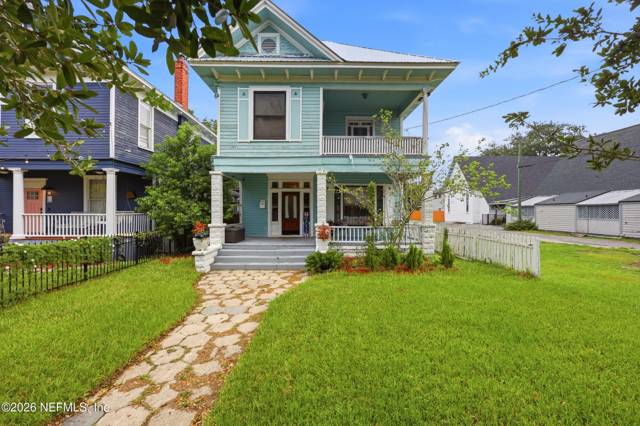 Active · 93 days
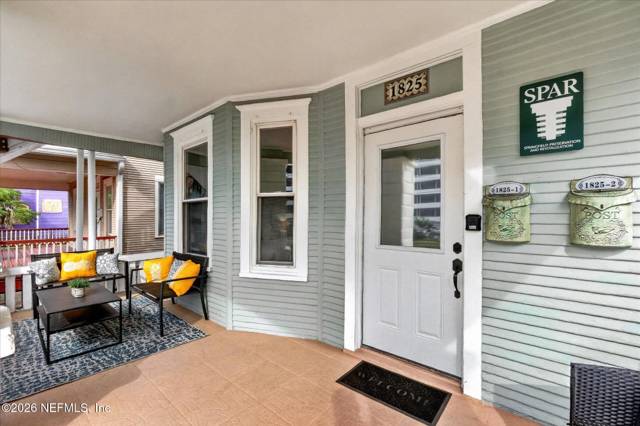 Active · 209 days
Active and pending Springfield listings as of 2026-10-24, priced high to low. Source: Data provided by realMLS. Tap any home to ask about it.

Springfield is a condition-driven market, not a price-tier market. The median sits at $395,000, but that number hides a wide spread between restored historic homes and properties still waiting for work. What sets price here is the quality and completeness of the renovation, not the square footage alone — two homes on the same block can trade at very different numbers depending on how much of the original detail was saved and how much of the mechanical work is finished.
The current posture favors patience. With a market heat score of 28 and a median of 50 days on market, homes are not moving on a rush, and prices are essentially flat year over year at -0.5%. That gives buyers room to inspect carefully and negotiate on condition, and it tells sellers that finished, well-presented homes are what clear — anything half-done will sit.
Figures in this note are as of July 12, 2026. The live market numbers elsewhere on this page update nightly and are newer.
Springfield right now
🟢 Buyer-leaning market. 47.0 months of supply and 22% of the inventory already under contract give buyers above-average negotiating leverage.Why it matters: months of supply is how long today's inventory would last at today's sales pace; under-contract share is the portion of homes for sale that already have a buyer.Momentum Research analysis of realMLS records, as of October 23, 2026. Confidence: Very High (60 active and pending listings, 81 closed sales in 12 months).
🟡 Off the recent peak. The trailing-12-month median ($325K) is down 1.4% from the prior 12 months ($330K) and up 547% since 2012.Momentum Research, record-level realMLS closed sales, 12-month windows ending October 23. Confidence: Very High (81 and 96 sales in the two windows).
Jump to: Price history & scorecard · Homes for sale · Schools · FAQ
· Updated October 24, 2026 · Live data: realMLS, refreshed twice daily · MLS facts carry their source; interpretation lines are Momentum Research · Data sources & freshness
The 60-Second Overview
Springfield market snapshot (as of October 23, 2026): the median sale price is about $325K ($173 per sq ft over the trailing 12 months of closed sales), a median 50 days on market for closed sales, and 47.0 months of supply, a buyer-leaning market. The trailing-12-month median is down 1% from the prior 12 months and up 547% since 2012, computed from record-level realMLS closed sales (81 closings in the current window).
In ZIP 32206 (Jacksonville), 221 homes closed in the last 12 months at a median of $325K ($173/sq ft), down 6.8% year over year, with a median 52 days on market. Right now 70 active and 23 pending listings put supply at about 29.4 months — a buyer's market. See the live ZIP 32206 housing market and the Duval County market.
realMLS (Northeast Florida) sales records identify 1,467 homes in Springfield that have changed hands since 2001, built between 1886 and 2026 (median 1919), with a median living area of about 1,848 sq ft and a typical 3-bedroom, 2-bath layout; 96% are single-family homes. Source: realMLS (Northeast Florida) closed-sale history compiled by Momentum Research; counts reflect homes with a recorded MLS sale, not every home in the community.
Flood zones in Springfield: of 56 listing addresses checked against the FEMA National Flood Hazard Layer, 100% sit outside the FEMA Special Flood Hazard Area (Zone X). Individual parcels vary - verify any specific address at msc.fema.gov. See flood zones by neighborhood in Jacksonville.
Springfield is one of Jacksonville's historic districts, where price tracks renovation quality more than anything else. The long-run gain since 2012 has been substantial, but the near-term market is flat and deliberate.
The setting & the homes.
Aerial and on-site photos of Springfield. Swipe to explore the community.
Swipe or use the arrows → tap any photo to enlarge
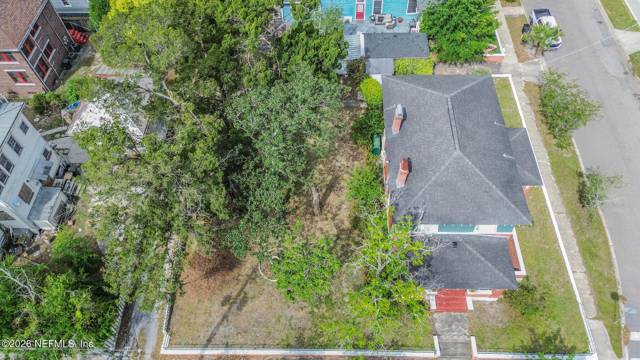 Springfield
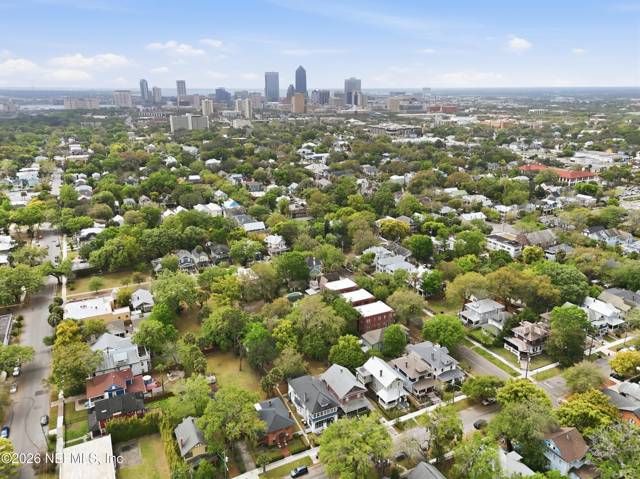 Springfield
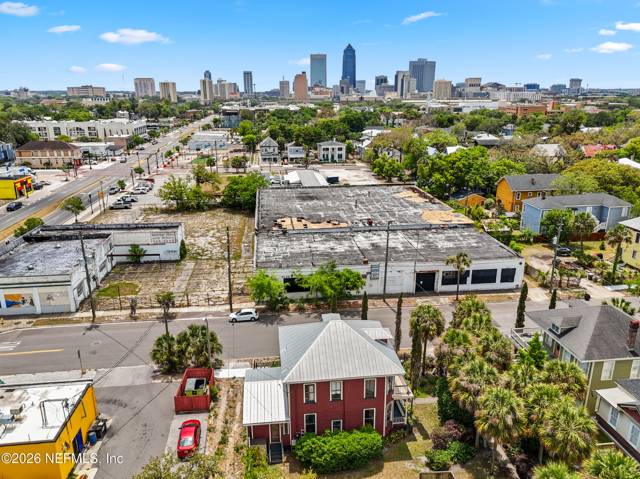 Springfield
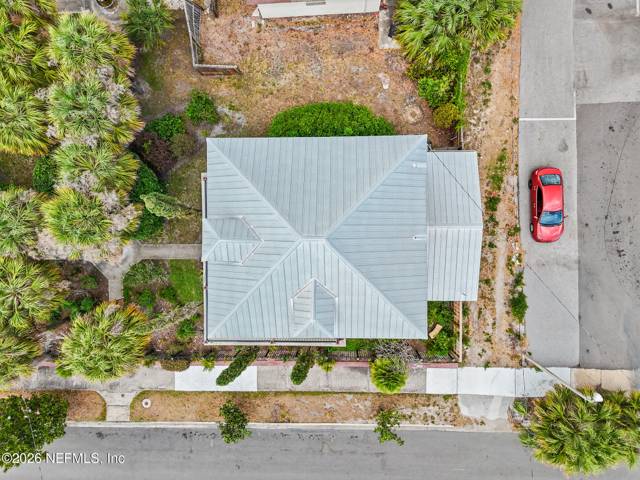 Springfield
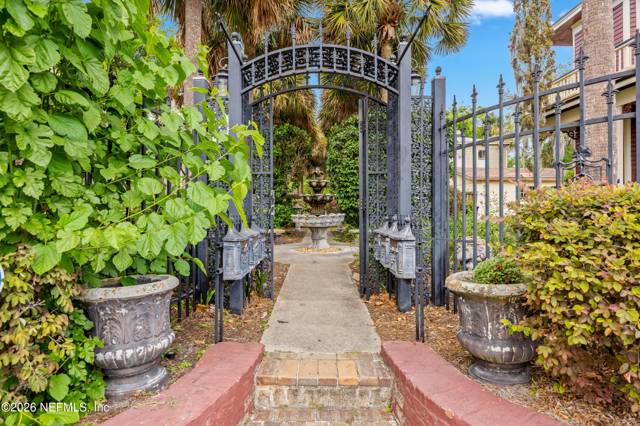 Springfield
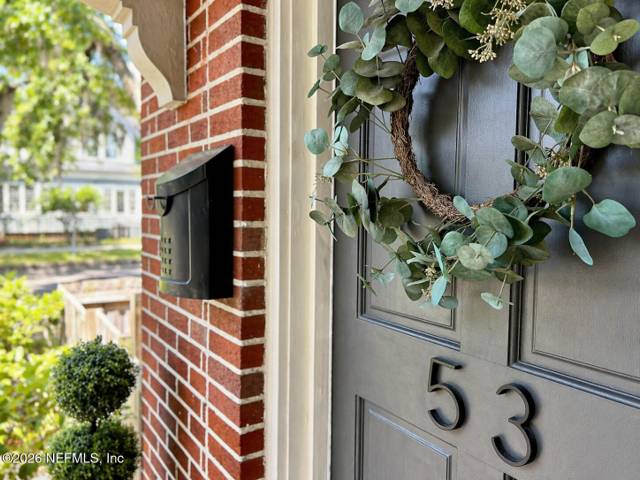 Springfield
Photos from realMLS listings in Springfield; content deemed reliable but not guaranteed.
Who Springfield is best for.
Best for
- Buyers drawn to historic architecture who will underwrite each home's condition individually
- Renovation-minded buyers with budget and tolerance for unfinished mechanical or cosmetic work
- Long-hold buyers comfortable with a flat near-term market and a deliberate pace
Probably not for
- Buyers who need a fully turnkey home with zero renovation exposure
- Buyers expecting quick short-term appreciation off recent price movement
- Buyers who want a predictable price per square foot across the district
Price History: What Homes Here Have Actually Sold For
Median sale price over the trailing 12 months ending October 23 of each year, from record-level realMLS closed sales. Same methodology as every appreciation figure on this page: the 2026 point ($325K) IS the median in the snapshot above, and the move from 2025 ($330K) IS the -1.4% one-year change.
Windows contain 70 to 158 sales each (81 in the current window); every figure carries its sample size. Source: Data provided by realMLS. Deemed reliable but not guaranteed.
20% of homes for sale in ZIP 32206 are already under contract (under contract ÷ under contract + active listings) — a read on how much of the available inventory buyers have already claimed. Source: MLS data (2026-10-20).
Springfield Market Scorecard
Springfield is currently a buyer-leaning market. About 47.0 months of supply, a median asking price of $399,900, and homes go under contract in about 65 days.
Go deeper: ZIP market scorecard · county scorecard · true cost calculator · affordability calculator.
Live data: realMLS, refreshed twice daily. Market metrics only; these describe homes for sale and recent sales, not residents.
Springfield on the map.
Every active, pending, and recently sold home, plotted. Toggle the layers and tap a home for the details.
Listing locations from realMLS. Map data © OpenStreetMap contributors.
Life at Springfield

- Security Fence · reported on 2 of 30 listings
- Security Lights · reported on 2 of 30 listings
- Maintenance Grounds · reported on 2 of 30 listings
- 24 Hour Security · reported on 1 of 30 listings
- Restaurant · reported on 1 of 30 listings
- Window Bars · reported on 1 of 30 listings
- Gated · reported on 1 of 30 listings
- Security Gate · reported on 1 of 30 listings
Community amenities as reported across realMLS listings in this community; deemed reliable but not guaranteed. Verify current amenities and access with the HOA.
How far is everything?
Everyday stops around Springfield are close: the nearest dining is about 1 minutes away.
- Othello · Dining1 min
- Foxy Lady Cafe · Coffee1 min
- Professional Offices Building (POB) · Health2 min
- Henry J. Klutho Park · Parks3 min
- Hope Centre Mall · Shopping7 min
Approximate drive times via Mapbox Search + Directions, 2026-07-03. Verify for a specific address.
Schools
- Duval County Public Schools
- Verify the zoned schools by address
- Magnet and choice options may be available
- Andrew A. Robinson Elementary SchoolFLDOE grade C · Public PreK-5
- Springfield Middle SchoolFLDOE grade B · Public 6-8
- William M. Raines High SchoolFLDOE grade B · Public 9-12
Grades are official Florida Department of Education school grades for 2025-26. Assignments are reported as of the 2025-26 year and can change; always confirm with Duval County Public Schools for a specific address.
Buying with schools in mind? We can confirm the exact zoned schools for any Springfield address.
Shop the zone: Homes zoned for Select One Middle School · Homes zoned for Matthew Gilbert Middle School · Homes zoned for Jean Ribault High School · Homes zoned for William M. Raines High School
Recent Developments in Springfield
Development, infrastructure, retail, and school activity affecting Springfield, tracked by our team and summarized from public reporting and official sources, with links to the original coverage. Last updated June 2026.
- January 2026Civic
City Council approves sale of historic Springfield Armory to redevelopment nonprofit
Jacksonville City Council voted 17-0 on Jan. 13 to sell the city-owned former Florida National Guard Armory at 851 N. Market St. to a subsidiary of Fort Lauderdale-based REVA Development Corp. for $3.04 million. The 1916 building, slated since 2019 for a mixed-use conversion with galleries, co-working, a food hall and a microbrewery, has had only roof and minor repairs to date, with full rehab estimated near $30 million.
What it may mean for the marketTransferring a long-stalled landmark to private ownership may set up adaptive reuse, though the timeline for actual construction remains uncertain.
Source: Jacksonville Daily Record - December 2025Civic
SPAR acquires historic Drew Mansion for community-space rehab
Springfield Preservation and Revitalization announced Dec. 8 it had acquired the 1909 Drew Mansion at 245 W. Third St. and launched a $1.5 million campaign to rehabilitate and operate it. Plans call for converting the deteriorated landmark into a publicly accessible community space and archive with low-cost office space.
What it may mean for the marketStabilizing a deteriorated landmark through preservation may reinforce the historic character that distinguishes Springfield's housing stock.
Source: Jacksonville Daily Record - November 2025Development
Corner on Main apartments completed in Springfield
Corner on Main, a 202-unit mixed-use development at 1148 N. Main St., reached completion in early 2025, preserving a 1928 art-deco landmark while adding roughly 324,708 square feet of residences and ground-floor retail. The roughly $59 million project, built by Summit Contracting Group, features hidden parking, resort-style pools and Emerald Trail access.
What it may mean for the marketA large new apartment count on Main Street may expand rental housing supply and street-level activity along Springfield's primary corridor.
Source: Jacksonville Daily Record - September 2025Infrastructure
Officials break ground on Hogan Street Link of the Emerald Trail
City and private leaders broke ground Sept. 25 on the Hogan Street Link, narrowing Hogan Street to one northbound lane with a two-way bike lane from Riverfront Plaza to Union Street. Full completion is targeted for early 2027; a later phase extending into Springfield to FSCJ awaits funding after a federal grant was voided in mid-2025.
What it may mean for the marketExtending the Emerald Trail toward Springfield could improve pedestrian and bike connectivity, a feature increasingly cited near urban-core homes.
Source: Jacksonville Daily Record - July 2025Infrastructure
Emerald Trail progress tied to Springfield walkability despite funding setback
Coverage in July detailed how the 30-mile Emerald Trail network is intended to enhance Springfield's walkability by connecting neighborhoods, parks and Downtown, even after the loss of a major federal grant slowed but did not stop the project. Klutho Park and Hogans Creek restoration are tied into the broader trail and greenway plans.
What it may mean for the marketSustained investment in trails and creek greenways near Springfield may support long-term neighborhood connectivity and flood-management goals.
Source: News4Jax - June 2025Development
Council committee backs TerraWise Homes office and model-home plan in Springfield
A City Council committee voted 7-0 on June 3 to support rezoning two adjacent West Sixth Street lots so TerraWise Homes can reuse a 1905 home as offices and build a high-efficiency, six-bedroom model home next door. The lots sit within the Springfield Historic District and Overlay, so exterior work requires Historic Preservation Commission review.
What it may mean for the marketInfill construction designed to fit historic context may add owner-occupied housing options while preserving district character.
Source: Jacksonville Daily Record
Summaries reflect public reporting and official sources linked above as of the dates shown. Project details, timelines, and approvals can change. Commentary on potential market effects is general observation, not investment advice or a prediction for any specific property. For the freshest items across the whole region, see This Week in Northeast Florida.
The Springfield buying strategy.
If we were buying in Springfield today, this is the order of operations we would run for our clients.
Underwrite the condition first. Price the roof, HVAC, and systems honestly before judging any list price; condition swings value here more than square footage alone.
Match the home to real comps. Recent sales of similar condition and lot, not the asking price, tell you what a home is worth.
Use your leverage. With inventory sitting, there is room to negotiate on anything dated or overpriced and to ask for repairs or a rate buydown.
Line up financing and inspection early. A pre-approval and an inspection plan let you act fast and negotiate from evidence.
Keep an agent in your corner. The listing agent works for the seller; we represent you and prepare a hand-built valuation before any offer in Springfield.
A restoration market, priced by condition
The median price per square foot here is about $209.62, but treat that as a midpoint rather than a rule. Historic stock means huge variation in what a dollar buys — original wood, updated systems, and completed permits carry a premium, while deferred maintenance and unfinished work discount fast. Underwrite each home on its own bones and its own mechanicals, not on a neighborhood average.
Since 2012, values in Springfield are up 690%, which reflects a long arc of reinvestment in the district's historic homes. That history matters for context, but it is not a forecast — the last twelve months were flat at -0.5%, and a heat score of 28 with 59 closings in the window describes a measured, low-urgency market. This is a place to buy on the merits of a specific house, not on momentum.
The location and the amenities are priced into every listing in Springfield. The deal is won or lost on condition, the comps, and the renovation math.
Momentum Buy Score.
Our proprietary 0 to 10 read across the factors that decide how a home in Springfield buys, holds, and resells. Momentum Research; not an appraisal.
Momentum Intelligence Scores are our proprietary, qualitative assessment on a 0 to 10 scale, built from the record-level market data on this page. They are a framework for comparing communities, not a guarantee of future value and not advice on a specific home; unlike an automated value estimate they do not price your home, they grade the community on evidence you can inspect. Composite is the plain average of the 4 factors (5.4). Basis: Long-Term Appreciation +547% since 2012; Recent Direction -1.4% year-over-year; Liquidity & Demand 47.0 months of supply; Pricing Power 94.0% sale-to-list. Refreshed with each data update.
Why work with Momentum here
Springfield rewards knowing which renovations were done to code and which were done to hide problems. We read historic homes for what is finished versus what is cosmetic, we help sellers position completed work so it actually gets paid for, and in a market moving at a 50-day median we make sure neither side overreacts to a number that varies house by house.
Springfield in 15 seconds.
What it really costs to own in Springfield
The parts of the monthly number a mortgage calculator leaves out, from the tax roll, the MLS, Citizens and FEMA. Property facts only.
| Property tax | Current owners' bills run a median of $1,515/yr across 12 listings here (MLS tax records, 2026-10-24). Buy at today's median asking price of $392,000 and the first-year bill resets to about $6,300 with homestead (Duval County total millage 17.865 mills, FY2025-26, Duval County Property Appraiser 2025 final millage chart; Duval County School Board FY2025-26 adopted millage); municipal and district millage vary within the county. |
|---|---|
| Home and flood insurance | The average Citizens Property Insurance premium in Duval County is $1,315/yr (2,001 policies, Citizens detail by county, April 2026); private-market quotes depend on roof age, wind mitigation and construction. Flood: of 56 listing addresses checked against the FEMA flood map, 100% sit outside the high-risk zone. Statewide, a Zone X flood policy runs about $500-$700/yr and a high-risk zone $1,200-$2,500/yr (FEMA Risk Rating 2.0 averages, not quotes). |
| Roof and age | Median build year 1924 across 12 listings. An original roof here would be about 102 years old; under Florida's 2022 reform (SB 2-D) carriers may require an inspection past 15 years, so budget for a roof report, and for replacement where it fails. |
Email me new listings in Springfield
One e-mail a day, only when a home lists here, with price, beds, baths and a link to every listing. Straight from the MLS feed; no account needed.
Ask an agent about Springfield
Have a question about the homes, fees, rules or commute here? A Momentum agent who works Springfield will answer, and the answer is published on this page for the next buyer.
HOA, CDD & Fees
- No CDD
- HOA status not on record. Verify any dues before you offer
Confirm the current HOA dues, exactly what they cover, and any CDD bond or special assessment for a specific address before you offer.
Page states no CDD.
Flood & Insurance Context
Of 56 sampled listing addresses in this community: 100% outside the FEMA Special Flood Hazard Area (Zone X/B/C).
Address-sampled; individual parcels vary - verify any specific address at msc.fema.gov. Check any address at FEMA's Flood Map Service Center, and see average home-insurance costs by Florida county.
Source: FEMA National Flood Hazard Layer, address-level lookups (n=56) · as of 2026-10
Tools for a Springfield buy.
Free calculators to pressure-test the real cost before you tour.
Selling here is won on condition and pricing to real comps, not an automated estimate. The right number comes from closed Springfield sales matched to your home.
Price it to the comps and condition, not an automated estimate.
If you are thinking about selling in Springfield, the right list price comes from recent comparable sales matched to your home's condition and location, not an automated estimate.
What is your Springfield home worth?
Get a no-obligation home value based on real comparable sales in Springfield, not an automated guess. Tell us about your home and we will personally prepare your numbers and a pricing strategy. No obligation, no spam.
See homes for sale in Springfield on the map →
Housing distress & ownership in Springfield, Jacksonville
Who owns here, how much is not owner-occupied, and how much for-sale inventory is under distress.
Source: Momentum Realty Research. Ownership & parcels from the FL DOR 2025 tax roll; distress from MLS active-listing status/remarks; price from MLS closed sales. Source: Data provided by realMLS. Deemed reliable but not guaranteed.
Just listed in Springfield
The newest homes for sale in Springfield right now, newest first. Each link opens the full listing with every photo, the price history and a tour request.
- 1443 Boulevard $215,000 · 4 bd · 2 ba · 1,836 sq ft · listed Oct 23, 2026 Courtesy of 1 PERCENT LISTS FIRST COAST
- 222 E 16Th Street $155,000 · 3 bd · 2 ba · 1,306 sq ft · listed Oct 21, 2026 Courtesy of LOKATION
- 340 W 6Th Street $499,000 · 3 bd · 2.5 ba · 1,968 sq ft · listed Oct 19, 2026 Courtesy of FLORIDA HOMES REALTY & MTG LLC
- 1434 Ionia Street $569,000 · 3 bd · 3.5 ba · 2,230 sq ft · listed Oct 15, 2026 Courtesy of ROOT REALTY LLC
- 503 W 16Th Street $169,900 · 3 bd · 1.5 ba · 1,216 sq ft · listed Oct 15, 2026 Courtesy of PINNACLE REALTY
- 522 W 21St Street $159,900 · 3 bd · 2 ba · 1,045 sq ft · listed Oct 15, 2026 Courtesy of PINNACLE REALTY
Checked against the MLS nightly. All new listings in this market.
More Jacksonville home searches
- All homes for sale in Jacksonville, FL
- Homes for sale in Duval County, FL
- Jacksonville pool homes for sale
- Jacksonville waterfront homes for sale
- Gated communities in Jacksonville
- Jacksonville golf course homes
- Homes under $300K in Jacksonville
- Homes from $300K to $500K in Jacksonville
- 4-bedroom homes for sale in Jacksonville
- Jacksonville home values: what is my house worth?
Jacksonville guides & data
- Market data
- Cost of living
- Best neighborhoods (ranked by data)
- Best neighborhoods
- Flood zones
- Property taxes (Duval County)
- Homestead exemption (Duval County)
- Home insurance cost
Florida buyer guides
- Florida home insurance rates by county
- Florida property tax by county
- Florida property tax calculator
- What flood zone X means
- The 4-point inspection, explained
- Florida flood insurance calculator
Real estate agent in Jacksonville? Join Momentum in Jacksonville: 100% commission, one $12K cap.
Frequently Asked Questions
What is the median home price in Springfield?
How long do homes in Springfield take to sell?
Is Springfield a buyer's or seller's market right now?
Have Springfield home prices gone up?
What schools serve Springfield?
Who is the best real estate agent for Springfield?
How do I find a top Jacksonville real estate agent who knows Springfield?
Can Momentum Realty connect me with an agent for Springfield?
Where is Springfield, and what county is it in?
How far is Springfield from downtown Jacksonville and the beach?
Is Springfield in a flood zone?
Is Springfield a good place to live?
Should you buy in Springfield?
An honest fit check. We will tell you when it is not your community.
Nearby Communities
Explore more neighborhoods near Springfield with Momentum Realty’s local guides.
Data sources & freshness
| Live listings | realMLS, refreshed twice daily (last: October 24, 2026) |
| Community market stats | realMLS closed sales, 12-month windows ending October 23, 2026 |
| Under-contract shares | realMLS records, as of 2026-10-20 |
| Schools | 2025-26 district assignments + FLDOE school grades; verify with the district |
| Historical depth | Closed-sale records back to 2001 (2,812 transactions analyzed) |
Verify the primary sources yourself: Florida DOR · U.S. Census · FEMA flood maps · Citizens Property Insurance.
Momentum Research figures are our own analysis of realMLS records; MLS data is deemed reliable but not guaranteed. Methodology: how Momentum market scores are computed. Market metrics describe homes for sale and recent sales, not residents.
Own a home here?
You just read the data. Now see what your home is worth.
The numbers on this page move markets in the aggregate. The number that matters to you is what a buyer pays for your address. Momentum sells for 1.25% above the realMLS member average and 8 days faster, and we’ll price yours against live local comps.
Looking to buy here? Search homes for sale →
What’s your home worth in your area?
A real valuation with real comps from a local listing agent, not an instant algorithm. Response within one business day.