
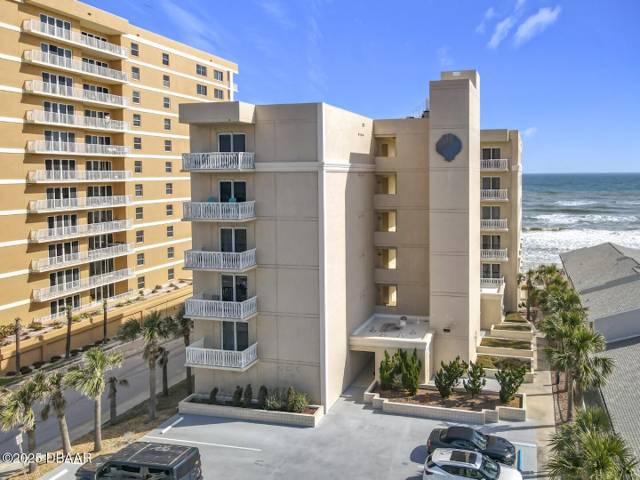
Captiva
Condos for Sale in Daytona Beach Shores, FL
All 237 homes for sale in Daytona Beach Shores, FL · median $379,900 · 219 condos for sale in Daytona Beach Shores · Volusia County homes for sale
True comps, carrying-cost math, and listings before the portals.
Photo courtesy of Allan Krausz, Coldwell Banker Coast Realty · via DBAMLS
As of October 2026, Captiva Condo in Daytona Beach Shores, FL has 1 home for sale. Captiva Condo is a community in Daytona Beach Shores, Volusia County, FL. Across Daytona Beach Shores as a whole, 38 homes closed in the last 12 months at a median of $162,500, 164 median days on market, with 36 homes for sale today. At that median and Volusia County's FY2025-26 rate of 19.21 mills, annual property tax runs about $3,120 ($2,290 with the full homestead exemption).

Captiva Condo is a secured oceanfront tower in Daytona Beach Shores with a single active listing as of mid-July 2026. With only one unit on the market, price discovery is limited; what you're seeing is one seller's ask, not a pattern. That makes it impossible to call a trend—inventory this thin tells you almost nothing about where the building trades broadly.
The amenity package is complete for a coastal high-rise: fitness center, spa, pool, secured lobby, and on-site storage. Off-site management means day-to-day requests may take longer to resolve than in a self-managed property. For a buyer, the scarcity of listings suggests low turnover, which can be a sign of owner satisfaction or simply a quiet season. For a seller, you're not competing with neighbors—but you also have no comps to anchor expectations.
The 60-Second Overview
A secured oceanfront condo tower in Daytona Beach Shores with one active listing and a full slate of high-rise amenities. Inventory this sparse offers no pricing pattern—what you see is one seller's number, not a market.
Pre-construction details are compiled from public records, builder announcements and builder listings, and are subject to change without notice; figures are deemed reliable but not guaranteed. Momentum Research figures are our own analysis. This page describes homes, pricing and community attributes, not residents.
The setting & the homes.
Aerial and on-site photos of Captiva Condo. Swipe to explore the community.
Swipe or use the arrows → tap any photo to enlarge
Captiva Condo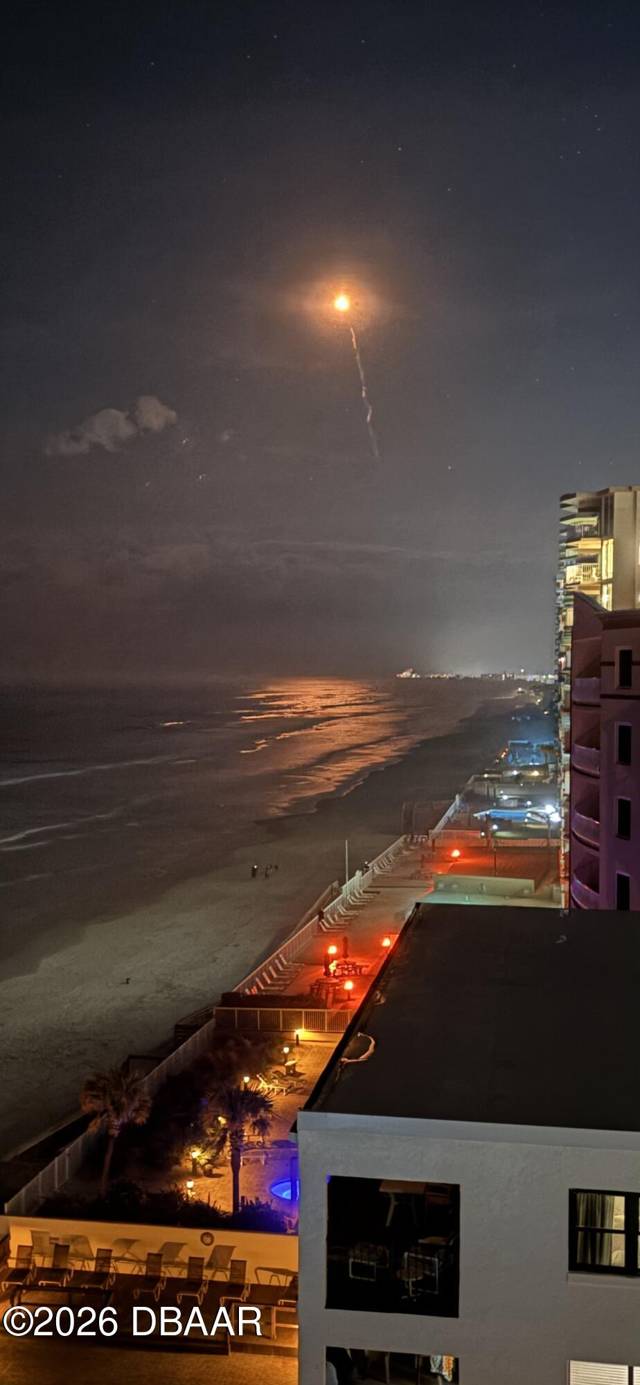 Captiva Condo
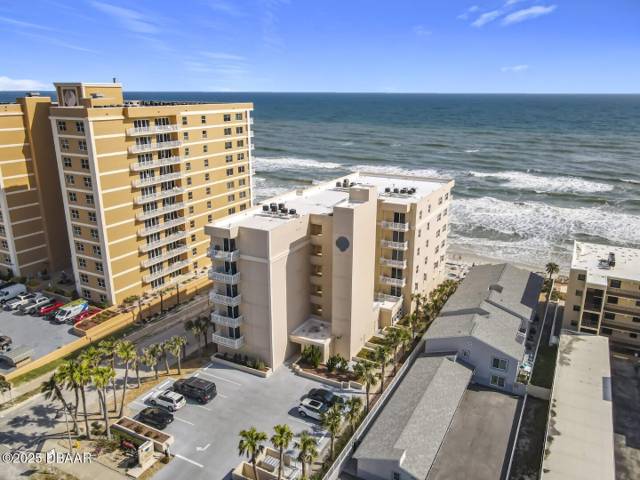 Captiva Condo
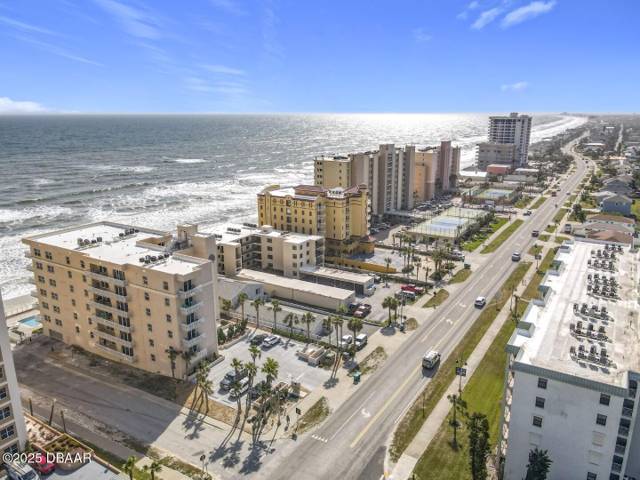 Captiva Condo
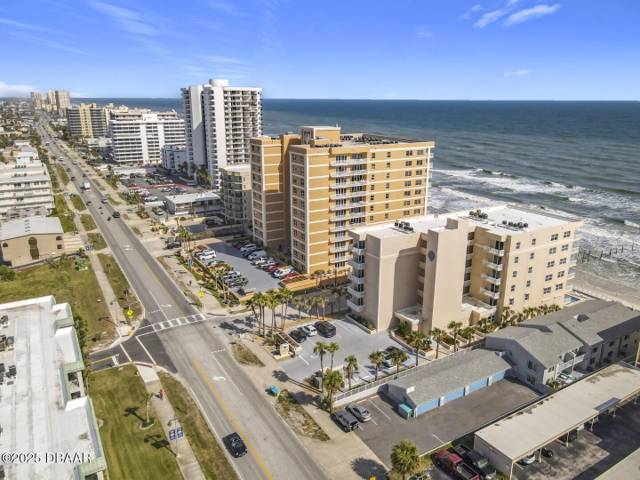 Captiva Condo
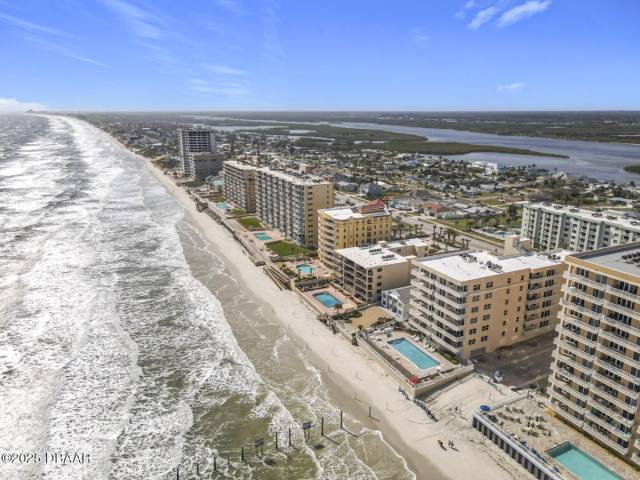 Captiva Condo
Photos from DBAMLS listings in Captiva Condo; content deemed reliable but not guaranteed.
Who Captiva Condo is best for.
Best for
- Oceanfront condo buyers who value a secured lobby and full amenity set and are comfortable with off-site property management.
- Investors or second-home buyers seeking Daytona Beach Shores exposure with modest current competition and a willingness to dig into closed comps.
- Buyers prioritizing a quiet, low-turnover building over abundant inventory and immediate selection.
Probably not for
- Shoppers who need multiple units to compare—one listing offers no choice and no pricing context without additional research.
- Buyers who expect on-site management and immediate response to maintenance requests—off-site oversight can mean slower resolution.
- Anyone looking for a pricing trend or clear market signal—a single active listing is a data point, not a pattern.
The market around Captiva Condo
Captiva Condo is too small for its own price trend, so here is the market around it.
Across Volusia County, 4,230 homes are active and 1,084 pending (20% under contract).
ZIP and county figures describe the wider market, not Captiva Condo specifically. Momentum Research analysis of MLS records.
The real cost & risk here
Before the list price, the Florida math the portals skip. These are Volusia County typicals — your exact home, flood zone, and insurance quote will vary, so verify each before you offer.
Check it for your address: look up your flood zone (FEMA) · insurance by county · true-cost calculator · Volusia County scorecard.
County typicals from Momentum’s Florida housing data (Zillow & Realtor.com aggregates, Census, FRED), updated monthly; insurance modeled. Flood zone is property-specific — always confirm via FEMA.
9% of homes for sale in ZIP 32118 are already under contract (under contract ÷ under contract + active listings) — a read on how much of the available inventory buyers have already claimed. Source: MLS data (2026-10-11).
Captiva Market Scorecard
Captiva is currently a buyer-leaning market (limited data). Limited supply, a median asking price of $749,900, and homes go under contract in about 576 days.
Typical home value in the 32118 ZIP is $292,720, about 2.4% below the Florida norm (Zillow Home Value Index).
Go deeper: ZIP market scorecard · county scorecard · true cost calculator · affordability calculator.
Live data: © 2026 Daytona Beach Area Association of REALTORS®, Inc. Refreshed twice daily. Market metrics only; these describe homes for sale and recent sales, not residents.
Homes For Sale Right Now in Captiva Condo
Live MLS inventory for Captiva Condo. Every active listing, what is under contract right now, and the last 12 months of closed sales, refreshed twice a day. Closed comps beat an algorithm's guess every time.
Active and pending Captiva Condo listings as of 2026-10-10, priced high to low. © 2026 Daytona Beach Area Association of REALTORS®, Inc. Tap any home to ask about it.
Every Home for Sale in Captiva Condo Daytona Beach Shores Right Now (1)
All 1 active and pending Captiva Condo Daytona Beach Shores listings with a detail page, newest first, refreshed twice a day from the MLS.
- 3801 S Atlantic Avenue #603 · $749,900 · 3 bd / 3 ba · listed Jul 12, 2026 · listed by Coldwell Banker Coast Realty
Life at Captiva Condo
- Cable TV · reported on 1 of 1 listings
- Elevator(s) · reported on 1 of 1 listings
- Fitness Center · reported on 1 of 1 listings
- Management - Off Site · reported on 1 of 1 listings
- Spa/Hot Tub · reported on 1 of 1 listings
- Storage · reported on 1 of 1 listings
- Trash · reported on 1 of 1 listings
- Water · reported on 1 of 1 listings
- Pool · reported on 1 of 1 listings
- Secured Lobby · reported on 1 of 1 listings
Community amenities as reported across DBAAR listings in this community; deemed reliable but not guaranteed. Verify current amenities and access with the HOA.
The Captiva Condo buying strategy.
If we were buying in Captiva Condo today, this is the order of operations we would run for our clients.
Underwrite the condition first. Price the roof, HVAC, and systems honestly before judging any list price; condition swings value here more than square footage alone.
Match the home to real comps. Recent sales of similar condition and lot, not the asking price, tell you what a home is worth.
Move deliberately, not desperately. Neither side has a decisive edge, so a well-prepared, fairly-priced offer wins without overpaying.
Line up financing and inspection early. A pre-approval and an inspection plan let you act fast and negotiate from evidence.
Keep an agent in your corner. The listing agent works for the seller; we represent you and prepare a hand-built valuation before any offer in Captiva Condo.
One listing, no pattern—context matters
Captiva Condo sits on the barrier-island strip of Daytona Beach Shores, where beachfront living comes with HOA fees that bundle cable, water, trash, and building upkeep. The building offers an elevator, fitness center, spa, pool, and a secured lobby—standard coastal tower features. Off-site management means maintenance requests and board communication flow through a third party rather than an on-site office.
With one active listing, there is no inventory depth to analyze. You cannot read supply pressure, price trends, or buyer appetite from a single data point. What sets price in a building like this is condition, floor, view, and how the one seller has positioned their ask relative to recent closed sales—none of which appear in this snapshot. If you are serious about Captiva, your agent will need to pull closed comps from the past six to twelve months to understand where the building actually trades.
The amenity list is typical for Volusia beachfront: the building has what buyers expect, nothing more. Storage and a secured entry add convenience and a layer of access control. The spa and fitness center mean you do not need to leave the property for basic wellness routines. Cable and water are included in the fee structure, which simplifies budgeting but also means you are paying for services whether you use them or not.
For a buyer, this is a wait-and-see moment. One listing does not constitute a market; it is an opportunity if the price, unit, and timing align with your search, but it offers no competitive tension and no frame of reference without comp research. For a seller, you have no in-building competition, which can be an advantage if your unit and price are right—but also no coattails to ride if buyer interest is soft.
The location and the amenities are priced into every listing in Captiva Condo. The deal is won or lost on condition, the comps, and the renovation math.
Why work with Momentum here
With one listing and no visible pricing pattern, you need an agent who will pull closed sales, assess per-square-foot trends across Daytona Beach Shores towers, and tell you whether the active ask is anchored in reality or testing the ceiling. Momentum brokers dig into condo financials, review reserve studies and special-assessment history, and walk you through what off-site management means for responsiveness and governance. We work Volusia beachfront daily; we know which buildings hold value, which boards are functional, and when to walk away. If Captiva fits, we will show you why. If it does not, we will say so before you waste time on a showing.
Captiva Condo in 15 seconds.
HOA, CDD & Fees
- HOA status not on record. Verify any dues before you offer
- Any club/amenity membership is billed separately
Confirm the current HOA dues, exactly what they cover, and any CDD bond or special assessment for a specific address before you offer.
Tools for a Captiva Condo buy.
Free calculators to pressure-test the real cost before you tour.
Selling here is won on condition and pricing to real comps, not an automated estimate. The right number comes from closed Captiva Condo sales matched to your home.
Price it to the comps and condition, not an automated estimate.
If you are thinking about selling in Captiva Condo, the right list price comes from recent comparable sales matched to your home's condition and location, not an automated estimate.
What is your Captiva Condo home worth?
Get a no-obligation home value based on real comparable sales in Captiva Condo, not an automated guess. Tell us about your home and we will personally prepare your numbers and a pricing strategy. No obligation, no spam.
See all homes for sale in Daytona Beach Shores →
Should you buy in Captiva Condo?
An honest fit check. We will tell you when it is not your community.
Data sources & freshness
| Live listings | DBAMLS, refreshed twice daily (last: October 10, 2026) |
| Under-contract shares | DBAMLS records, as of 2026-07-12 |
Verify the primary sources yourself: Florida DOR · U.S. Census · FEMA flood maps · Citizens Property Insurance.
Momentum Research figures are our own analysis of DBAMLS records; MLS data is deemed reliable but not guaranteed. Methodology: how Momentum market scores are computed. Market metrics describe homes for sale and recent sales, not residents.
More Daytona Beach Shores home searches
- All homes for sale in Daytona Beach Shores, FL
- Homes for sale in Volusia County, FL
- Daytona Beach Shores pool homes for sale
- Daytona Beach Shores waterfront homes for sale
- Gated communities in Daytona Beach Shores
- Daytona Beach Shores golf course homes
- Homes under $300K in Daytona Beach Shores
- Homes from $300K to $500K in Daytona Beach Shores
- 1 coming-soon community in Volusia County
Own a home here?
You just read the data. Now see what your home is worth.
The numbers on this page move markets in the aggregate. The number that matters to you is what a buyer pays for your address. Momentum sells for 1.25% above the DBAMLS member average and 8 days faster, and we’ll price yours against live local comps.
Looking to buy here? Search homes for sale →
What’s your home worth in your area?
A real valuation with real comps from a local listing agent, not an instant algorithm. Response within one business day.
See how Captiva Condo fits the bigger picture — live prices, inventory, and Momentum Scores:
Common questions about Captiva
Where is Captiva?
Captiva is a community in Daytona Beach Shores, Volusia County, Florida.
Are there homes for sale in Captiva right now?
Yes — 1 active and 0 pending listings as of the last feed refresh (twice daily). They are listed on this page.
Does Captiva have an HOA or CDD?
No HOA is on record for Captiva in our data. Verify dues, what they cover, and any special assessment for a specific address before you offer.
Answers are generated from county property records, MLS feeds and the figures on this page, as of the page date; deemed reliable but not guaranteed.
More Daytona Beach Shores & Volusia County / Daytona Beach Area guides
Compare before you commit - every guide covers pricing, HOA/CDD, insurance posture, and fit. Browse all of Volusia County / Daytona Beach Area or the full Neighborhood Finder.
Nearby Communities
Explore more neighborhoods near Captiva with Momentum Realty’s local guides.