
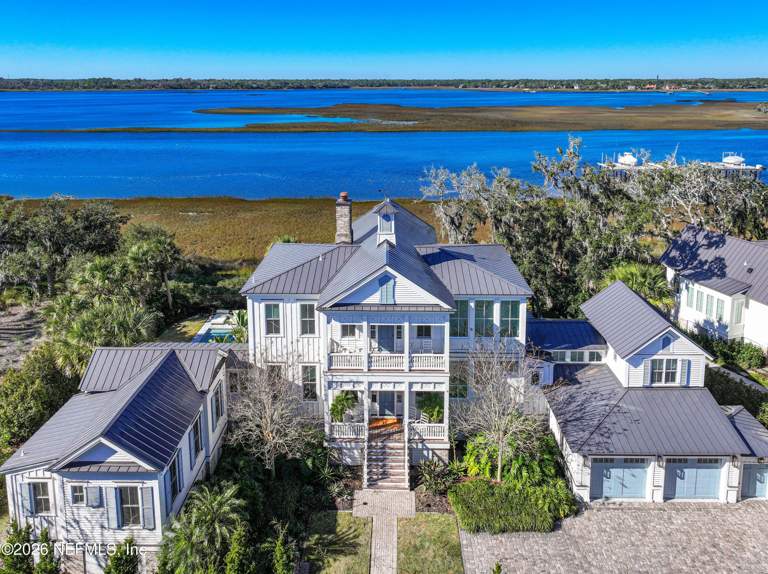
Crane Island
Homes for Sale in Amelia Island, FL
True comps, carrying-cost math, and listings before the portals.
Photo courtesy of ONE SOTHEBY'S INTERNATIONAL REALTY · via realMLS
As of October 2026, Crane Island in Amelia Island, FL has 3 homes for sale. Homes listed or recently sold were built 2019–2024; 3 of 3 report an HOA (median $612/mo); 3 of the 3 geocoded homes sit in a FEMA special flood hazard zone (median elevation 6 ft).
Homes For Sale Right Now in Crane Island
Live MLS inventory for Crane Island. Every active listing, what is under contract right now, and the last 12 months of closed sales, refreshed twice a day. Closed comps beat an algorithm's guess every time.
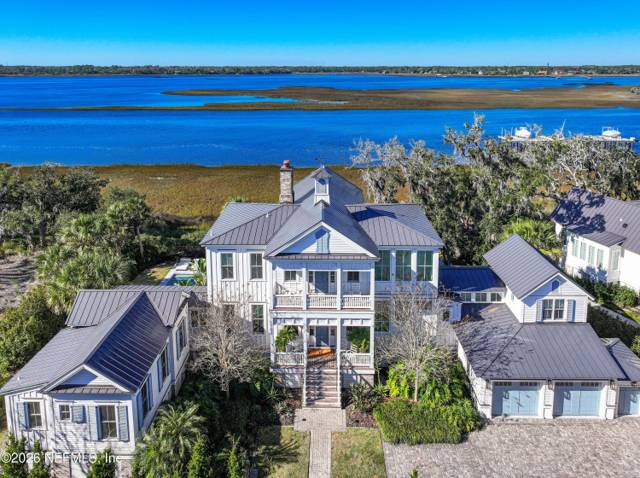 Active · 252 daysTop listing
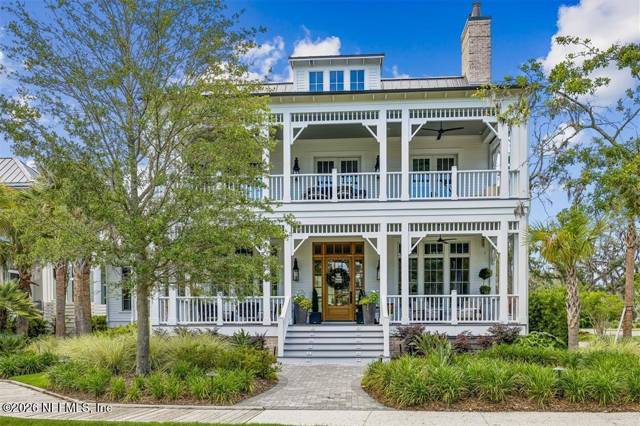 Active · 140 days
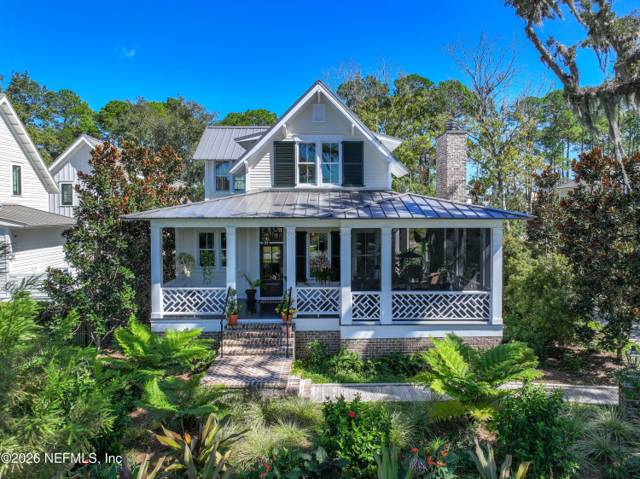 Active · 275 days
Active and pending Crane Island listings as of 2026-10-19, priced high to low. Source: Data provided by realMLS. Tap any home to ask about it.

Crane Island is defined less by any single floor plan than by what surrounds the homes: gated access, full-time on-site management, a clubhouse, fitness center, pool, spa/hot tub, jogging path, park, and direct boat dock and boat slip access. That is a resort-scale amenity stack for a Nassau County address, and it is the kind of infrastructure that typically sets this community apart from homes without dock or marina access nearby.
Active inventory is thin right now — 4 listings on the market — which is not unusual for a smaller, amenity-defined enclave like this one, but it does change the playbook. A buyer serious about Crane Island should expect to move deliberately once the right listing surfaces rather than shop a wide field of comparables, and a seller here is pricing against a much shorter list of direct competitors than in a high-volume subdivision.
Figures in this note are as of July 15, 2026. The live market numbers elsewhere on this page update nightly and are newer.
The 60-Second Overview
Crane Island is a gated community in Amelia Island (Nassau County) built around a clubhouse, fitness center, pool, spa/hot tub, jogging path, park, and boat dock and boat slip access — a full-service, water-oriented amenity package backed by full-time management rather than a conventional subdivision setup.
realMLS (Northeast Florida) sales records identify 7 homes in Crane Island that have changed hands since 2021, built between 2019 and 2024 (median 2022), with a median living area of about 3,610 sq ft and a typical 4-bedroom, 4.5-bath layout; 100% are single-family homes. Source: realMLS (Northeast Florida) closed-sale history compiled by Momentum Research; counts reflect homes with a recorded MLS sale, not every home in the community.
Pre-construction details are compiled from public records, builder announcements and builder listings, and are subject to change without notice; figures are deemed reliable but not guaranteed. Momentum Research figures are our own analysis. This page describes homes, pricing and community attributes, not residents.
The setting & the homes.
Aerial and on-site photos of Crane Island. Swipe to explore the community.
Swipe or use the arrows → tap any photo to enlarge
Crane Island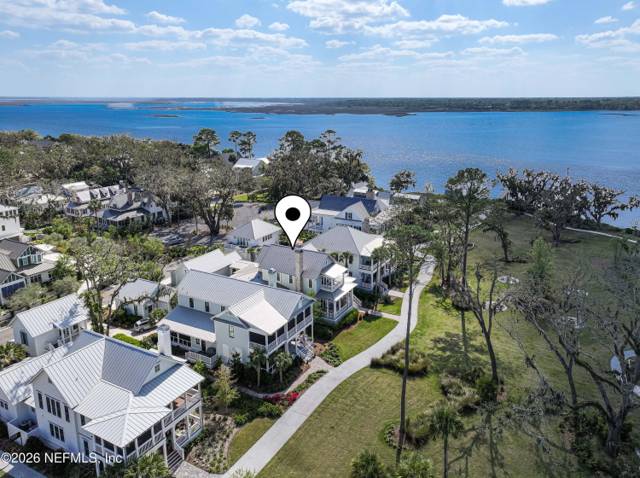 Crane Island
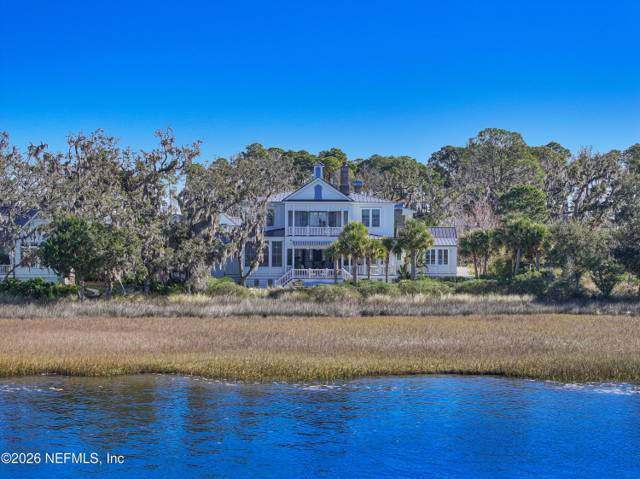 Crane Island
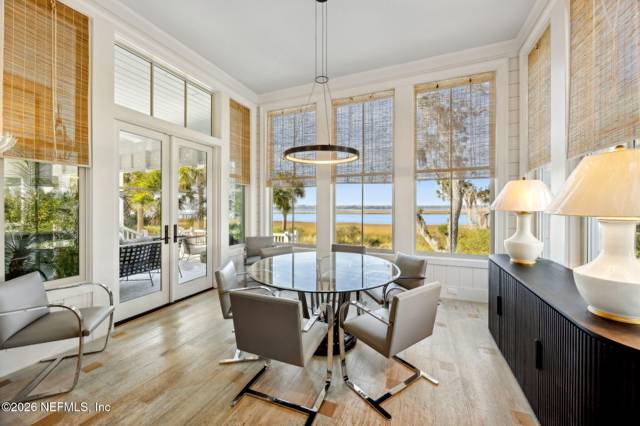 Crane Island
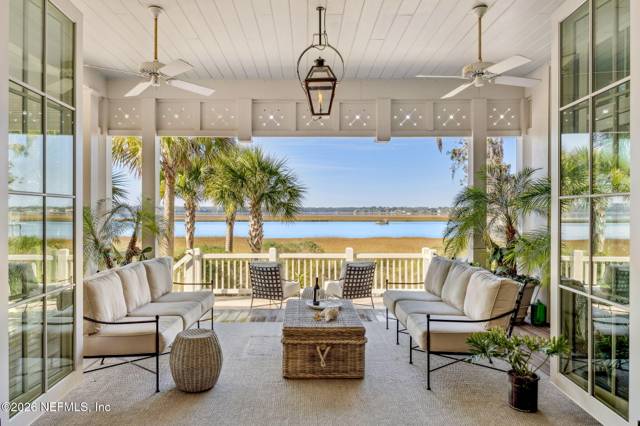 Crane Island
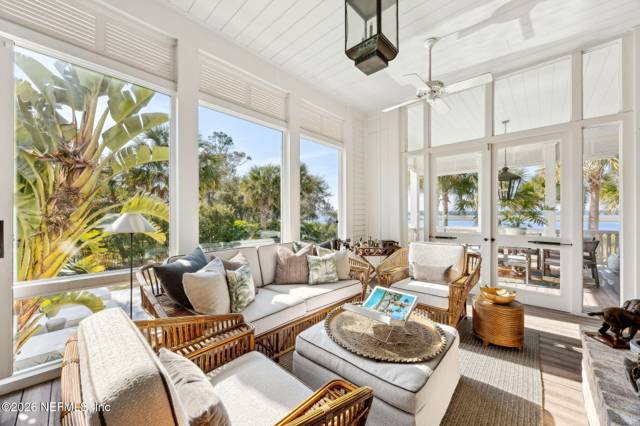 Crane Island
Photos from realMLS listings in Crane Island; content deemed reliable but not guaranteed.
Who Crane Island is best for.
Best for
- Buyers who want direct boat dock and boat slip access and are willing to wait for the right listing
- Buyers who want a gated, professionally managed community with a full amenity package
- Buyers focused on lifestyle amenities — fitness center, spa, clubhouse, park — over maximizing square footage
Probably not for
- Buyers who need a wide field of active listings to compare before committing
- Buyers who are not interested in paying for gated access, dock/slip privileges, and full-time management
- Buyers on a fast, fixed closing timeline shopping a low-inventory pocket community
The market around Crane Island
Crane Island is too small for its own price trend, so here is the market around it.
In ZIP 32034, 342 homes are on the market and 22% are under contract — a steady corner of Amelia Island.
Across Nassau County, 587 homes are active and 179 pending (23% under contract).
In ZIP 32034 (Amelia Island), 1,033 homes closed in the last 12 months at a median of $441K ($200/sq ft), up 0.4% year over year, with a median 51 days on market. Right now 226 active and 76 pending listings put supply at about 4.8 months — a balanced market. See the live ZIP 32034 housing market and the Nassau County market.
ZIP and county figures describe the wider market, not Crane Island specifically. Momentum Research analysis of MLS records.
Crane Island on the map.
Every active, pending, and recently sold home, plotted. Toggle the layers and tap a home for the details.
Listing locations from realMLS. Map data © OpenStreetMap contributors.
Life at Crane Island

- Clubhouse · reported on 3 of 3 listings
- Fitness Center · reported on 3 of 3 listings
- Gated · reported on 3 of 3 listings
- Pool · reported on 3 of 3 listings
- Jogging Path · reported on 2 of 3 listings
- Spa/Hot Tub · reported on 1 of 3 listings
- Management - Full Time · reported on 1 of 3 listings
- Boat Dock · reported on 1 of 3 listings
- Barbecue · reported on 1 of 3 listings
- Boat Slip · reported on 1 of 3 listings
- Park · reported on 1 of 3 listings
Community amenities as reported across realMLS listings in this community; deemed reliable but not guaranteed. Verify current amenities and access with the HOA.
How far is everything?
Everyday stops around Crane Island are close: the nearest health is about 7 minutes away.
- VITAS Healthcare · Health7 min
- Holy Grounds Coffee House · Coffee8 min
- Shucker's Oyster Bar and Grill · Dining9 min
- Harris Teeter · Groceries12 min
- Palmetto Walk Shopping Village · Shopping12 min
- Peters Point Beachfront Park · Parks12 min
Approximate drive times via Mapbox Search + Directions, 2026-07-03. Verify for a specific address.
Nearby Communities
Explore more neighborhoods near Crane Island with Momentum Realty’s local guides.
Schools
- Nassau County Public Schools
- Verify the zoned schools by address
- Magnet and choice options may be available
- Emma Love Hardee ElementaryFLDOE grade A · Elementary (verify zoning)
- Fernandina Beach Middle SchoolFLDOE grade A · 6-8 (verify zoning)
- Fernandina Beach High SchoolFLDOE grade A · 9-12 (verify zoning)
Grades are official Florida Department of Education school grades for 2025-26. Assignments are reported as of the 2025-26 year and can change; always confirm with Nassau County Public Schools for a specific address.
Buying with schools in mind? We can confirm the exact zoned schools for any Crane Island address.
Recent Developments in Crane Island Fernandina Beach
Development, infrastructure, retail, and school activity affecting Crane Island Fernandina Beach, tracked by our team and summarized from public reporting and official sources, with links to the original coverage. Last updated October 2026.
- September 2026Development
Nassau review committee considers up to 350 lots in Wildlight southern planning area
At its Sept. 1 meeting the Development Review Committee reviewed a residential plan for up to 350 single-family lots south of State Road 200 and west of Liberty Cove, in two phases. The committee also reviewed a 167-lot Liberty Cove Phase 2 plat and a Wild Acres Trail extension to a future county park entrance. A comprehensive plan amendment was expected before commissioners around Sept. 14.
What it may mean for the marketAdded lots near the SR 200 corridor increase future housing supply in Yulee and Fernandina Beach commuting areas. The site is about 6 miles northwest of Crane Island Fernandina Beach.
Source: Nassau NewsLine - August 2026Builder Activity
Century Communities adds Hidden Lake and Mills Bridge communities in Nassau County
Century closed on Hidden Lake near Amelia Walk, a planned 275-unit community on 80-foot lots, its second self-developed community in Nassau County. It also plans Mills Bridge, a 144-home community on 40 and 50 foot lots, with sales projected to begin in Q1 2027. Its 247-unit Concourse Crossing in Fernandina Beach sold its last home in Q1 2026.
What it may mean for the marketNew-home inventory in the Fernandina Beach area is increasing, with different lot sizes serving different buyer budgets. The site is about 1 mile west of Crane Island Fernandina Beach.
Source: Nassau NewsLine - July 2026Builder Activity
Wildlight subdivision advances in Yulee as the master-planned community expands
Rayonier's Wildlight master-planned community continued adding residential phases in Yulee in mid-2026, part of a long-range plan that pairs new housing with its commerce park and town center near Interstate 95.
What it may mean for the marketOngoing residential expansion at a large master-planned community adds new supply and amenities in the Yulee area, which can influence pricing and competition for nearby communities. The site is about 13 miles west of Crane Island Fernandina Beach.
Source: Jax Daily Record - March 2026Development
First Wildlight Commerce Park speculative building opens in Yulee
The first speculative building at Wildlight Commerce Park opened in March 2026, adding move-in-ready industrial and flex space to Rayonier's Wildlight community in Nassau County near Interstate 95 and A1A.
What it may mean for the marketNew employment and commerce space at Wildlight strengthens the live-and-work profile of the Interstate 95 and A1A area in Nassau County, a factor that can support nearby residential demand. The site is about 13 miles west of Crane Island Fernandina Beach.
Source: Jax Daily Record
Summaries reflect public reporting and official sources linked above as of the dates shown. Project details, timelines, and approvals can change. Commentary on potential market effects is general observation, not investment advice or a prediction for any specific property. For the freshest items across the whole region, see This Week in Northeast Florida.
The Crane Island buying strategy.
If we were buying in Crane Island today, this is the order of operations we would run for our clients.
Underwrite the condition first. Price the roof, HVAC, and systems honestly before judging any list price; condition swings value here more than square footage alone.
Match the home to real comps. Recent sales of similar condition and lot, not the asking price, tell you what a home is worth.
Move deliberately, not desperately. Neither side has a decisive edge, so a well-prepared, fairly-priced offer wins without overpaying.
Line up financing and inspection early. A pre-approval and an inspection plan let you act fast and negotiate from evidence.
Keep an agent in your corner. The listing agent works for the seller; we represent you and prepare a hand-built valuation before any offer in Crane Island.
The amenity package is the story
Break the amenities down and a pattern emerges: gated entry plus full-time management points to an operationally maintained community, not a self-managed HOA. Boat dock and boat slip access, paired with a park and jogging path, point to a layout organized around the water and outdoor circulation rather than a purely residential grid. Clubhouse, fitness center, spa/hot tub, and pool round out a full resort-club stack on top of that. For a buyer, that combination is the actual product being purchased here as much as any individual home.
With only 4 active listings, the practical implication is inventory discipline. Buyers should have financing and an agent relationship lined up before a listing hits, since there is little cushion of similar options to fall back on. Sellers, by the same logic, are working with less direct on-market competition than the broader Amelia Island market would suggest — which is worth factoring into how a listing is positioned and priced.
The location and the amenities are priced into every listing in Crane Island. The deal is won or lost on condition, the comps, and the renovation math.
Why work with Momentum here
A community this amenity-heavy and this thin on inventory rewards local, current knowledge over a generic search — knowing when something is about to list, understanding how gated access, dock, and slip privileges actually work in practice, and verifying current amenities and access directly with the HOA rather than relying on a listing sheet. That is where a Nassau County-focused broker earns their keep on an address like Crane Island.
Crane Island in 15 seconds.
What it really costs to own in Crane Island
The parts of the monthly number a mortgage calculator leaves out, from the tax roll, the MLS, Citizens and FEMA. Property facts only.
| Property tax | At today's median asking price of $4,900,000, the first-year bill with homestead is about $64,500/yr (Nassau County total millage 13.2757 mills, FY2025-26, Nassau County Property Appraiser, FY2025-26 adopted budget). |
|---|---|
| Home and flood insurance | The average Citizens Property Insurance premium in Nassau County is $1,159/yr (389 policies, Citizens detail by county, April 2026); private-market quotes depend on roof age, wind mitigation and construction. |
Email me new listings in Crane Island
One e-mail a day, only when a home lists here, with price, beds, baths and a link to every listing. Straight from the MLS feed; no account needed.
Ask an agent about Crane Island
Have a question about the homes, fees, rules or commute here? A Momentum agent who works Crane Island will answer, and the answer is published on this page for the next buyer.
HOA, CDD & Fees
- No CDD
- HOA status not on record. Verify any dues before you offer
Confirm the current HOA dues, exactly what they cover, and any CDD bond or special assessment for a specific address before you offer.
Page states no CDD.
Tools for a Crane Island buy.
Free calculators to pressure-test the real cost before you tour.
Selling here is won on condition and pricing to real comps, not an automated estimate. The right number comes from closed Crane Island sales matched to your home.
Price it to the comps and condition, not an automated estimate.
If you are thinking about selling in Crane Island, the right list price comes from recent comparable sales matched to your home's condition and location, not an automated estimate.
What is your Crane Island home worth?
Get a no-obligation home value based on real comparable sales in Crane Island, not an automated guess. Tell us about your home and we will personally prepare your numbers and a pricing strategy. No obligation, no spam.
See homes for sale in Crane Island on the map →
| Location | Amelia Island, Nassau County, FL · ZIP 32034 |
|---|---|
| Homes in the community | 13 (FL DOR 2025 assessment roll) |
| Years built | 2020–2024 (median 2023) |
| Typical living area | 4,288 sq ft (median) |
| Amenities listed by sellers | Clubhouse, Fitness Center, Gated, Barbecue, Boat Dock, Boat Slip |
| For sale right now | 3 active, 0 pending · median asking $4,900,000 |
| Owner-occupied (homestead) share | 48% |
| Zoned public schools | Emma Love Hardee Elementary (A, FLDOE 2025-26); Fernandina Beach Middle School (A, FLDOE 2025-26); Fernandina Beach High School (A, FLDOE 2025-26) |
Data as of October 20, 2026. Data provided by realMLS; housing-stock figures from Florida Department of Revenue public records. Market figures describe homes, not residents. Cite as: Momentum Realty, “Crane Island key facts,” movewithmomentum.com/neighborhoods/crane-island-fernandina-beach, data as of October 20, 2026.
Housing distress & ownership in Crane Island, Amelia Island
Who owns here, how much is not owner-occupied, and how much for-sale inventory is under distress.
Source: Momentum Realty Research. Ownership & parcels from the FL DOR 2025 tax roll; distress from MLS active-listing status/remarks; price from MLS closed sales. Source: Data provided by realMLS. Deemed reliable but not guaranteed.
Just listed in Crane Island
The newest homes for sale in Crane Island right now, newest first. Each link opens the full listing with every photo, the price history and a tour request.
- 52 Wallan Court $4,900,000 · 5 bd · 4.5 ba · 4,693 sq ft · 141 days on market Courtesy of BERKSHIRE HATHAWAY HOME SERVICES HEYMANN WILLIAMS
- 50 Cord Grass Court $7,950,000 · 4 bd · 5.5 ba · 4,533 sq ft · 253 days on market Courtesy of ONE SOTHEBY'S INTERNATIONAL REALTY
- 101 Broadbent Way $2,550,000 · 4 bd · 3.5 ba · 2,838 sq ft · 276 days on market Courtesy of ONE SOTHEBY'S INTERNATIONAL REALTY
Checked against the MLS Oct 20, 2026. All new listings in this market.
Every Home for Sale in Crane Island Fernandina Beach Right Now (3)
All 3 active and pending Crane Island Fernandina Beach listings with a detail page, newest first, refreshed twice a day from the MLS.
- 52 Wallan Court · $4,900,000 · 5 bd / 4.5 ba · listed Aug 8, 2026 · listed by Berkshire Hathaway Home Services Heymann Williams
- 50 Cord Grass Court · $7,950,000 · 4 bd / 5.5 ba · listed Jul 22, 2026 · listed by One Sotheby'S International Realty
- 101 Broadbent Way · $2,550,000 · 4 bd / 3.5 ba · listed Jul 22, 2026 · listed by One Sotheby'S International Realty
More Amelia Island home searches
- Homes for sale in Nassau County, FL
- ZIP 32034 housing scorecard
- 1 coming-soon community in Nassau County
Amelia Island guides & data
- Property taxes (Nassau County)
- Homestead exemption (Nassau County)
- New construction (Nassau County)
- Home builders (Nassau County)
Florida buyer guides
23% of homes for sale in ZIP 32034 are already under contract (under contract ÷ under contract + active listings) — a read on how much of the available inventory buyers have already claimed. Source: MLS data (2026-10-19).
Frequently Asked Questions
How many homes are in Crane Island?
What share of Crane Island is owner-occupied?
When were the homes in Crane Island built?
What schools serve Crane Island?
Who is the best real estate agent for Crane Island?
How do I find a top Amelia Island real estate agent who knows Crane Island?
Can Momentum Realty connect me with an agent for Crane Island?
Where is Crane Island, and what county is it in?
How far is Crane Island from downtown Jacksonville and the beach?
Should you buy in Crane Island?
An honest fit check. We will tell you when it is not your community.
Data sources & freshness
| Live listings | realMLS, refreshed twice daily (last: October 19, 2026) |
| Housing stock & ownership | Florida DOR assessment roll (street-list match (1 streets, ZIP 32034)) |
| Under-contract shares | realMLS records, as of 2026-10-18 |
| Schools | 2025-26 district assignments + FLDOE school grades; verify with the district |
| Historical depth | Closed-sale records back to 2021 (3 transactions analyzed) |
Verify the primary sources yourself: Florida DOR · U.S. Census · FEMA flood maps · Citizens Property Insurance.
Momentum Research figures are our own analysis of realMLS records; MLS data is deemed reliable but not guaranteed. Methodology: how Momentum market scores are computed. Market metrics describe homes for sale and recent sales, not residents.
Own a home here?
You just read the data. Now see what your home is worth.
The numbers on this page move markets in the aggregate. The number that matters to you is what a buyer pays for your address. Momentum sells for 1.25% above the realMLS member average and 8 days faster, and we’ll price yours against live local comps.
Looking to buy here? Search homes for sale →
What’s your home worth in your area?
A real valuation with real comps from a local listing agent, not an instant algorithm. Response within one business day.
See how Crane Island fits the bigger picture — live prices, inventory, and Momentum Scores:
More on Crane Island
- Home values · What homes in Crane Island actually sell for