

Del Webb Etown
Homes for Sale in Jacksonville, FL
All 4,477 homes for sale in Jacksonville, FL · median $299,999 · 298 homes for sale in 32256 · Duval County homes for sale
True comps, carrying-cost math, and listings before the portals.
Market Heat
As of October 2026, Del Webb Etown in Jacksonville, FL has 9 homes for sale and 1 pending, asking from $367,500 to $839,000 (median $498,000). Over the 12 months ending 2026-10-20, 36 recorded sales closed at a median of $484,000, $262 per square foot, a median 56 days on market, sellers accepting 95% of original asking (+13% versus the prior year). Homes listed or recently sold were built 2020–2024; 22 of 22 report an HOA (median $315/mo); none of the 22 geocoded homes sit in a FEMA special flood hazard zone (median elevation 43 ft). At the median price and Duval County's FY2025-26 rate of 17.86 mills, annual property tax runs about $8,650 ($7,910 with the full homestead exemption).
Part of the eTown master-planned community in Jacksonville, FL — see all eTown homes for sale (32 listings across 4 villages and sections in the MLS).
Last 30 days in Del Webb Etown: 6 new listings (median asking $525,000), 1 under contract right now, 5 closed sales (median $475,000). As of October 20, 2026, realMLS.
Homes For Sale Right Now in Del Webb Etown
Live MLS inventory for Del Webb Etown. Every active listing, what is under contract right now, and the last 12 months of closed sales, refreshed twice a day. Closed comps beat an algorithm's guess every time.
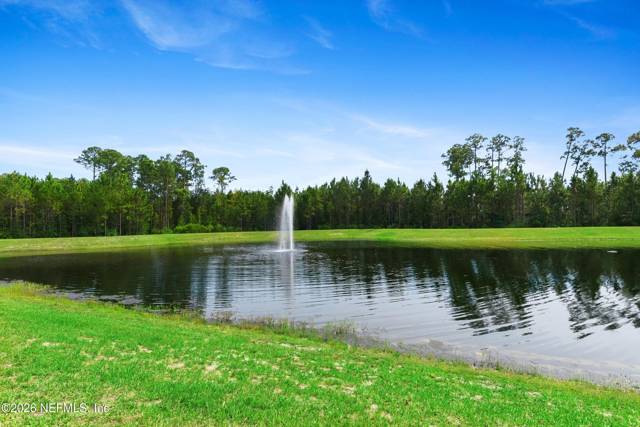 Active · 19 daysTop listing
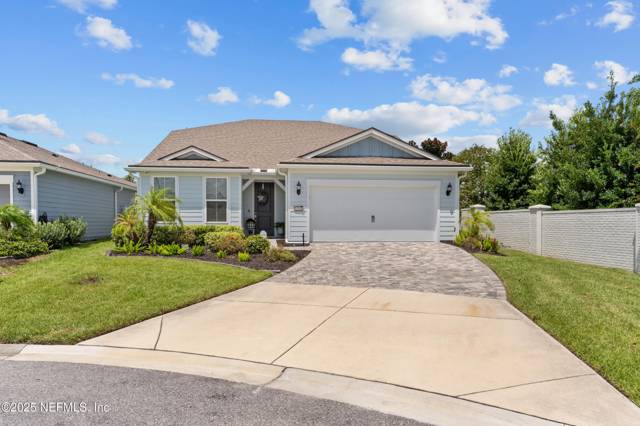 Active · 14 days
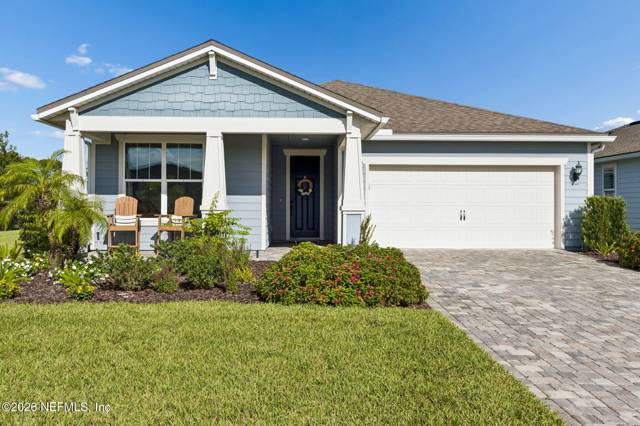 Active · 12 days
 Active · 46 days
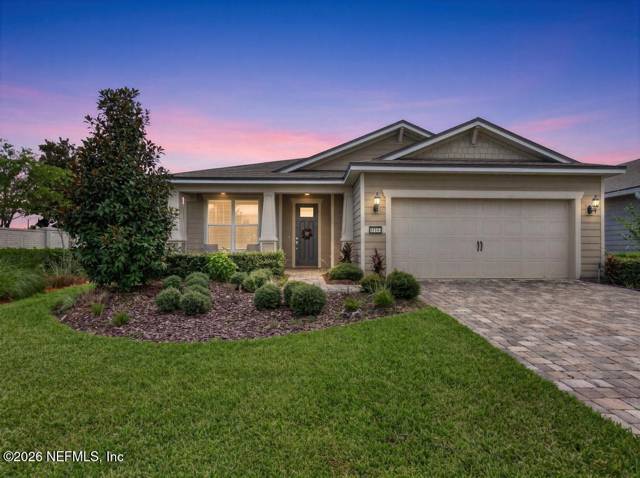 Active · 33 days
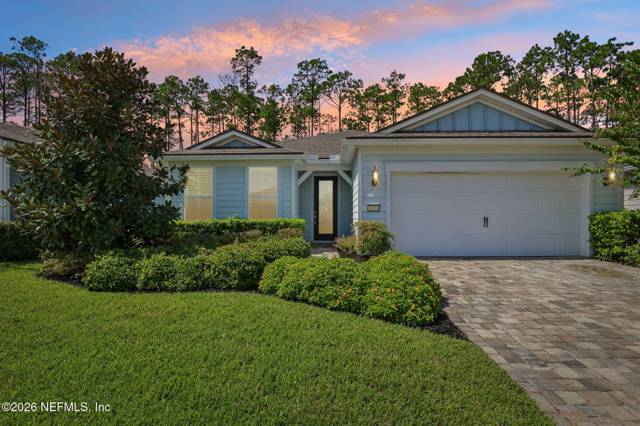 Active · 12 days
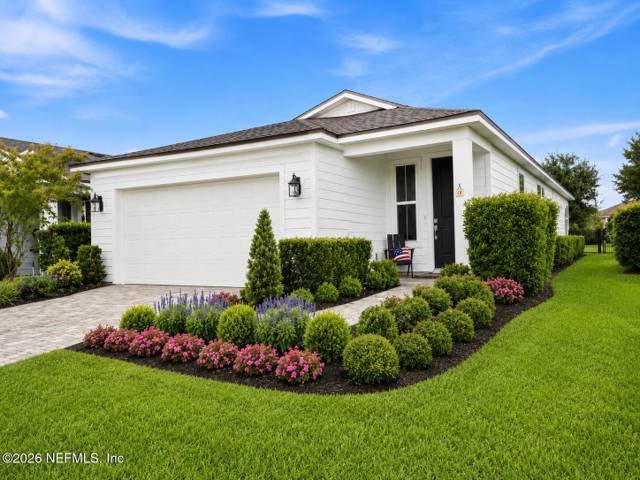 Active · 53 days
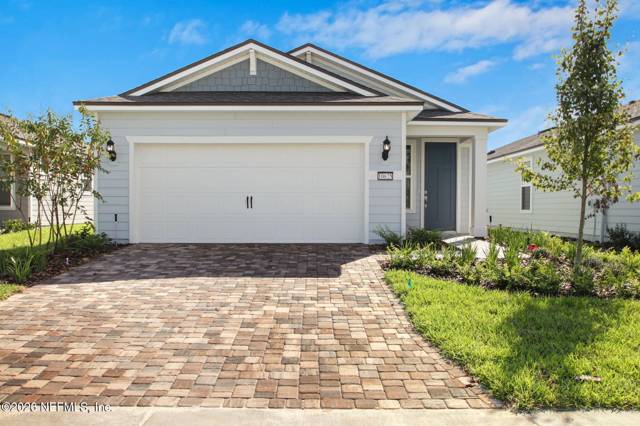 Active · 22 days
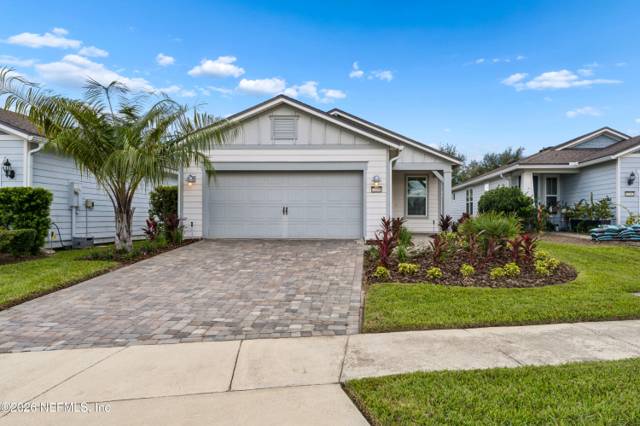 Active · 8 days
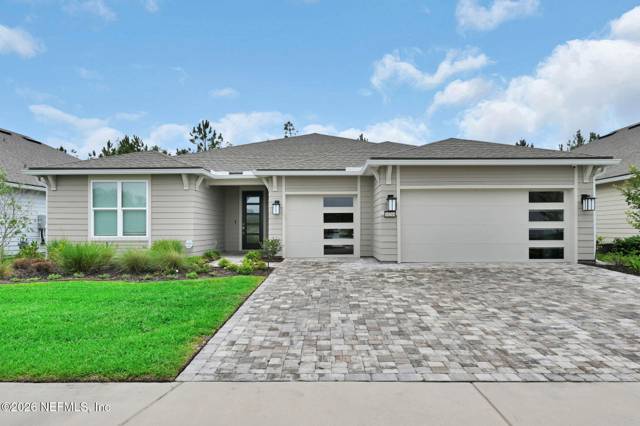 Pending · 8 days
Active and pending Del Webb Etown listings as of 2026-10-20, priced high to low. Source: Data provided by realMLS. Tap any home to ask about it.

Del Webb Etown's pricing is set almost entirely by the homes themselves. Every home was built between 2019 and 2024, with a median year built of 2022, so this is one of the newest inventories you'll find in Duval County, and median living space runs 2,218 square feet. At a median of $474,000 and $259.90 per square foot, buyers are paying for recent construction and a long amenity list — gated entry, a clubhouse, fitness center, pool, pickleball and tennis courts, a dog park, spa, jogging path, and full-time on-site management — rather than for lot size or an established-neighborhood premium.
The supply picture reads seller-leaning on paper: 2.2 months of supply and just 6 active listings against 513 homes. But the trend underneath it is more balanced — median days on market sits at 66, and price is down 4.6% year over year on 32 closings in the recent window. For sellers, realistic pricing at listing still moves the home; overpricing will sit. For buyers, thin active inventory means fewer homes to choose from at any given moment, but the price trend and DOM leave some room to negotiate rather than compete.
Figures in this note are as of July 15, 2026. The live market numbers elsewhere on this page update nightly and are newer.
Del Webb Etown right now
🟢 Buyer-leaning market. 9.0 months of supply and 10% of the inventory already under contract give buyers above-average negotiating leverage.Why it matters: months of supply is how long today's inventory would last at today's sales pace; under-contract share is the portion of homes for sale that already have a buyer.Momentum Research analysis of realMLS records, as of October 20, 2026. Confidence: Very High (10 active and pending listings, 36 closed sales in 12 months).
🟢 Still climbing. The trailing-12-month median ($484K) is up 12.6% from the prior 12 months ($430K).Momentum Research, record-level realMLS closed sales, 12-month windows ending October 20. Confidence: Very High (36 and 31 sales in the two windows).
Jump to: Price history & scorecard · Homes for sale · Schools · FAQ
· Updated October 20, 2026 · Live data: realMLS, refreshed twice daily · MLS facts carry their source; interpretation lines are Momentum Research · Data sources & freshness
The 60-Second Overview
Del Webb Etown market snapshot (as of October 20, 2026): the median sale price is about $484K ($262 per sq ft over the trailing 12 months of closed sales), a median 57 days on market for closed sales, and 9.0 months of supply, a buyer-leaning market. The trailing-12-month median is up 13% from the prior 12 months, computed from record-level realMLS closed sales (36 closings in the current window).
In ZIP 32256 (Jacksonville), 966 homes closed in the last 12 months at a median of $398K ($215/sq ft), down 5.9% year over year, with a median 57 days on market. Right now 217 active and 71 pending listings put supply at about 4.5 months — a balanced market. See the live ZIP 32256 housing market and the Duval County market.
County records show 94 qualified sales in Del Webb Etown across 2024–2025 (82 in 2024, 12 in 2025), median $499,000 — the last recorded sale per parcel on the Florida DOR 2025 assessment roll, independent of the MLS.
Flood zones in Del Webb Etown: of 16 listing addresses checked against the FEMA National Flood Hazard Layer, 100% sit outside the FEMA Special Flood Hazard Area (Zone X). Individual parcels vary - verify any specific address at msc.fema.gov. See flood zones by neighborhood in Jacksonville.
Del Webb Etown is a community of 433 homes in Jacksonville, Duval County, built between 2019 and 2024 (median 2022), with a median living area of about 2,226 square feet. 86% of parcels are homesteaded, the owner-occupancy proxy in the Florida DOR assessment roll (2025 roll, public records).
Del Webb Etown is a gated Jacksonville community built out entirely since 2019, pairing new construction with a resort-style amenity package — clubhouse, fitness center, pool, pickleball and tennis courts, spa/hot tub, and full-time on-site management — bundled under one HOA.
The setting & the homes.
Aerial and on-site photos of Del Webb Etown. Swipe to explore the community.
Swipe or use the arrows → tap any photo to enlarge
 Del Webb Etown
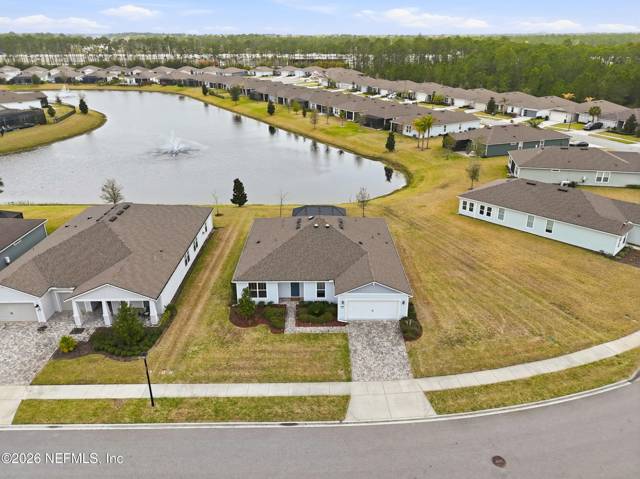 Del Webb Etown
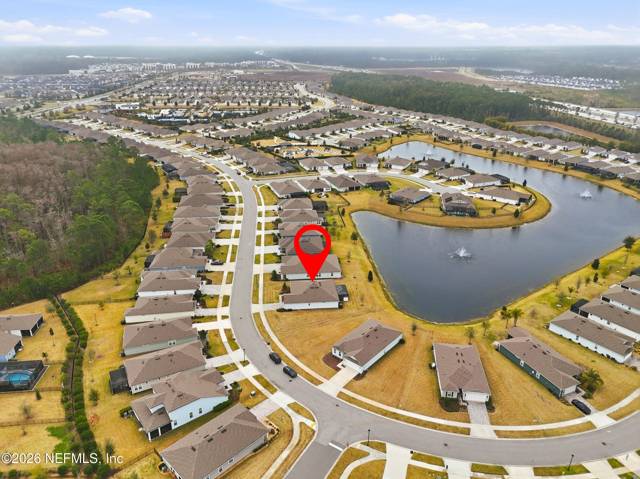 Del Webb Etown
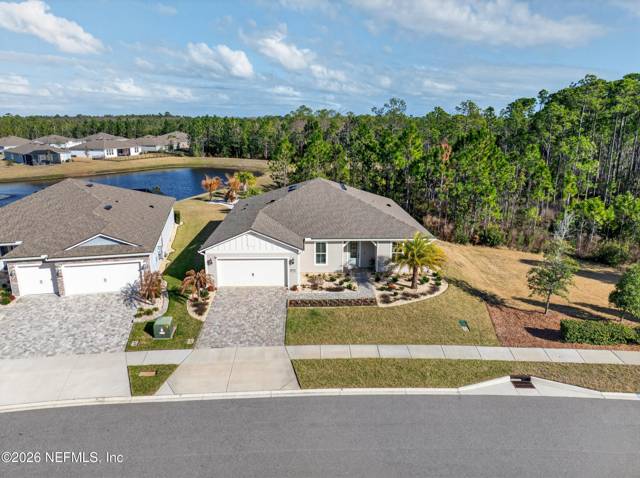 Del Webb Etown
 Del Webb Etown
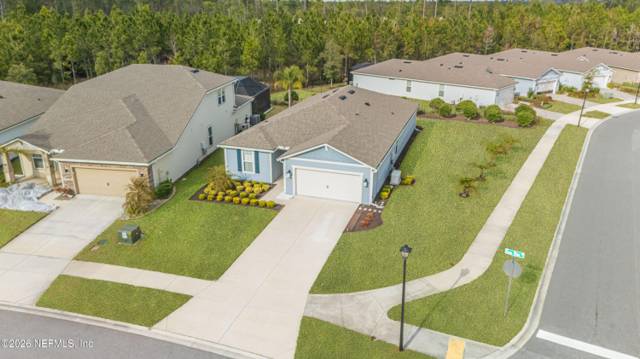 Del Webb Etown
Photos from realMLS listings in Del Webb Etown; content deemed reliable but not guaranteed.
Who Del Webb Etown is best for.
Best for
- Buyers who want a move-in-ready home built within the last several years and don't want to take on renovation.
- Buyers who prioritize a full amenity package — clubhouse, fitness center, pool, pickleball, and tennis — bundled under one HOA.
- Buyers comfortable acting quickly on a home once it lists, given how few are active at any one time.
Probably not for
- Buyers who need a wide price range to shop, since pricing here clusters tightly around the $474,000 median.
- Buyers seeking an established neighborhood with a mix of home vintages rather than a uniformly new build-out.
- Buyers who want to minimize HOA-bundled costs, since gated security, maintenance grounds, and full-time management are all built into ownership here.
Price History: What Homes Here Have Actually Sold For
Median sale price over the trailing 12 months ending October 20 of each year, from record-level realMLS closed sales. Same methodology as every appreciation figure on this page: the 2026 point ($484K) IS the median in the snapshot above, and the move from 2025 ($430K) IS the +12.6% one-year change.
Windows contain 3 to 48 sales each (36 in the current window); every figure carries its sample size. Source: Data provided by realMLS. Deemed reliable but not guaranteed.
10% of homes for sale in Del Webb Etown are already under contract (under contract ÷ under contract + active listings) — a read on how much of the available inventory buyers have already claimed. Source: MLS data (2026-10-20).
Del Webb eTown Market Scorecard
Del Webb eTown is currently a seller's market. About 3.0 months of supply, a median asking price of $498,000, and homes go under contract in about 17 days.
Typical home value in the 32256 ZIP is $308,568, about 14.7% below the Florida norm (Zillow Home Value Index).
Go deeper: ZIP market scorecard · county scorecard · true cost calculator · affordability calculator.
Live data: realMLS, refreshed twice daily. Typical value: Zillow Research. Market metrics only; these describe homes for sale and recent sales, not residents.
Del Webb Etown on the map.
Every active, pending, and recently sold home, plotted. Toggle the layers and tap a home for the details.
Listing locations from realMLS. Map data © OpenStreetMap contributors.
Life at Del Webb Etown
- Gated · reported on 24 of 25 listings
- Clubhouse · reported on 23 of 25 listings
- Fitness Center · reported on 23 of 25 listings
- Pool · reported on 23 of 25 listings
- Pickleball · reported on 21 of 25 listings
- Tennis Court(s) · reported on 18 of 25 listings
- Security Gate · reported on 16 of 25 listings
- Dog Park · reported on 14 of 25 listings
- Spa/Hot Tub · reported on 13 of 25 listings
- Jogging Path · reported on 12 of 25 listings
- Maintenance Grounds · reported on 9 of 25 listings
- Security · reported on 7 of 25 listings
Community amenities as reported across realMLS listings in this community; deemed reliable but not guaranteed. Verify current amenities and access with the HOA.
How far is everything?
Everyday stops around Del Webb Etown are close: the nearest coffee is about 5 minutes away.
- The Loft · Coffee5 min
- McDonald's · Dining6 min
- Urgent care · Health8 min
- Fort Family Park · Parks9 min
- Publix · Groceries10 min
- Reedy Branch Commons Shopping Center · Shopping10 min
Approximate drive times via Mapbox Search + Directions, 2026-07-03. Verify for a specific address.
Nearby Communities
Explore more neighborhoods near Del Webb Etown with Momentum Realty’s local guides.
Schools
- Duval County Public Schools
- Verify the zoned schools by address
- Magnet and choice options may be available
- Twin Lakes Academy ElementaryFLDOE grade C · Public PreK-5
- Twin Lakes Academy MiddleFLDOE grade B · Public 6-8
- Atlantic Coast High SchoolFLDOE grade A · Public 9-12
Grades are official Florida Department of Education school grades for 2025-26. Assignments are reported as of the 2025-26 year and can change; always confirm with Duval County Public Schools for a specific address.
Buying with schools in mind? We can confirm the exact zoned schools for any Del Webb Etown address.
Shop the zone: Homes zoned for Mandarin Oaks Elementary School · Homes zoned for Twin Lakes Academy · Homes zoned for Select One Middle School · Homes zoned for Atlantic Coast High School
Recent Developments in Del Webb Etown
Development, infrastructure, retail, and school activity affecting Del Webb Etown, tracked by our team and summarized from public reporting and official sources, with links to the original coverage. Last updated October 2026.
- October 2026Market
St. Johns County denies 4,462-acre Palm Valley farmland housing application under new state enclave law
Commissioners denied 3-2 on Sept. 15 the 4,462-acre Palm Valley application near Nocatee under the state agricultural enclave law, and the county plans to fight it in court. Another proposal of nearly 1,200 acres and about 15,000 homes south of St. Augustine was approved in August, then denied 3-2 on Sept. 28. St. Johns County has received 16 applications under the law.
What it may mean for the marketThe outcome of these applications will shape how much new housing supply can be added on rural land in the county. The site is about 7 miles east of Del Webb Etown.
Source: Jacksonville Today - October 2026Schools
Loretto Elementary breaks ground on $12.3 million classroom addition
The addition will replace 13 portable classrooms and two aging pod buildings with 15 classrooms, a music room and a teacher planning room, and will expand the parent drop-off loop. The school enrolls 875 students for 2026-27. Funding comes from the voter-approved half-cent sales tax, with opening expected in 2028.
What it may mean for the marketExpanded permanent capacity and a longer drop-off loop affect school-area traffic and classroom availability in the Mandarin area. The project is about 8 miles west of Del Webb Etown, elsewhere in Duval County.
Source: Hoodline - September 2026Development
UF Health Durbin Park 99-bed hospital opens in northern St. Johns County; Baptist Silverleaf adds emergency department
UF Health Durbin Park, a 99-bed hospital with a 24-hour emergency department on 42.5 acres, held its ribbon-cutting and opens the following week. Baptist Health's Silverleaf campus, about 10 miles south, is adding an emergency department, and AdventHealth and Acadia Health have also opened facilities near I-95. The county's population has grown more than 25% since 2020.
What it may mean for the marketNew hospital and emergency capacity shortens drive times to emergency care and adds healthcare jobs in northern St. Johns County. The site is about 4 miles south of Del Webb Etown.
Source: Jacksonville Today - June 2026Infrastructure
First Coast Expressway advances as an economic-development corridor across Clay and St. Johns
The First Coast Expressway (State Road 23), a tolled beltway looping around the west and south of the Jacksonville metro, continued to open land for development along its corridor, with the final St. Johns County phase from Interstate 95 to east of County Road 2209 in progress. FDOT held a St. Johns County open house on the final phase in January 2026.
What it may mean for the marketNew limited-access highway capacity shortens commutes and opens adjacent land, changes that have historically shaped where new communities and demand concentrate. The site is about 16 miles southwest of Del Webb Etown.
Source: Jax Daily Record - May 2026Retail & Dining
Grocery-anchored retail center proposed in Durbin Park
A grocery-anchored retail center was proposed at Durbin Park, the large mixed-use development near Interstate 95 and County Road 210 in northern St. Johns County, adding to the district's existing stores, restaurants, and Walmart-anchored core.
What it may mean for the marketAdded grocery and retail at Durbin Park deepens everyday conveniences in northern St. Johns County, an amenity factor that can support demand for surrounding communities. The site is about 6 miles south of Del Webb Etown.
Source: Jax Daily Record - February 2026Retail & Dining
Durbin Park Walmart plans an expansion
The Walmart anchoring Durbin Park filed plans to expand in early 2026, reinforcing the retail core of the Interstate 95 and County Road 210 district in northern St. Johns County.
What it may mean for the marketInvestment in Durbin Park's retail anchor signals continued commercial strength in northern St. Johns County, which can reinforce the appeal of nearby residential areas. The site is about 6 miles south of Del Webb Etown.
Source: Jax Daily Record
Summaries reflect public reporting and official sources linked above as of the dates shown. Project details, timelines, and approvals can change. Commentary on potential market effects is general observation, not investment advice or a prediction for any specific property. For the freshest items across the whole region, see This Week in Northeast Florida.
The Del Webb Etown buying strategy.
If we were buying in Del Webb Etown today, this is the order of operations we would run for our clients.
Underwrite the condition first. Price the roof, HVAC, and systems honestly before judging any list price; condition swings value here more than square footage alone.
Match the home to real comps. Recent sales of similar condition and lot, not the asking price, tell you what a home is worth.
Use your leverage. With inventory sitting, there is room to negotiate on anything dated or overpriced and to ask for repairs or a rate buydown.
Line up financing and inspection early. A pre-approval and an inspection plan let you act fast and negotiate from evidence.
Keep an agent in your corner. The listing agent works for the seller; we represent you and prepare a hand-built valuation before any offer in Del Webb Etown.
New construction, gated and amenity-dense
The community comprises 513 homes, all built between 2019 and 2024, with a median year built of 2022 — construction here is essentially complete, so there's little new-build competition from within the neighborhood going forward. Median living area runs 2,218 square feet at a median price of $474,000, or $259.90 per square foot. Notably, 85.4% of homes carry a homestead exemption, pointing to a primary-residence-driven ownership base rather than one dominated by investor or seasonal purchases.
The amenity package is extensive for a single HOA: gated entry with a security gate and on-site security, a clubhouse, fitness center, pool, spa/hot tub, pickleball and tennis courts, a jogging path, dog park, and barbecue area, with maintenance grounds and full-time management covered. Amenities are reported across this community's MLS listings, so verify current access and hours with the HOA before writing an offer around a specific feature. On the market side, inventory is thin at 6 active listings and 2.2 months of supply, and the market band reads seller-leaning — though a median 66-day DOM and a 4.6% year-over-year price pullback on 32 closings suggest that edge is narrower than the headline supply number implies.
The location and the amenities are priced into every listing in Del Webb Etown. The deal is won or lost on condition, the comps, and the renovation math.
Momentum Buy Score.
Our proprietary 0 to 10 read across the factors that decide how a home in Del Webb Etown buys, holds, and resells. Momentum Research; not an appraisal.
Momentum Intelligence Scores are our proprietary, qualitative assessment on a 0 to 10 scale, built from the record-level market data on this page. They are a framework for comparing communities, not a guarantee of future value and not advice on a specific home; unlike an automated value estimate they do not price your home, they grade the community on evidence you can inspect. Composite is the plain average of the 4 factors (6.3). Basis: Recent Direction +12.6% year-over-year; Liquidity & Demand 9.0 months of supply; Owner Commitment 86% owner-occupied; Pricing Power 94.9% sale-to-list. Refreshed with each data update.
Why work with Momentum here
With just 6 active listings across 513 homes, Del Webb Etown trades in small windows — there isn't much sitting on the market at any given time. Momentum tracks closings, days-on-market, and price trend inside this specific community rather than relying on Jacksonville-wide averages, so pricing a listing against this community's own $474,000 median and 66-day DOM baseline, not a citywide blend, is how we set expectations here.
Del Webb Etown in 15 seconds.
What it really costs to own in Del Webb Etown
The parts of the monthly number a mortgage calculator leaves out, from the tax roll, the MLS, Citizens and FEMA. Property facts only.
| Property tax | Current owners' bills run a median of $7,940/yr across 12 listings here (MLS tax records, 2026-10-20). Buy at today's median asking price of $498,000 and the first-year bill resets to about $8,200 with homestead (Duval County total millage 17.865 mills, FY2025-26, Duval County Property Appraiser 2025 final millage chart; Duval County School Board FY2025-26 adopted millage); municipal and district millage vary within the county. |
|---|---|
| HOA dues | Median $315/month across 13 MLS listings (most billed monthly; 2026-10-20). Dues cover what the documents say they cover; ask for the budget and reserve study. |
| Home and flood insurance | The average Citizens Property Insurance premium in Duval County is $1,315/yr (2,001 policies, Citizens detail by county, April 2026); private-market quotes depend on roof age, wind mitigation and construction. Flood: of 16 listing addresses checked against the FEMA flood map, 100% sit outside the high-risk zone. Statewide, a Zone X flood policy runs about $500-$700/yr and a high-risk zone $1,200-$2,500/yr (FEMA Risk Rating 2.0 averages, not quotes). |
| Roof and age | Median build year 2022 across 12 listings. Newer roofs and current wind-mitigation features usually mean the lower end of insurance quotes. |
Estimated carrying cost at the median asking price, before the mortgage: about $1,108/month (tax $683, HOA $315, insurance $110). An estimate from the sources above, not a quote.
Email me new listings in Del Webb Etown
One e-mail a day, only when a home lists here, with price, beds, baths and a link to every listing. Straight from the MLS feed; no account needed.
Ask an agent about Del Webb Etown
Have a question about the homes, fees, rules or commute here? A Momentum agent who works Del Webb Etown will answer, and the answer is published on this page for the next buyer.
HOA, CDD & Fees
- Includes age-restricted (55+) homes. Verify whether age requirements apply to a specific home with the HOA
- No CDD
- HOA reported ~$315/month
Confirm the current HOA dues, exactly what they cover, and any CDD bond or special assessment for a specific address before you offer.
Page states no CDD.
Flood & Insurance Context
Of 16 sampled listing addresses in this community: 100% outside the FEMA Special Flood Hazard Area (Zone X/B/C).
Address-sampled; individual parcels vary - verify any specific address at msc.fema.gov. Check any address at FEMA's Flood Map Service Center, and see average home-insurance costs by Florida county.
Source: FEMA National Flood Hazard Layer, address-level lookups (n=16) · as of 2026-10
Tools for a Del Webb Etown buy.
Free calculators to pressure-test the real cost before you tour.
Selling here is won on condition and pricing to real comps, not an automated estimate. The right number comes from closed Del Webb Etown sales matched to your home.
Price it to the comps and condition, not an automated estimate.
If you are thinking about selling in Del Webb Etown, the right list price comes from recent comparable sales matched to your home's condition and location, not an automated estimate.
What is your Del Webb Etown home worth?
Get a no-obligation home value based on real comparable sales in Del Webb Etown, not an automated guess. Tell us about your home and we will personally prepare your numbers and a pricing strategy. No obligation, no spam.
See all homes for sale in Jacksonville →
Recently off market in Del Webb Etown
Homes in Del Webb Etown that recently left the market. Each address opens its public-record profile: county-recorded value, property taxes, the last recorded sale, community sales history, and what is for sale nearby now. 40 on record.
- 10309 Anthem Way · off market
- 10464 Anthem Way · off market
- 10470 Anthem Way · off market
- 10476 Anthem Way · off market
- 10498 Anthem Way · off market
- 10737 Town View Drive · off market
- 10772 Town View Drive · off market
- 10787 Town View Drive · off market
| Location | Jacksonville, Duval County, FL · ZIP 32256, 32081 |
|---|---|
| Homes in the community | 433 (FL DOR 2025 assessment roll) |
| Years built | 2019–2024 (median 2022) |
| Typical living area | 2,226 sq ft (median) |
| Home types (current listings and sales) | single-family 100% |
| Amenities listed by sellers | Fitness Center, Tennis Court(s), Gated, Pickleball, Clubhouse, Dog Park |
| Sale prices, last 12 months | $484,000 median across 36 closed sales · $262 per sq ft · +12.6% vs the prior 12 months |
| Days on market (closed sales) | 56 median |
| For sale right now | 9 active, 1 pending · median asking $498,000 · 9.0 months of supply |
| Owner-occupied (homestead) share | 86% |
| Zoned public schools | Twin Lakes Academy Elementary (C, FLDOE 2025-26); Twin Lakes Academy Middle (B, FLDOE 2025-26); Atlantic Coast High School (A, FLDOE 2025-26) |
Data as of October 20, 2026. Data provided by realMLS; housing-stock figures from Florida Department of Revenue public records. Market figures describe homes, not residents. Cite as: Momentum Realty, “Del Webb Etown key facts,” movewithmomentum.com/neighborhoods/del-webb-etown-jacksonville, data as of October 20, 2026.
Housing distress & ownership in Del Webb Etown, Jacksonville
Who owns here, how much is not owner-occupied, and how much for-sale inventory is under distress.
Source: Momentum Realty Research. Ownership & parcels from the FL DOR 2025 tax roll; distress from MLS active-listing status/remarks; price from MLS closed sales. Source: Data provided by realMLS. Deemed reliable but not guaranteed.
Just listed in Del Webb Etown
The newest homes for sale in Del Webb Etown right now, newest first. Each link opens the full listing with every photo, the price history and a tour request.
- 11268 Lenora Court $367,500 · 2 bd · 2 ba · 1,348 sq ft · 8 days on market Courtesy of WATSON REALTY CORP
- 11155 Town View Court $585,000 · 2 bd · 2 ba · 1,948 sq ft · 12 days on market Courtesy of ROUND TABLE REALTY
- 11018 Town View Drive $465,000 · 2 bd · 2 ba · 1,807 sq ft · 12 days on market Courtesy of REDFIN CORPORATION
- 11151 Kentworth Way $719,900 · 4 bd · 3 ba · 2,891 sq ft · 14 days on market Courtesy of 904 REALTY LLC
- 10482 Anthem Way $839,000 · 3 bd · 3.5 ba · 2,737 sq ft · 19 days on market Courtesy of CHRISTIE'S INTERNATIONAL REAL ESTATE FIRST COAST
- 10625 Meeker Court $459,900 · 2 bd · 2 ba · 1,812 sq ft · 22 days on market Courtesy of BERKSHIRE HATHAWAY HOMESERVICES FLORIDA NETWORK REALTY
Checked against the MLS Oct 20, 2026. All new listings in this market.
Every Home for Sale in Del Webb Etown Jacksonville Right Now (10)
All 10 active and pending Del Webb Etown Jacksonville listings with a detail page, newest first, refreshed twice a day from the MLS.
- 11268 Lenora Court · $367,500 · 2 bd / 2 ba · listed Oct 12, 2026 · listed by Watson Realty Corp
- 11155 Town View Court · $585,000 · 2 bd / 2 ba · listed Oct 9, 2026 · listed by Round Table Realty
- 11018 Town View Drive · $465,000 · 2 bd / 2 ba · listed Oct 9, 2026 · listed by Redfin Corporation
- 11151 Kentworth Way · $719,900 · 4 bd / 3 ba · listed Oct 6, 2026 · listed by 904 Realty Llc
- 10482 Anthem Way · $839,000 · 3 bd / 3.5 ba · listed Oct 1, 2026 · listed by Christie'S International Real Estate First Coast
- 10625 Meeker Court · $459,900 · 2 bd / 2 ba · listed Sep 29, 2026 · listed by Berkshire Hathaway Homeservices Florida Network Realty
- 11144 Kentworth Way · $498,000 · 3 bd / 2 ba · listed Sep 18, 2026 · listed by Keller Williams Realty Atlantic Partners
- 11248 City Front Drive · $525,000 · 2 bd / 2 ba · listed Sep 5, 2026 · listed by Keller Williams Realty Atlantic Partners
- 10244 Anthem Way · $825,000 · 3 bd / 4 ba · pending · listed Sep 2, 2026 · listed by Christie'S International Real Estate First Coast
- 11257 Lenora Court · $460,000 · 2 bd / 2 ba · listed Aug 29, 2026 · listed by Bold & Sold Llc
Recently sold in Del Webb Etown Jacksonville
- 10476 Anthem Way · sold $725,000
- 11166 Town View Drive · sold $687,000
- 11030 Town View Drive · sold $445,000
- 11191 Lenora Court · sold $367,500
- 11115 Kentworth Way · sold $475,000
- 10947 Town View Drive · sold $560,000
- 10470 Anthem Way · sold $825,000
- 11280 Lenora Court · sold $424,000
- 11097 City Front Drive · sold $415,000
- 11140 City Front Drive · sold $380,000
Closed sales from the MLS; each page shows the sold price, taxes and value history.
More Jacksonville home searches
- All homes for sale in Jacksonville, FL
- Homes for sale in Duval County, FL
- Jacksonville pool homes for sale
- Jacksonville waterfront homes for sale
- Gated communities in Jacksonville
- Jacksonville golf course homes
- Homes under $300K in Jacksonville
- Homes from $300K to $500K in Jacksonville
- 4-bedroom homes for sale in Jacksonville
- Jacksonville home values: what is my house worth?
Jacksonville guides & data
- Market data
- Cost of living
- Best neighborhoods (ranked by data)
- Best neighborhoods
- Flood zones
- Property taxes (Duval County)
- Homestead exemption (Duval County)
- Home insurance cost
Florida buyer guides
- Florida home insurance rates by county
- Florida property tax by county
- Florida property tax calculator
- What flood zone X means
- The 4-point inspection, explained
- Florida flood insurance calculator
Real estate agent in Jacksonville? Join Momentum in Jacksonville: 100% commission, one $12K cap.
Streets in this community
Street-level pages: every home on record, what sold and what is for sale on each street.
- Town View Drive (63 homes on record)
- Kentworth Way (39 homes on record)
- Anthem Way (23 homes on record)
- City Front Drive (21 homes on record)
- Lenora Court (14 homes on record)
- Prescott Court (14 homes on record)
Frequently Asked Questions
What is the median home price in Del Webb Etown?
How long do homes in Del Webb Etown take to sell?
Is Del Webb Etown a buyer's or seller's market right now?
How many homes are in Del Webb Etown?
What share of Del Webb Etown is owner-occupied?
When were the homes in Del Webb Etown built?
What schools serve Del Webb Etown?
Who is the best real estate agent for Del Webb Etown?
How do I find a top Jacksonville real estate agent who knows Del Webb Etown?
Can Momentum Realty connect me with an agent for Del Webb Etown?
Where is Del Webb Etown, and what county is it in?
How far is Del Webb Etown from downtown Jacksonville and the beach?
Is Del Webb Etown in a flood zone?
Is Del Webb Etown a good place to live?
Should you buy in Del Webb Etown?
An honest fit check. We will tell you when it is not your community.
Data sources & freshness
| Live listings | realMLS, refreshed twice daily (last: October 20, 2026) |
| Community market stats | realMLS closed sales, 12-month windows ending October 20, 2026 |
| Housing stock & ownership | Florida DOR assessment roll (street-list match (5 streets, ZIP 32081/32256/32258)) |
| Under-contract shares | realMLS records, as of 2026-10-20 |
| Schools | 2025-26 district assignments + FLDOE school grades; verify with the district |
| Historical depth | Closed-sale records back to 2020 (218 transactions analyzed) |
Verify the primary sources yourself: Florida DOR · U.S. Census · FEMA flood maps · Citizens Property Insurance.
Momentum Research figures are our own analysis of realMLS records; MLS data is deemed reliable but not guaranteed. Methodology: how Momentum market scores are computed. Market metrics describe homes for sale and recent sales, not residents.
Own a home here?
You just read the data. Now see what your home is worth.
The numbers on this page move markets in the aggregate. The number that matters to you is what a buyer pays for your address. Momentum sells for 1.25% above the realMLS member average and 8 days faster, and we’ll price yours against live local comps.
Looking to buy here? Search homes for sale →
What’s your home worth in your area?
A real valuation with real comps from a local listing agent, not an instant algorithm. Response within one business day.
See how Del Webb Etown fits the bigger picture — live prices, inventory, and Momentum Scores:
More on Del Webb Etown
- Home values · What homes in Del Webb Etown actually sell for
- Find an agent · How to choose the best real estate agent in Del Webb Etown