
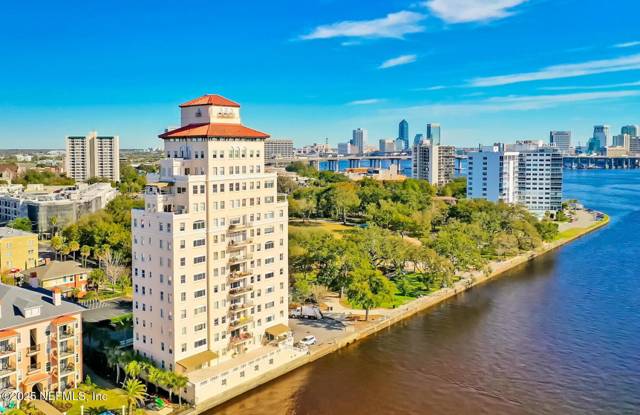
Park Lane Riverside
Homes for Sale in Jacksonville, FL
All 4,086 homes for sale in Jacksonville, FL · median $299,900 · 484 condos for sale in Jacksonville · 38 homes for sale in 32204 · Duval County homes for sale
True comps, carrying-cost math, and listings before the portals.
Photo courtesy of FLORIDA HOMES REALTY & MTG LLC · via realMLS
As of October 2026, Park Lane in Jacksonville, FL has 2 homes for sale. Homes listed or recently sold were built 1926–1926; 4 of 4 report an HOA (median $1,328/mo); 4 of the 4 geocoded homes sit in a FEMA special flood hazard zone (median elevation 5 ft).

Park Lane Riverside is a secured, elevator-served condominium building on the river in Jacksonville, and what actually sets price here is unit condition and how much updating has happened, not location, since all 115 homes share the same lobby, grounds, and access system. Vintage runs a wide range, from 1937 through 2005, with a median build year of 1964, so the age of any individual unit's systems and finishes varies more than the building's uniform amenity list suggests.
With only two active listings against 115 total homes and 24 months of supply, this reads as a buyer-leaning market: inventory is thin in raw count but slow to turn, which usually means sellers need to price sharply for condition rather than assume competitive bidding, and buyers who do find a listing here have real room to negotiate on price and terms. About 63.8% of homes carry homestead exemptions, which points to a base of owner-occupied units rather than a building dominated by short-term rental turnover.
Park Lane Riverside right now
🟢 Buyer-leaning market. 12.0 months of supply and 0% of the inventory already under contract give buyers above-average negotiating leverage.Why it matters: months of supply is how long today's inventory would last at today's sales pace; under-contract share is the portion of homes for sale that already have a buyer.Momentum Research analysis of realMLS records, as of October 12, 2026. Confidence: Low (2 active and pending listings, 2 closed sales in 12 months).
Jump to: Price history & scorecard · Homes for sale · Schools · FAQ
· Updated October 13, 2026 · Live data: realMLS, refreshed twice daily · MLS facts carry their source; interpretation lines are Momentum Research · Data sources & freshness
The 60-Second Overview
Park Lane Riverside pairs secured, gated riverside access with a building stock that spans a wide range of construction years, from 1937 to 2005, so due diligence on any specific unit matters more than the building's overall amenity list.
realMLS (Northeast Florida) sales records identify 22 homes in Park Lane that have changed hands since 2005, built between 1926 and 1936 (median 1926), with a median living area of about 1,313 sq ft and a typical 2-bedroom, 1.5-bath layout; 95% are condominiums. Source: realMLS (Northeast Florida) closed-sale history compiled by Momentum Research; counts reflect homes with a recorded MLS sale, not every home in the community.
Pre-construction details are compiled from public records, builder announcements and builder listings, and are subject to change without notice; figures are deemed reliable but not guaranteed. Momentum Research figures are our own analysis. This page describes homes, pricing and community attributes, not residents.
The setting & the homes.
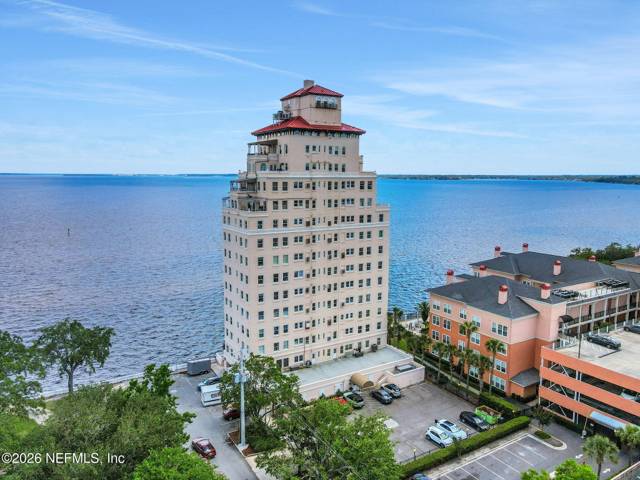
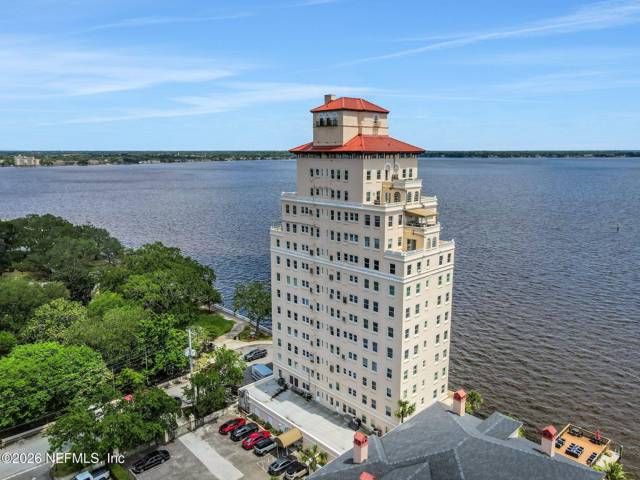
Aerial and on-site photos of Park Lane Riverside. Swipe to explore the community.
Swipe or use the arrows → tap any photo to enlarge
Park Lane Riverside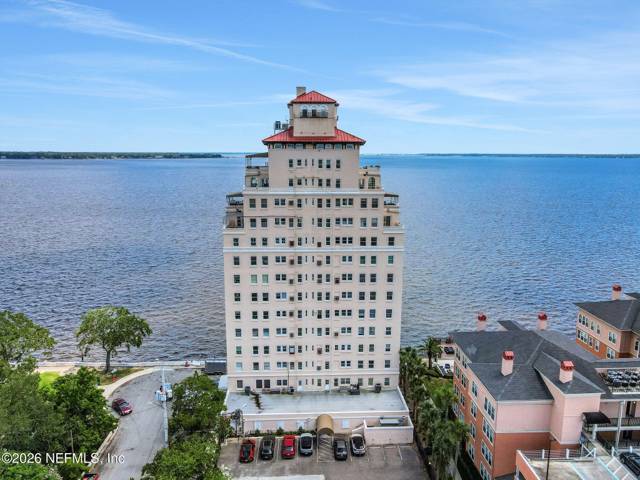 Park Lane Riverside
 Park Lane Riverside
 Park Lane Riverside
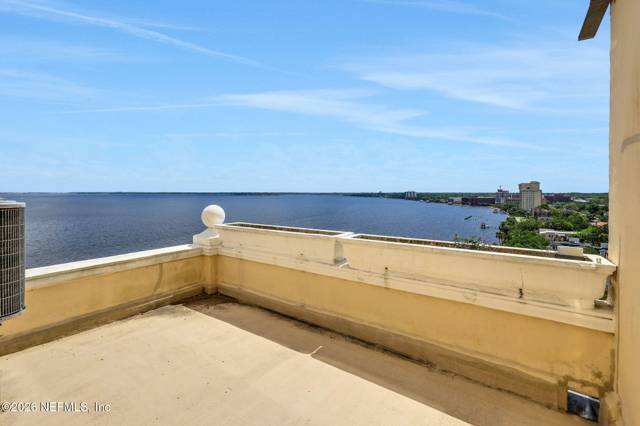 Park Lane Riverside
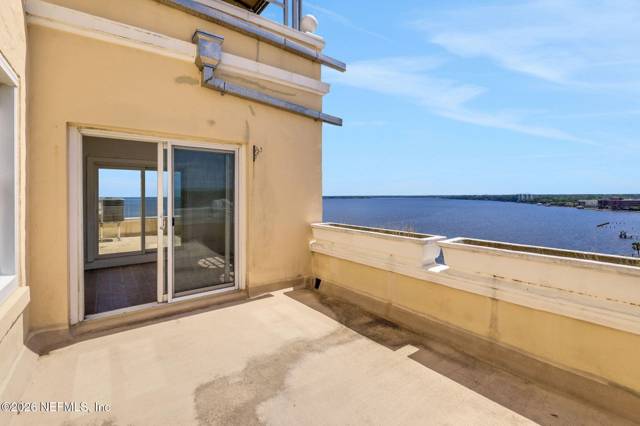 Park Lane Riverside
Photos from realMLS listings in Park Lane Riverside; content deemed reliable but not guaranteed.
Who Park Lane Riverside is best for.
Best for
- Buyers who want secured, gated riverside access and are willing to do unit-level diligence on condition and updates.
- Owner-occupants planning to hold long-term in a market currently carrying 24 months of supply.
- Buyers comfortable with an off-site managed association and want maintenance, grounds, trash, and water handled at the building level.
Probably not for
- Buyers who want a large pool of active listings to compare before deciding.
- Buyers who assume every unit shares the same build year — vintage here ranges from 1937 to 2005.
- Investors seeking a building geared toward short-term rental turnover rather than owner-occupied use.
The market around Park Lane Riverside
Park Lane Riverside is too small for its own price trend, so here is the market around it.
In ZIP 32204, 55 homes are on the market and 33% are under contract — a fast-moving corner of Jacksonville.
Across Duval County, 3,964 homes are active and 1,454 pending (27% under contract).
In ZIP 32204 (Jacksonville), 69 homes closed in the last 12 months at a median of $545K ($260/sq ft), up 53.6% year over year, with a median 42 days on market. Right now 12 active and 5 pending listings put supply at about 15.8 months — a buyer's market. See the live ZIP 32204 housing market and the Duval County market.
ZIP and county figures describe the wider market, not Park Lane Riverside specifically. Momentum Research analysis of MLS records.
Homes For Sale Right Now in Park Lane Riverside
Live MLS inventory for Park Lane Riverside. Every active listing, what is under contract right now, and the last 12 months of closed sales, refreshed twice a day. Closed comps beat an algorithm's guess every time.
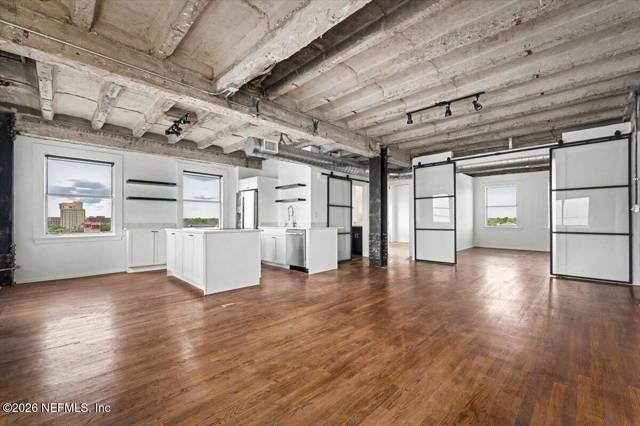
Active and pending Park Lane Riverside listings as of 2026-10-12, priced high to low. Source: Data provided by realMLS. Tap any home to ask about it.
Park Lane Riverside on the map.
Every active, pending, and recently sold home, plotted. Toggle the layers and tap a home for the details.
Listing locations from realMLS. Map data © OpenStreetMap contributors.
Life at Park Lane Riverside

- Secured Lobby · reported on 3 of 3 listings
- Secured Elevator · reported on 2 of 3 listings
- Trash · reported on 2 of 3 listings
- Key Card Entry · reported on 2 of 3 listings
- Gated · reported on 1 of 3 listings
- Laundry · reported on 1 of 3 listings
- Water · reported on 1 of 3 listings
- Security Gate · reported on 1 of 3 listings
- Entry Phone/Intercom · reported on 1 of 3 listings
- Elevator(s) · reported on 1 of 3 listings
- Maintenance Grounds · reported on 1 of 3 listings
- Maintenance Structure · reported on 1 of 3 listings
Community amenities as reported across realMLS listings in this community; deemed reliable but not guaranteed. Verify current amenities and access with the HOA.
How far is everything?
Everyday stops around Park Lane Riverside are close: the nearest dining is about 1 minutes away.
- River and Post · Dining1 min
- Memorial Park · Parks1 min
- Bakery Ribault · Coffee1 min
- Publix · Groceries2 min
- Hospice of Florida · Health2 min
- Riverside Market Square · Shopping3 min
Approximate drive times via Mapbox Search + Directions, 2026-07-03. Verify for a specific address.
Nearby Communities
Explore more neighborhoods near Park Lane Riverside with Momentum Realty’s local guides.
Schools
- Duval County Public Schools
- Verify the zoned schools by address
- Magnet and choice options may be available
- West Riverside Elementary SchoolFLDOE grade A · Public PreK-5 (Duval, Riverside)
- Lake Shore Middle SchoolFLDOE grade C · Public 6-8 (Duval)
- Riverside High SchoolFLDOE grade C · Public 9-12 (Duval)
Grades are official Florida Department of Education school grades for 2025-26. Assignments are reported as of the 2025-26 year and can change; always confirm with Duval County Public Schools for a specific address.
Buying with schools in mind? We can confirm the exact zoned schools for any Park Lane Riverside address.
Recent Developments in Park Lane Riverside
Development, infrastructure, retail, and school activity affecting Park Lane Riverside, tracked by our team and summarized from public reporting and official sources, with links to the original coverage. Last updated October 2026.
- October 2026Retail & Dining
Council committee defers vote on incentives for Downtown Publix at 119 W. Beaver St.
The Finance Committee deferred a $49.65 million incentive package for Gateway Jax's $140.15 million high-rise anchored by a Publix at 119 W. Beaver St. The tower is planned with 259 apartments and about 400 parking spaces. The committee is scheduled to revisit the bill Nov. 4, the day after the Amendment 3 vote.
What it may mean for the marketThe timing of the first full-size grocery store in the Downtown core depends on the incentive vote, affecting nearby retail access. The site is about 2 miles northeast of Park Lane Riverside.
Source: Jacksonville Today - September 2026Infrastructure
JEA advances about $690 million in infrastructure projects including Fulton Cut transmission line raise near JAXPORT
JEA is moving forward with three water reclamation projects (Blacks Ford in northwest St. Johns County, over $220 million; near Jacksonville International Airport, about $193 million; East Arlington, just under $165 million) and the $117 million Fulton Cut transmission line clearance over the St. Johns River near Blount Island. Fulton Cut, shared with JAXPORT and the city, is expected to finish in summer 2027 and all four projects by 2030.
What it may mean for the marketRaised power lines support larger ship access to port terminals, and new reclamation capacity supports growth in surrounding areas. The site is about 11 miles northeast of Park Lane Riverside.
Source: News4JAX - September 2026Development
Gateway Jax seeks more than $70 million in city incentives for Riverfront Plaza tower and Hotel Merrydelle
Gateway Jax is requesting about $55.4 million in incentives for a 17-story, roughly $271.5 million Riverfront Plaza tower with 130 to 170 hotel rooms and 50 to 150 residences on Independent Drive. It also seeks a $15 million loan for the nearly $50 million renovation of the former Ambassador Hotel at 420 Julia Street. The Downtown Investment Authority board votes Sept. 16 and City Council has the final say.
What it may mean for the marketIf approved, the projects would add hotel rooms, residences and restaurants along the Downtown riverfront. The site is about 2 miles northeast of Park Lane Riverside.
Source: Jacksonville Today - September 2026Development
Downtown review board approves concept for first new University of Florida graduate campus building in LaVilla
The Downtown Development Review Board voted 7-0 on Sept. 10 for a six to eight story, roughly 185,000 square foot academic building on a 2.34-acre site bounded by West Bay, Forsyth and North Lee streets. It is the first new building in a multiphase UF graduate and semiconductor institute campus estimated at $345 million. UF hopes to break ground in December, pending final design review and permitting.
What it may mean for the marketA large graduate campus adds education and technology jobs and daytime foot traffic to the western Downtown core. The site is less than a mile north of Park Lane Riverside.
Source: Jacksonville Today - July 2026Development
Culinary Institute of America selects Jacksonville for Southeast campus
News4Jax reported that the Culinary Institute of America chose downtown Jacksonville for its Southeast hub, to be located at 330 E. Bay Street on the Northbank riverfront. The campus would anchor a $160.5 million hotel and convention center development. The city previously approved up to $35 million in incentives, and the Downtown Investment Authority is finalizing agreements on design and property details.
What it may mean for the marketAnchors a major downtown riverfront redevelopment that pairs an educational campus with hotel and convention space, adding institutional and commercial investment to the urban core alongside Riverfront Plaza and Pearl Square. The site is about 2 miles northeast of Park Lane Riverside.
Source: News4Jax - June 2026Infrastructure
First Coast Expressway advances as an economic-development corridor across Clay and St. Johns
The First Coast Expressway (State Road 23), a tolled beltway looping around the west and south of the Jacksonville metro, continued to open land for development along its corridor, with the final St. Johns County phase from Interstate 95 to east of County Road 2209 in progress. FDOT held a St. Johns County open house on the final phase in January 2026.
What it may mean for the marketNew limited-access highway capacity shortens commutes and opens adjacent land, changes that have historically shaped where new communities and demand concentrate. The site is about 19 miles south of Park Lane Riverside.
Source: Jax Daily Record
Summaries reflect public reporting and official sources linked above as of the dates shown. Project details, timelines, and approvals can change. Commentary on potential market effects is general observation, not investment advice or a prediction for any specific property. For the freshest items across the whole region, see This Week in Northeast Florida.
The Park Lane Riverside buying strategy.
If we were buying in Park Lane Riverside today, this is the order of operations we would run for our clients.
Underwrite the condition first. Price the roof, HVAC, and systems honestly before judging any list price; condition swings value here more than square footage alone.
Match the home to real comps. Recent sales of similar condition and lot, not the asking price, tell you what a home is worth.
Use your leverage. With inventory sitting, there is room to negotiate on anything dated or overpriced and to ask for repairs or a rate buydown.
Line up financing and inspection early. A pre-approval and an inspection plan let you act fast and negotiate from evidence.
Keep an agent in your corner. The listing agent works for the seller; we represent you and prepare a hand-built valuation before any offer in Park Lane Riverside.
Inside a Secured Riverside Building
The amenity list here is built around access control and low-maintenance ownership: a secured lobby, secured elevator and service elevator, key card entry, a security gate, and an entry phone/intercom system, all overseen by an off-site management company. Trash and water are handled at the building level, and grounds and structure maintenance fall under the association's scope. The median unit runs 1,616 square feet, giving most owners a full-size floor plan rather than a compact layout.
With just two active listings and 24 months of supply against a total of 115 homes, activity here is naturally lumpy — a handful of transactions can swing the numbers, and buyers watching this building need to move deliberately rather than wait for a wave of comparable listings to shop against. Anyone evaluating a specific unit should verify current amenities and access details directly with the HOA, since building-level offerings can shift over time.
The location and the amenities are priced into every listing in Park Lane Riverside. The deal is won or lost on condition, the comps, and the renovation math.
Why work with Momentum here
A building spanning construction years from 1937 to 2005 means HOA documents, reserve information, and unit-specific renovation history carry more weight than listing photos, and with only two active listings at any given time across 115 homes, buyers need someone tracking this specific address rather than running a broad area search. Momentum verifies current amenities, access systems, and association terms directly with the HOA before an offer goes in.
Park Lane Riverside in 15 seconds.
What it really costs to own in Park Lane Riverside
The parts of the monthly number a mortgage calculator leaves out, from the tax roll, the MLS, Citizens and FEMA. Property facts only.
| HOA dues | Median $2,066/month across 62 MLS listings (most billed monthly; 2026-10-13). Dues cover what the documents say they cover; ask for the budget and reserve study. |
|---|---|
| Home and flood insurance | The average Citizens Property Insurance premium in Duval County is $1,315/yr (2,001 policies, Citizens detail by county, April 2026); private-market quotes depend on roof age, wind mitigation and construction. |
Ask an agent about Park Lane Riverside
Have a question about the homes, fees, rules or commute here? A Momentum agent who works Park Lane Riverside will answer, and the answer is published on this page for the next buyer.
HOA, CDD & Fees
- No CDD
- HOA dues reported around $2,066/month (about $24,792/yr) · median of 62 MLS listings, most billed monthly
- Any club/amenity membership is billed separately
Listings in this community report association dues of about $2,066 per month ($24,792 a year) — the median AssociationFee across 62 MLS records, normalised to a monthly figure; most are billed monthly. Dues change with budgets and can differ by section or product type; confirm the current figure with the association before you offer. Source: MLS listing records, 2026-10.
Confirm the current HOA dues, exactly what they cover, and any CDD bond or special assessment for a specific address before you offer.
Page states no CDD.
Tools for a Park Lane Riverside buy.
Free calculators to pressure-test the real cost before you tour.
Selling here is won on condition and pricing to real comps, not an automated estimate. The right number comes from closed Park Lane Riverside sales matched to your home.
Price it to the comps and condition, not an automated estimate.
If you are thinking about selling in Park Lane Riverside, the right list price comes from recent comparable sales matched to your home's condition and location, not an automated estimate.
What is your Park Lane Riverside home worth?
Get a no-obligation home value based on real comparable sales in Park Lane Riverside, not an automated guess. Tell us about your home and we will personally prepare your numbers and a pricing strategy. No obligation, no spam.
See all homes for sale in Jacksonville →
Recently off market in Park Lane
Homes in Park Lane that recently left the market. Each address opens its public-record profile: county-recorded value, property taxes, the last recorded sale, community sales history, and what is for sale nearby now. 2 on record.
- 1846 Margaret Street #10A & 10B · off market
- 1846 Margaret Street #1B · off market
| Location | Jacksonville, Duval County, FL · ZIP 32204 |
|---|---|
| Amenities listed by sellers | Secured Lobby, Key Card Entry, Trash, Closed Circuit Camera(s), Gated, Maintenance Grounds |
| For sale right now | 2 active, 0 pending · median asking $397,450 · 12.0 months of supply |
| Zoned public schools | West Riverside Elementary School (A, FLDOE 2025-26); Lake Shore Middle School (C, FLDOE 2025-26); Riverside High School (C, FLDOE 2025-26) |
Data as of October 12, 2026. Data provided by realMLS. Market figures describe homes, not residents. Cite as: Momentum Realty, “Park Lane key facts,” movewithmomentum.com/neighborhoods/park-lane-riverside-jacksonville, data as of October 12, 2026.
Housing distress & ownership in Park Lane, Jacksonville
Who owns here, how much is not owner-occupied, and how much for-sale inventory is under distress.
Source: Momentum Realty Research. Ownership & parcels from the FL DOR 2025 tax roll; distress from MLS active-listing status/remarks; price from MLS closed sales. Source: Data provided by realMLS. Deemed reliable but not guaranteed.
Just listed in Park Lane Riverside Homes for Sale: 2 Homes
The newest homes for sale in Park Lane Riverside Homes for Sale: 2 Homes right now, newest first. Each link opens the full listing with every photo, the price history and a tour request.
- 1846 Margaret Street #6A $569,900 · 2 bd · 2 ba · 1,313 sq ft · 61 days on market Courtesy of OCEANSIDE REAL ESTATE
- 1846 Margaret Street #2B $225,000 · 1 bd · 1 ba · 677 sq ft · 349 days on market Courtesy of FLORIDA HOMES REALTY & MTG LLC
Checked against the MLS Oct 13, 2026. All new listings in this market.
Every Home for Sale in Park Lane Riverside Jacksonville Right Now (2)
All 2 active and pending Park Lane Riverside Jacksonville listings with a detail page, newest first, refreshed twice a day from the MLS.
- 1846 Margaret Street #6A · $569,900 · 2 bd / 2 ba · listed Aug 13, 2026 · listed by Oceanside Real Estate
- 1846 Margaret Street #2B · $225,000 · 1 bd / 1 ba · listed Jul 14, 2026 · listed by Florida Homes Realty & Mtg Llc
Recently sold in Park Lane Riverside Jacksonville
- 1846 Margaret Street #10A & 10B · sold $350,000
- 1846 Margaret Street #1B · sold $425,000
Closed sales from the MLS; each page shows the sold price, taxes and value history.
More Jacksonville home searches
- All homes for sale in Jacksonville, FL
- Homes for sale in Duval County, FL
- Jacksonville pool homes for sale
- Jacksonville waterfront homes for sale
- Gated communities in Jacksonville
- Jacksonville golf course homes
- Homes under $300K in Jacksonville
- Homes from $300K to $500K in Jacksonville
- 4-bedroom homes for sale in Jacksonville
- Jacksonville home values: what is my house worth?
32% of homes for sale in ZIP 32204 are already under contract (under contract ÷ under contract + active listings) — a read on how much of the available inventory buyers have already claimed. Source: MLS data (2026-10-13).
Price History: What Homes Here Have Actually Sold For
Median sale prices in Park Lane Riverside Jacksonville year by year since 2012, from closed MLS sales. Long-run history beats any single estimate: it shows what this community has actually done through rate cycles, not what a model guesses.
Frequently Asked Questions
Is Park Lane Riverside a buyer's or seller's market right now?
What schools serve Park Lane Riverside?
Who is the best real estate agent for Park Lane Riverside?
How do I find a top Jacksonville real estate agent who knows Park Lane Riverside?
Can Momentum Realty connect me with an agent for Park Lane Riverside?
Where is Park Lane Riverside, and what county is it in?
How far is Park Lane Riverside from downtown Jacksonville and the beach?
Should you buy in Park Lane Riverside?
An honest fit check. We will tell you when it is not your community.
Data sources & freshness
| Live listings | realMLS, refreshed twice daily (last: October 12, 2026) |
| Under-contract shares | realMLS records, as of 2026-10-12 |
| Schools | 2025-26 district assignments + FLDOE school grades; verify with the district |
| Historical depth | Closed-sale records back to 2003 (49 transactions analyzed) |
Verify the primary sources yourself: Florida DOR · U.S. Census · FEMA flood maps · Citizens Property Insurance.
Momentum Research figures are our own analysis of realMLS records; MLS data is deemed reliable but not guaranteed. Methodology: how Momentum market scores are computed. Market metrics describe homes for sale and recent sales, not residents.
Own a home here?
You just read the data. Now see what your home is worth.
The numbers on this page move markets in the aggregate. The number that matters to you is what a buyer pays for your address. Momentum sells for 1.25% above the realMLS member average and 8 days faster, and we’ll price yours against live local comps.
Looking to buy here? Search homes for sale →
What’s your home worth in your area?
A real valuation with real comps from a local listing agent, not an instant algorithm. Response within one business day.
See how Park Lane fits the bigger picture — live prices, inventory, and Momentum Scores: