

The Cape
Homes for Sale in Jacksonville, FL
All 4,097 homes for sale in Jacksonville, FL · median $299,900 · 105 homes for sale in 32226 · Duval County homes for sale
True comps, carrying-cost math, and listings before the portals.
Market Heat
Photo courtesy of LISA DUKE REALTY LLC · via realMLS
As of October 2026, The Cape in Jacksonville, FL has 3 homes for sale. Over the 12 months ending 2026-10-10, 13 recorded sales closed at a median of $378,000, $191 per square foot, a median 36 days on market, sellers accepting 95% of original asking (-4% versus the prior year). Homes listed or recently sold were built 1969–2008; 2 of the 17 geocoded homes sit in a FEMA special flood hazard zone (median elevation 16 ft). At the median price and Duval County's FY2025-26 rate of 17.86 mills, annual property tax runs about $6,750 ($6,020 with the full homestead exemption).
| Location | Jacksonville, Duval County, FL · ZIP 32226 |
|---|---|
| Homes in the community | 247 (FL DOR 2025 assessment roll) |
| Years built | 1967–2023 (median 1985) |
| Typical living area | 2,152 sq ft (median) |
| Home types (current listings and sales) | single-family 94%, mobile homes 6% |
| Amenities listed by sellers | Fire Alarm, Security Lights |
| Sale prices, last 12 months | $378,000 median across 13 closed sales · $191 per sq ft · -4.3% vs the prior 12 months |
| Days on market (closed sales) | 36 median |
| For sale right now | 3 active, 2 pending · median asking $795,000 · 2.8 months of supply |
| Owner-occupied (homestead) share | 83% |
| Zoned public schools | New Berlin Elementary (A, FLDOE 2025-26); Oceanway Middle School; First Coast High School (C, FLDOE 2025-26) |
Data as of October 10, 2026. Data provided by realMLS; housing-stock figures from Florida Department of Revenue public records. Market figures describe homes, not residents. Cite as: Momentum Realty, “The Cape key facts,” movewithmomentum.com/neighborhoods/the-cape-jacksonville, data as of October 10, 2026.
Last 30 days in The Cape: 1 new listing (median asking $400,000), 2 under contract right now, 1 closed sale (median $444,900). As of October 10, 2026, realMLS.
Homes For Sale Right Now in The Cape
Live MLS inventory for The Cape. Every active listing, what is under contract right now, and the last 12 months of closed sales, refreshed twice a day. Closed comps beat an algorithm's guess every time.
Active · 531 daysTop listing Active · 63 days
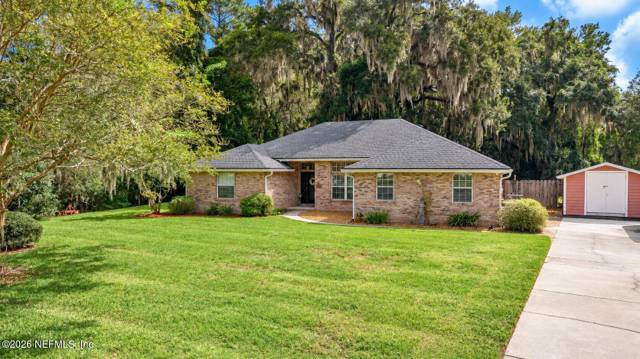 Active · 15 days
 Pending · 195 days
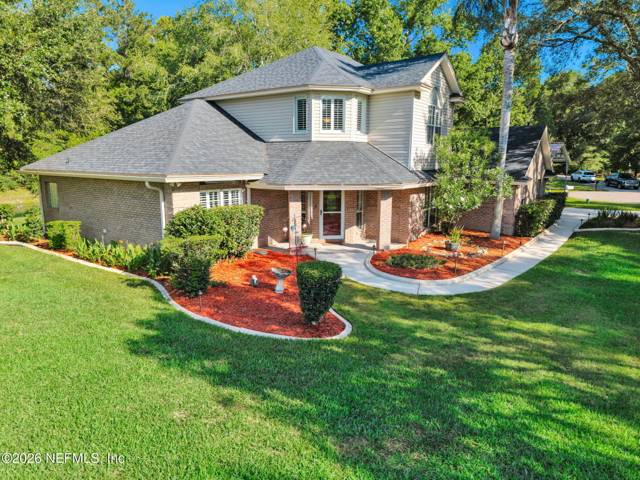 Pending · 119 days
Active and pending The Cape listings as of 2026-10-10, priced high to low. Source: Data provided by realMLS. Tap any home to ask about it.
Every Home for Sale in The Cape Jacksonville Right Now (5)
All 5 active and pending The Cape Jacksonville listings with a detail page, newest first, refreshed twice a day from the MLS.
- 15203 Landmark Circle · $400,000 · 3 bd / 2 ba · listed Sep 24, 2026 · listed by Era Oneteam Realty
- 14736 Cape Drive · $795,000 · 4 bd / 3 ba · listed Aug 8, 2026 · listed by Community Realty Associates
- 15289 Cape Drive · $1,820,000 · 4 bd / 3.5 ba · listed Jul 12, 2026 · listed by Lisa Duke Realty Llc
- 15489 Cape Drive · $565,000 · 4 bd / 2.5 ba · pending · listed Jul 12, 2026 · listed by Bold & Sold Llc
- 15330 Landmark Court · $498,000 · 3 bd / 2.5 ba · pending · listed Jul 12, 2026 · listed by Christie'S International Real Estate First Coast

Six active listings against a base of roughly 260 homes puts The Cape at an 8-month supply as of 2026-07-14 — a buyer-leaning reading. That is a meaningfully longer runway than a tight market, which means sellers here need to price and present carefully rather than assume competing offers.
The housing stock is the other half of the story: a median year built of 1985 across homes ranging from 1967 to 2023, with a median living area of 2,152 square feet. That spread of vintages means condition, updates, and layout will separate the homes that move quickly from the ones that sit — buyers have real room to be selective.
The Cape right now
🔴 Seller-leaning market. 2.8 months of supply and 40% of the inventory already under contract give sellers the pressure advantage.Why it matters: months of supply is how long today's inventory would last at today's sales pace; under-contract share is the portion of homes for sale that already have a buyer.Momentum Research analysis of realMLS records, as of October 10, 2026. Confidence: High (5 active and pending listings, 13 closed sales in 12 months).
🟡 Off the recent peak. The trailing-12-month median ($378K) is down 4.3% from the prior 12 months ($395K). With about a dozen sales a year, a single closing can swing this number, so read the level and the decade, not one year's move.Momentum Research, record-level realMLS closed sales, 12-month windows ending October 10. Confidence: Medium (13 and 9 sales in the two windows).
Jump to: Price history & scorecard · Homes for sale · Schools · FAQ
· Updated October 11, 2026 · Live data: realMLS, refreshed twice daily · MLS facts carry their source; interpretation lines are Momentum Research · Data sources & freshness
The 60-Second Overview
The Cape market snapshot (as of October 10, 2026): the median sale price is about $378K ($191 per sq ft over the trailing 12 months of closed sales), a median 36 days on market for closed sales, and 2.8 months of supply, a seller-leaning market. The trailing-12-month median is down 4% from the prior 12 months, computed from record-level realMLS closed sales (13 closings in the current window).
In ZIP 32226 (Jacksonville), 207 homes closed in the last 12 months at a median of $382K ($191/sq ft), up 0.2% year over year, with a median 50 days on market. Right now 71 active and 24 pending listings put supply at about 5.2 months — a balanced market. See the live ZIP 32226 housing market and the Duval County market.
County records show 9 qualified sales in The Cape across 2024–2025 (5 in 2024, 4 in 2025), median $380,000 — the last recorded sale per parcel on the Florida DOR 2025 assessment roll, independent of the MLS.
Flood zones in The Cape: of 16 listing addresses checked against the FEMA National Flood Hazard Layer, 88% sit outside the FEMA Special Flood Hazard Area (Zone X); 12% are in a V-series coastal high-hazard zone. Individual parcels vary - verify any specific address at msc.fema.gov. See flood zones by neighborhood in Jacksonville.
The Cape is a community of 247 homes in Jacksonville, Duval County, built between 1967 and 2023 (median 1985), with a median living area of about 2,152 square feet. 83% of parcels are homesteaded, the owner-occupancy proxy in the Florida DOR assessment roll (2025 roll, public records).
The Cape is an established Duval County community in Jacksonville with roughly 260 homes spanning original 1967 construction through 2023-built homes, giving buyers a wide range of vintages to choose from in one neighborhood.
The setting & the homes.
Aerial and on-site photos of The Cape. Swipe to explore the community.
Swipe or use the arrows → tap any photo to enlarge
The Cape The Cape
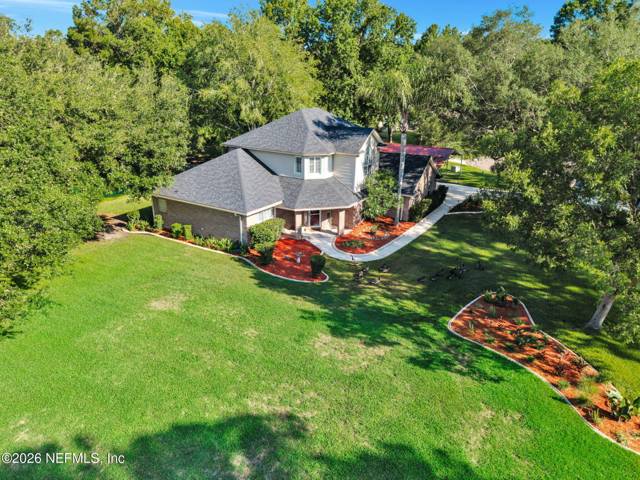 The Cape
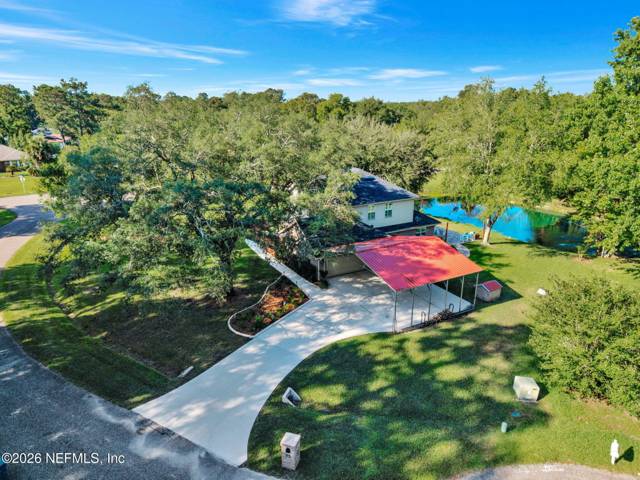 The Cape
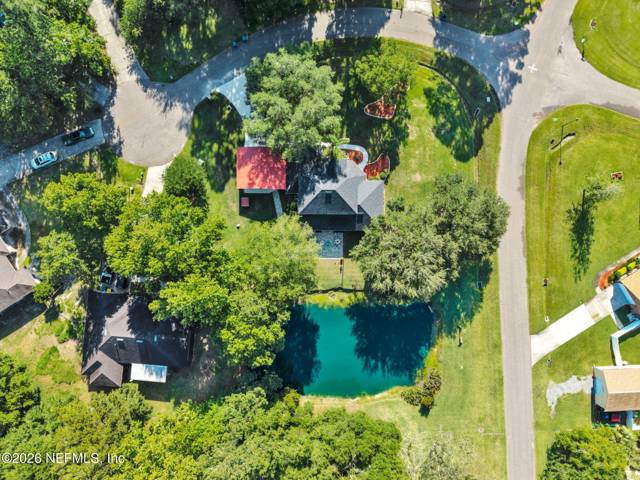 The Cape
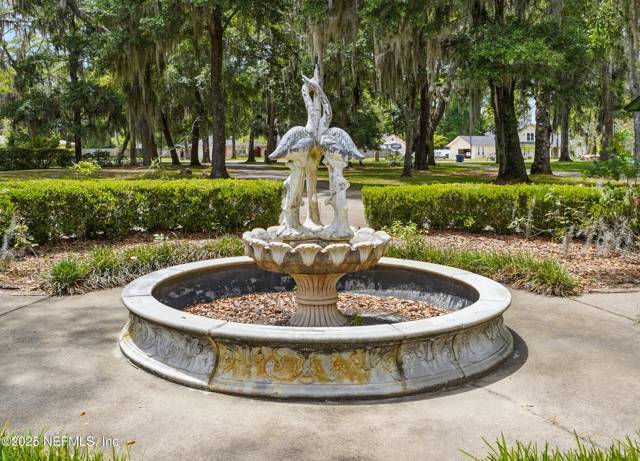 The Cape
Photos from realMLS listings in The Cape; content deemed reliable but not guaranteed.
Who The Cape is best for.
Best for
- Buyers who want negotiating room and are comfortable evaluating homes built across a wide span of decades (1967–2023).
- Buyers prioritizing more living space — the median home here runs 2,152 square feet — over a brand-new build.
- Buyers planning to occupy the home themselves, consistent with the roughly 84% homestead-exemption share in this community.
Probably not for
- Buyers who need a quick, low-competition sale — the current 8-month supply is not this community's strength for a fast turnaround as a seller.
- Buyers wanting a fully modern build with no vintage-condition variation, given the 1967–2023 range of construction years.
- Buyers relying on a long amenity list — reported community amenities here are limited to security lighting, per MLS records.
Price History: What Homes Here Have Actually Sold For
Median sale price over the trailing 12 months ending October 10 of each year, from record-level realMLS closed sales. Same methodology as every appreciation figure on this page: the 2026 point ($378K) IS the median in the snapshot above, and the move from 2025 ($395K) IS the -4.3% one-year change.
Windows contain 2 to 23 sales each (13 in the current window); every figure carries its sample size, and thin markets swing on single closings. Source: Data provided by realMLS. Deemed reliable but not guaranteed.
24% of homes for sale in ZIP 32226 are already under contract (under contract ÷ under contract + active listings) — a read on how much of the available inventory buyers have already claimed. Source: MLS data (2026-10-11).
The Cape Market Scorecard
The Cape is currently a seller's market. About 2.8 months of supply, a median asking price of $795,000, and homes go under contract in about 63 days.
Typical home value in the 32226 ZIP is $384,168, about 29.2% below the Florida norm (Zillow Home Value Index).
Go deeper: ZIP market scorecard · county scorecard · true cost calculator · affordability calculator.
Live data: realMLS, refreshed twice daily. Typical value: Zillow Research. Market metrics only; these describe homes for sale and recent sales, not residents.
Housing distress & ownership in The Cape, Jacksonville
Who owns here, how much is not owner-occupied, and how much for-sale inventory is under distress.
Source: Momentum Realty Research. Ownership & parcels from the FL DOR 2025 tax roll; distress from MLS active-listing status/remarks; price from MLS closed sales. Source: Data provided by realMLS. Deemed reliable but not guaranteed.
The Cape on the map.
Every active, pending, and recently sold home, plotted. Toggle the layers and tap a home for the details.
Listing locations from realMLS. Map data © OpenStreetMap, tiles © CARTO.
Life at The Cape
- Security Lights · reported on 1 of 3 listings
Community amenities as reported across realMLS listings in this community; deemed reliable but not guaranteed. Verify current amenities and access with the HOA.
How far is everything?
Everyday stops around The Cape are close: the nearest parks is about 4 minutes away.
- Jacksonville Clay Target Sports · Parks4 min
- Northpoint Village Shopping Center · Shopping5 min
- Publix · Groceries6 min
- Nagasaki Japanese Restaurant · Dining6 min
- Dunkin' · Coffee7 min
- Ashchi Heart and Vascular · Health14 min
Approximate drive times via Mapbox Search + Directions, 2026-07-03. Verify for a specific address.
Streets in this community
Street-level pages: every home on record, what sold and what is for sale on each street.
- Cape Drive N (38 homes on record)
- Cape Drive S (15 homes on record)
- Cape Drive N (14 homes on record)
- Cape Drive E (13 homes on record)
- Cape Drive E (12 homes on record)
- Cape Drive S (8 homes on record)
- Cape Drive S (5 homes on record)
- Cape Drive E (3 homes on record)
- Forest Circle (1 homes on record)
- Mariners Point Drive (1 homes on record)
Nearby Communities
Explore more neighborhoods near The Cape with Momentum Realty’s local guides.
Schools
- Duval County Public Schools
- Verify the zoned schools by address
- Magnet and choice options may be available
- New Berlin ElementaryFLDOE grade A · Elementary (verify zoning)
- Oceanway Middle School · 6-8 (verify zoning)
- First Coast High SchoolFLDOE grade C · 9-12 (verify zoning)
- Somerset Academy Eagle Campus · Charter K-8
Grades are official Florida Department of Education school grades for 2025-26. Assignments are reported as of the 2025-26 year and can change; always confirm with Duval County Public Schools for a specific address.
Buying with schools in mind? We can confirm the exact zoned schools for any The Cape address.
Shop the zone: Homes zoned for New Berlin Elementary School · Homes zoned for Oceanway Middle School · Homes zoned for First Coast High School
Recent Developments in The Cape
Development, infrastructure, retail, and school activity affecting The Cape, tracked by our team and summarized from public reporting and official sources, with links to the original coverage. Last updated October 2026.
- September 2026Infrastructure
JEA advances about $690 million in infrastructure projects including Fulton Cut transmission line raise near JAXPORT
JEA is moving forward with three water reclamation projects (Blacks Ford in northwest St. Johns County, over $220 million; near Jacksonville International Airport, about $193 million; East Arlington, just under $165 million) and the $117 million Fulton Cut transmission line clearance over the St. Johns River near Blount Island. Fulton Cut, shared with JAXPORT and the city, is expected to finish in summer 2027 and all four projects by 2030.
What it may mean for the marketRaised power lines support larger ship access to port terminals, and new reclamation capacity supports growth in surrounding areas. The site is about 9 miles southeast of The Cape.
Source: News4JAX - July 2026Builder Activity
Wildlight subdivision advances in Yulee as the master-planned community expands
Rayonier's Wildlight master-planned community continued adding residential phases in Yulee in mid-2026, part of a long-range plan that pairs new housing with its commerce park and town center near Interstate 95.
What it may mean for the marketOngoing residential expansion at a large master-planned community adds new supply and amenities in the Yulee area, which can influence pricing and competition for nearby communities. The site is about 13 miles northwest of The Cape.
Source: Jax Daily Record - July 2026Development
Culinary Institute of America selects Jacksonville for Southeast campus
News4Jax reported that the Culinary Institute of America chose downtown Jacksonville for its Southeast hub, to be located at 330 E. Bay Street on the Northbank riverfront. The campus would anchor a $160.5 million hotel and convention center development. The city previously approved up to $35 million in incentives, and the Downtown Investment Authority is finalizing agreements on design and property details.
What it may mean for the marketAnchors a major downtown riverfront redevelopment that pairs an educational campus with hotel and convention space, adding institutional and commercial investment to the urban core alongside Riverfront Plaza and Pearl Square. The project is about 14 miles south of The Cape, elsewhere in Duval County.
Source: News4Jax - April 2026Development
Southeast Toyota opens $170M vehicle-processing facility at JAXPORT's Blount Island, adding 400-plus jobs
Southeast Toyota Distributors dedicated a new vehicle processing facility at JAXPORT's Blount Island Marine Terminal in April 2026. The company put the investment at $170 million and said the facility created more than 400 full-time jobs, most of them hired locally.
What it may mean for the marketA large new employment center on Blount Island adds sustained local job demand, a factor that has historically supported nearby housing absorption. The project is about 9 miles south of The Cape, elsewhere in Duval County.
Source: JAXPORT - March 2026Development
First Wildlight Commerce Park speculative building opens in Yulee
The first speculative building at Wildlight Commerce Park opened in March 2026, adding move-in-ready industrial and flex space to Rayonier's Wildlight community in Nassau County near Interstate 95 and A1A.
What it may mean for the marketNew employment and commerce space at Wildlight strengthens the live-and-work profile of the Interstate 95 and A1A area in Nassau County, a factor that can support nearby residential demand. The site is about 13 miles northwest of The Cape.
Source: Jax Daily Record - February 2026Infrastructure
JAXPORT details $250M Blount Island modernization and record cargo in 2026 State of the Ports
At its February 2026 State of the Ports address, JAXPORT outlined a $250 million modernization of Blount Island's container and vehicle-handling capabilities and reported record fiscal-2025 cargo volumes. The port also said an air-draft expansion to accommodate larger ships is on track to finish by the end of 2026.
What it may mean for the marketContinued heavy investment in the Blount Island port complex anchors long-term industrial employment on the northeast side, a structural demand driver for the surrounding area. The site is about 9 miles south of The Cape.
Source: News4Jax
Summaries reflect public reporting and official sources linked above as of the dates shown. Project details, timelines, and approvals can change. Commentary on potential market effects is general observation, not investment advice or a prediction for any specific property. For the freshest items across the whole region, see This Week in Northeast Florida.
The The Cape buying strategy.
If we were buying in The Cape today, this is the order of operations we would run for our clients.
Underwrite the condition first. Price the roof, HVAC, and systems honestly before judging any list price; condition swings value here more than square footage alone.
Match the home to real comps. Recent sales of similar condition and lot, not the asking price, tell you what a home is worth.
Come strong and clean. Homes here move, so lead with your best terms and financing ready rather than a low anchor.
Line up financing and inspection early. A pre-approval and an inspection plan let you act fast and negotiate from evidence.
Keep an agent in your corner. The listing agent works for the seller; we represent you and prepare a hand-built valuation before any offer in The Cape.
An 8-month market favors buyers
With only 6 homes actively listed and an 8.0 months-supply reading, The Cape currently sits in buyer-leaning territory as of 2026-07-14. That figure means it would take roughly eight months to sell through the current active inventory at the recent pace of sales — long enough that buyers can negotiate on price, closing costs, or repairs rather than compete in multiple-offer situations.
About 84% of homes in The Cape carry a homestead exemption, per Duval County property records, indicating most of the community's homes are owner-occupied rather than held as rentals or investment property. Reported community amenities for this community are limited to security lighting across MLS listings; buyers should verify current amenities and access directly with the HOA.
The location and the amenities are priced into every listing in The Cape. The deal is won or lost on condition, the comps, and the renovation math.
Momentum Buy Score.
Our proprietary 0 to 10 read across the factors that decide how a home in The Cape buys, holds, and resells. Momentum Research; not an appraisal.
Momentum Intelligence Scores are our proprietary, qualitative assessment on a 0 to 10 scale, built from the record-level market data on this page. They are a framework for comparing communities, not a guarantee of future value and not advice on a specific home; unlike an automated value estimate they do not price your home, they grade the community on evidence you can inspect. Composite is the plain average of the 4 factors (6.7). Basis: Recent Direction -4.3% year-over-year; Liquidity & Demand 2.8 months of supply; Owner Commitment 83% owner-occupied; Pricing Power 94.7% sale-to-list. Refreshed with each data update.
Why work with Momentum here
In an 8-month, buyer-leaning market like The Cape, pricing and negotiating strategy matter more than they do in a tight seller's market. Momentum tracks this community's active-listing count and months-supply reading directly against Duval County MLS data, so sellers price to the actual competition and buyers know exactly how much room they have to negotiate before writing an offer.
The Cape in 15 seconds.
HOA, CDD & Fees
- No CDD
- HOA status not on record. Verify any dues before you offer
- Any club/amenity membership is billed separately
Confirm the current HOA dues, exactly what they cover, and any CDD bond or special assessment for a specific address before you offer.
Page states no CDD.
Flood & Insurance Context
Of 16 sampled listing addresses in this community: 88% outside the FEMA Special Flood Hazard Area (Zone X/B/C); 12% in a V-series coastal high-hazard zone.
Address-sampled; individual parcels vary - verify any specific address at msc.fema.gov. Check any address at FEMA's Flood Map Service Center, and see average home-insurance costs by Florida county.
Source: FEMA National Flood Hazard Layer, address-level lookups (n=16) · as of 2026-10
Tools for a The Cape buy.
Free calculators to pressure-test the real cost before you tour.
Selling here is won on condition and pricing to real comps, not an automated estimate. The right number comes from closed The Cape sales matched to your home.
Price it to the comps and condition, not an automated estimate.
If you are thinking about selling in The Cape, the right list price comes from recent comparable sales matched to your home's condition and location, not an automated estimate.
What is your The Cape home worth?
Get a no-obligation home value based on real comparable sales in The Cape, not an automated guess. Tell us about your home and we will personally prepare your numbers and a pricing strategy. No obligation, no spam.
See all homes for sale in Jacksonville →
Recently off market in The Cape
Homes in The Cape that recently left the market. Each address opens its public-record profile: county-recorded value, property taxes, the last recorded sale, community sales history, and what is for sale nearby now. 14 on record.
- 14453 Denton Road · off market
- 14461 Denton Road · off market
- 14720 Compass Drive · off market
- 14724 Cape Drive · off market
- 14783 Compass Drive · off market
- 14845 Cape Drive · off market
- 15076 Cape Drive · off market
- 15221 Landmark Circle · off market
More Jacksonville home searches
- All homes for sale in Jacksonville, FL
- Homes for sale in Duval County, FL
- Jacksonville pool homes for sale
- Jacksonville waterfront homes for sale
- Gated communities in Jacksonville
- Jacksonville golf course homes
- Homes under $300K in Jacksonville
- Homes from $300K to $500K in Jacksonville
- 4-bedroom homes for sale in Jacksonville
- Jacksonville home values: what is my house worth?
Frequently Asked Questions
What is the median home price in The Cape?
How long do homes in The Cape take to sell?
Is The Cape a buyer's or seller's market right now?
How many homes are in The Cape?
What share of The Cape is owner-occupied?
When were the homes in The Cape built?
What schools serve The Cape?
Who is the best real estate agent for The Cape?
How do I find a top Jacksonville real estate agent who knows The Cape?
Can Momentum Realty connect me with an agent for The Cape?
Where is The Cape, and what county is it in?
How far is The Cape from downtown Jacksonville and the beach?
Is The Cape in a flood zone?
Is The Cape a good place to live?
Should you buy in The Cape?
An honest fit check. We will tell you when it is not your community.
Data sources & freshness
| Live listings | realMLS, refreshed twice daily (last: October 10, 2026) |
| Community market stats | realMLS closed sales, 12-month windows ending October 10, 2026 |
| Housing stock & ownership | Florida DOR assessment roll (street-list match (3 streets, ZIP 32218/32226)) |
| Under-contract shares | realMLS records, as of 2026-10-10 |
| Schools | 2025-26 district assignments + FLDOE school grades; verify with the district |
| Historical depth | Closed-sale records back to 2001 (226 transactions analyzed) |
Verify the primary sources yourself: Florida DOR · U.S. Census · FEMA flood maps · Citizens Property Insurance.
Momentum Research figures are our own analysis of realMLS records; MLS data is deemed reliable but not guaranteed. Methodology: how Momentum market scores are computed. Market metrics describe homes for sale and recent sales, not residents.
Own a home here?
You just read the data. Now see what your home is worth.
The numbers on this page move markets in the aggregate. The number that matters to you is what a buyer pays for your address. Momentum sells for 1.25% above the realMLS member average and 8 days faster, and we’ll price yours against live local comps.
Looking to buy here? Search homes for sale →
What’s your home worth in your area?
A real valuation with real comps from a local listing agent, not an instant algorithm. Response within one business day.
See how The Cape fits the bigger picture — live prices, inventory, and Momentum Scores:
More on The Cape
- Home values · What homes in The Cape actually sell for
- Find an agent · How to choose the best real estate agent in The Cape