The 60-Second Overview
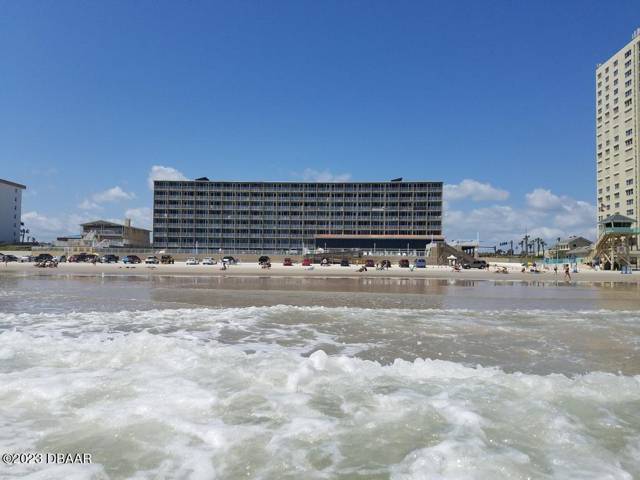
Daytona Beach Shores is not Daytona Beach. That sentence does most of the work. While Daytona Beach is famous for condo hotels and daily beach driving, the Shores is an incorporated city with its own government, its own combined police-fire-EMS public safety department, and a zoning ethos that tilted decisively toward residential ownership rather than transient tourism. The result, on S Atlantic Avenue, is roughly a dozen oceanfront high-rise towers built primarily between 1988 and 2007, whose governing documents enforce minimum rental periods that screen out nightly-rental operators and attract genuine owners.
The price spread is wide: from the $300K entry point in pre-2000 buildings like the Caribbean (1988, 130 units) and the Sherwin (1991, 126 units), up through the mid-era wave of 2004-2007 towers (Towers Grande, St. Maarten, DiMucci Twin Towers, Bella Vista, Ocean Vistas) at roughly $450K-$900K, to Ocean Villas at the current luxury apex where average list prices approach $1.5M. And in 2029, the Aston Martin Residences will deliver 86 branded units at $2M-$10M and reset the price ceiling for the entire strip.
The single most important research step here is not price per square foot, it is the minimum rental period in the specific building's governing documents. Two-week minimums, month minimums, and one-week minimums all exist on this strip, and they produce meaningfully different owner profiles, neighbor pools, and investment dynamics. We cover exactly how to verify this in the section below.
On this strip, the minimum rental period is not a footnote. It is the core of the investment thesis.
The fee stack: HOA, SIRS, and what the new reserve rules mean
These towers carry no CDD. The fee structure is simpler than it looks: one mandatory condominium association per building, typically covering building insurance (the master policy), water, sewer, trash, cable, internet, pest control, fitness and pool maintenance, and reserves. What has changed since 2022 is the reserve line. Florida's Structural Integrity Reserve Study (SIRS) requirement, enacted after the Surfside tragedy, mandated that all owner-controlled associations for buildings three stories or higher complete their first SIRS by December 31, 2025, and - critically - budgets adopted from January 1, 2025 cannot waive or reduce reserve funding for SIRS-required structural components.
For buildings built in the 1988-1997 era (Caribbean, Sherwin, Grand Coquina), this means fully-funded structural reserves are now mandatory, not optional. That is driving higher monthly fees and, in some cases, special assessments to close the reserve gap. For mid-era buildings (2004-2007), the same requirement applies but the gap is typically smaller because concrete construction is newer. Always ask for the completed SIRS, the current reserve balance relative to the required funding level, and any special assessment history or pending votes before you write an offer.
Pre-2000 buildings: roughly $600-$900/month, trending upward post-SIRS.
Mid-era 2004-2007 towers: roughly $700-$1,050/month; Towers Grande averages ~$887/month; Bella Vista $785-$1,140; Ocean Vistas from ~$1,000.
Luxury buildings: Ocean Villas $781-$1,226/month.
Confirm exact current figures with the association directly - do not rely on listing-sheet representations.
The building roster: tier by tier
We group the residential towers into three tiers based on build era, size, and price position. The addresses run north to south on S Atlantic Ave. Note that the Oceans complex buildings (Oceans One, Two, Three, Four, Seven) are covered in a separate guide linked at the bottom of this page.
Luxury and larger-format buildings (2006-2007): Ocean Villas (3703 S Atlantic, 2006, 76 units, 2,100-3,100 sf, avg list ~$1.5M, HOA $781-$1,226/month) is the current luxury benchmark, developed by The Devlin Group with boutique unit count and the largest floor plans on the strip. Bella Vista (2515 S Atlantic, 2007, 100 units, 3 bed / 3 bath throughout, HOA $785-$1,140/month, 1-month minimum) is the only fully confirmed 30-day-minimum building and draws the most owner-occupant-oriented buyer pool. DiMucci Twin Towers (3311 and 3315 S Atlantic, 2006, 68 units each / 136 total, 2- and 3-bedroom layouts, 2-week minimum) are the only twin-tower complex on the strip, with all units flowing east-west for both ocean and Intracoastal views.
Core mid-era (2004-2007): Towers Grande (2055 S Atlantic, 2004, 132 units, 1,860-4,262 sf, HOA $629-$947/month, 2-week minimum, no pets) is one of the most amenity-rich buildings, with underground parking and a penthouse club room. Ocean Vistas (1925 S Atlantic, 2007, approximately 108 units, 2-4 bedrooms from 2,000 sf, HOA from ~$1,000/month, 1-week minimum, pets allowed 2 per unit) offers the northernmost residential address on the row with concierge service and underground parking. St. Maarten (2403 S Atlantic, 2005, 129 units, all 3 bed / 3 bath, 2-week minimum) provides a mid-range entry with consistent floor plans.
Value era (1988-1997): Caribbean (2425 S Atlantic, 1988, 130 units, 19 floors, 7 per floor plus penthouse) is the oldest and typically the lowest-priced entry into the residential strip, with an oceanfront heated pool, fitness, sauna, and indoor jacuzzi. Sherwin (2555 S Atlantic, 1991, 126 units, 20 floors) is another pre-2000 tower at a lower price point. Grand Coquina (3333 S Atlantic, 1997, approximately 112 units, 22-23 floors, 2- and 3-bedroom units, 2-week minimum) and Marbella (3343 S Atlantic, 2007, 24 units, 7 floors, 4 units per floor, all 3-bedroom, HOA $700+/month) round out the south end of the strip near the DiMucci towers.
The residential test: how to separate residential regimes from condo hotels
This is the section that most buyer guides skip and that costs uninformed buyers the most. On S Atlantic Avenue in Daytona Beach Shores, buildings that look similar from the outside operate under fundamentally different legal and lifestyle frameworks depending on their governing documents.
Florida law defines a transient public lodging establishment as any unit rented for 30 days or less more than three times in a calendar year - and Volusia County's zoning ordinance, in effect since 2004, prohibits rentals of less than 30 days in areas zoned for residential purposes. A building whose declaration allows seven-day or 14-day minimum rentals is permitting activity that walks closer to the transient line. A building with a firm 30-day minimum is operating as a residential regime and is unlikely to be reclassified.
The practical tests: (1) Read the declaration - the minimum lease term provision is what governs, not what a listing agent says or what the building's marketing materials claim. (2) Look for operational signals - does the building have a front-desk check-in program, a property management rental desk, or listings on hotel booking platforms? Those indicate transient operation even when the declaration reads residential. (3) Ask about the current owner-occupancy rate - lenders underwriting conventional and FHA/VA financing have their own owner-occupancy thresholds, and buildings with high investor concentrations can limit financing options. (4) Check the Florida Department of Business and Professional Regulation license lookup to see whether the building holds a hotel or transient-lodging license.
1-month minimum (most residential): Bella Vista (2515 S Atlantic).
2-week minimum: Towers Grande (2055 S Atlantic), DiMucci Twin Towers (3311-3315 S Atlantic), Grand Coquina (3333 S Atlantic), St. Maarten (2403 S Atlantic).
1-week minimum: Ocean Vistas (1925 S Atlantic).
Caribbean, Sherwin, Marbella, and Ocean Villas rental minimums: verify directly with each association - policies can be amended. Always confirm in writing from the management company before relying on any figure.
What is coming: Aston Martin 2029 and the supply story
The Daytona Beach Shores residential strip has not seen a major new tower since the 2006-2007 wave. That changes in 2029. Announced in October 2025, the Aston Martin Residences at 3411 S Atlantic Ave is a partnership between Aston Martin and Valor Real Estate Development - an 18-story tower with 86 units including eight ultra-luxury penthouse residences on two penthouse floors, approximately 320,000 square feet, with underground parking.
Pricing starts around $2M and climbs to $10M for penthouses, placing it well above the current market ceiling. Amenities include a private beach club, oceanfront infinity pool, wellness spa, fine dining, and an artisan bakery. First move-ins are targeted for 2029. The project also includes plans from Aston Martin and Valor for additional branded residences in Tampa Bay and Mexico City, suggesting this is a serious development brand rather than a single project.
For buyers of existing buildings, the Aston Martin project matters in two ways. First, it establishes a new price ceiling that will lift the luxury end of existing buildings by comparison effect - Ocean Villas and high-floor DiMucci and Bella Vista units gain context. Second, it confirms institutional confidence in the Shores residential strip as distinct from the condo-hotel market to the north. That is a comps story and a narrative story both.
Schools: mostly an adult market, but the zoning is solid
Daytona Beach Shores is primarily an adult, retiree, and snowbird market. The vast majority of buyers on this strip are not school-driven. That said, families do purchase and rent in these towers, and for them the school feeder is worth knowing. The Shores falls into the Port Orange school zone: Longstreet Elementary, Silver Sands Middle (a Florida 5-Star school for six consecutive years), and Spruce Creek High School, which has historically posted among the highest graduation rates in Volusia County. These are meaningfully stronger than the school zones for comparable price points in Daytona Beach proper.
What living here is actually like
Day to day, Daytona Beach Shores lives quieter than its famous neighbor to the north. The beach in front of the residential towers is a no-drive zone - no cars sharing the sand, no engine noise at the waterline. The city runs its own combined police-fire-EMS department, meaning emergency response is sized for a small residential city of roughly 5,500 year-round residents rather than a tourist destination. Groceries and most services require a quick bridge crossing to the mainland.
Who actually buys in these buildings?
Three distinct groups: owner-occupants and snowbirds who want the residential lifestyle (attracted by 30-day and longer minimums), investors seeking long-term or seasonal rental income in a genuine residential regime, and luxury buyers who want the best-value direct-oceanfront address south of Jacksonville. The mix varies by building - Bella Vista (1-month minimum) skews heavily owner-occupant; buildings with 2-week minimums draw more investor-snowbird mix.
How does the no-cars beach actually feel?
Unlike the Daytona Beach strand where vehicle traffic runs a lane at the waterline, the residential stretch of Daytona Beach Shores prohibits beach driving in front of the towers. The result is a quieter, more conventional beach experience - clean sand, no motor fumes, and pedestrians who are not dodging traffic. This distinction is rarely emphasized in listing descriptions and materially changes the daily beach experience.
What is the Intracoastal access like?
The Intracoastal Waterway runs directly behind the buildings on the west side of S Atlantic Ave, creating the postcard view of river-side towers facing the ocean. Many buildings frame both water views from east-west units. Boat launch access is minutes away, and the Intracoastal is a genuine boating corridor. Units with Intracoastal views command premiums in buildings where that sightline is available.
What are the biggest carrying-cost surprises?
Three things hit buyers after closing: (1) Florida coastal high-rise insurance premiums, which have risen sharply and require quotes on the specific unit before any offer is written; (2) SIRS-driven fee increases or special assessments in pre-2000 buildings; (3) the total monthly outlay of HOA fee plus insurance plus mortgage is frequently $2,000-$3,500+ depending on building and financing. Model the full carrying cost before you commit, not just the mortgage payment.
Five costly mistakes oceanfront condo buyers make on this strip
We have guided buyers through every one of these. They are all avoidable with the right preparation.
Taking the rental minimum at the listing agent's word
The only source that matters is the current declaration and rules, confirmed in writing by the association management company. Listings are not binding legal documents. One phone call to the management company settles this before you fall in love with the unit.
Skipping the SIRS and reserve study
Pre-2000 buildings on this strip were legally allowed to waive reserve funding for years. Many did. The SIRS mandate exposed those gaps, and the buildings without adequate reserves are now assessing owners - sometimes five figures - to catch up. Request the completed SIRS, the reserve balance, and the funded percentage before you write any offer on any building built before 2000.
Not getting insurance quotes before the offer
Florida coastal high-rise insurance is a specialized market. Quotes can vary dramatically between carriers, and some carriers have withdrawn from the Florida market entirely. Get at least one real quote for the specific unit and building before you negotiate price - the insurance number changes your total carrying cost materially.
Comparing price per square foot across eras
A 1,600 sf unit in a 1991 building and a 2,100 sf unit in a 2006 building do not compete on the same metric. Construction standards, concrete quality, window specifications, balcony depth, and mechanical systems differ meaningfully. Compare within era and within building first, then across buildings with full fee-load adjustment.
Assuming all buildings allow pets
Towers Grande prohibits animals of any kind and claims an exemption from ADA service-animal rules - a policy that has generated documented friction. Several other buildings have weight limits or breed restrictions. If a pet is coming with you, confirm the policy in writing from the association before you are emotionally committed to a unit.
Building classes and the value tiers
Building era is the primary value driver on this strip
Unlike a land community where lot type drives resale, in oceanfront condo towers the building era, unit size, floor, and view orientation are the durable value levers. A high-floor ocean-direct unit in a 2006 building holds value differently than a comparable-priced mid-floor unit in a 1991 building - even when the square footage matches. We map the specific unit against its true twins, not building-wide averages.
The Daytona Beach Shores oceanfront condo buyer checklist
- Rental minimum confirmation. Request the declaration section governing minimum lease terms, confirmed in writing by the current association management company - not the listing agent.
- SIRS and reserve study. Request the completed SIRS, the current reserve balance, the funded percentage, and any pending or recently levied special assessments for the building.
- Milestone inspection report. For any building built before 1997, request the Phase I milestone inspection report and, if a Phase II was triggered, that report as well.
- Insurance pre-quotes. Get at least one real insurance quote for the specific unit and building before you negotiate price - this belongs in your offer preparation, not your post-inspection checklist.
- Pet policy confirmation. If a pet is part of your household, confirm the specific breed, weight, and number policies in writing from the association, not the listing description.
- Financing check. Verify that your lender is comfortable with the owner-occupancy ratio and any pending litigation or assessment in the specific building - condo approval can derail deals late if not front-loaded.
- View and floor analysis. Confirm ocean-direct vs. angled view vs. Intracoastal view for your specific unit - these drive resale value and are not always accurately described in listings.
- Aston Martin timing. If you are buying in the $900K-$1.5M range, understand the 2029 supply story and how new branded inventory at higher price points could affect your building's resale position in that window.
The Daytona Beach Shores residential strip is one of the more nuanced markets we work in, not because the buildings are complicated, but because the due diligence is layered in ways that listings never show. The rental minimum in the declaration, the reserve gap from years of SIRS waivers, the insurance market on coastal high-rises, the financing thresholds for investor-concentrated buildings - these are the things that separate a great oceanfront purchase from an expensive surprise.
Our job is that unglamorous layer: the declaration reading, the reserve math, the insurance pre-check, and the honest conversation about which building tier and which specific floor actually fits your plan. That is what we mean when we say we represent you, not the seller.
Daytona Beach Shores residential towers vs. the alternatives
The residential strip is the most tightly concentrated residential oceanfront product in Volusia County, but it is not the only option. Here is the honest comparison:
| Community | Price range | The trade |
|---|---|---|
| The Oceans District | ~$200K-$700K+ | The Oceans and Bellemead oceanfront towers and the Oceans resort complex - covered in a separate guide. Different building regimes; confirm rental policies individually. |
| The Peninsula | ~$300K-$800K | The mid-island and riverfront Shores community with a different lifestyle profile - less oceanfront-tower density, more mixed product. |
| Towers at Ponce Inlet | ~$400K-$1.2M+ | The quieter, southernmost oceanfront alternative at Ponce Inlet - smaller community, inlet views, no race-week traffic. |
| Ormond Beach Oceanfront | ~$200K-$600K | Lower price points north of Daytona, older building stock, less density - the value play for buyers who want oceanfront without the Shores price premium. |
| Marina Grande on the Halifax | ~$300K-$700K | Intracoastal luxury tower in Holly Hill - not oceanfront but a genuine waterfront alternative with deep-water marina access and a different lifestyle dynamic. |
| Shores Residential Row | ~$300K-$1.5M+ | The most concentrated residential oceanfront high-rise supply in Volusia County, with the tightest link between rental minimum and lifestyle quality. |
The bottom line: if direct oceanfront, a no-drive beach, a residential-regime building, and a 2029 luxury supply story all matter to you, Daytona Beach Shores residential row is the only place in Volusia County where all four converge. The trade is higher fees and a carrying-cost structure that requires full due diligence before you offer.
Pros and cons, no varnish
Pros
- Direct oceanfront on a no-drive beach zone - no cars sharing your beach
- Incorporated city with its own combined police-fire-EMS department
- Residential-regime buildings with 30-day or longer minimums attract genuine owner-occupant neighbors
- Building variety from ~$300K entry to $1.5M luxury in Ocean Villas
- Aston Martin 2029 arrival sets a new price ceiling and lifts the narrative for the entire strip
- Solid school feeder (Silver Sands Middle, Spruce Creek High) for the families who do buy here
Cons
- SIRS and milestone requirements have driven fee increases and special assessments, especially in pre-2000 buildings
- Florida coastal high-rise insurance costs are among the highest in the state and rising
- Rental minimum policies vary building to building and must be verified in the actual declaration
- Total monthly carrying costs of $2,000-$3,500+ (HOA plus insurance plus mortgage) on mid-range units
- Market softened in 2025-2026 with 87-day median days on market; not a liquid market for quick resale
- Barrier-island location means every errand beyond the building requires a bridge crossing
The offer playbook
How we run a Daytona Beach Shores oceanfront condo purchase, in order:
- Define the rental regime first. The declaration confirms the minimum lease term - this step happens before any showing, not during inspection.
- Pull building-specific SIRS and reserve data. We request the completed study, the reserve balance, and the funded percentage from the management company before our client falls in love with a unit.
- Front-load the insurance quote. On coastal high-rises, the insurance number materially changes the offer price logic. We get it before, not after, the offer.
- Run floor-and-view-accurate comps. Ocean-direct vs. angled vs. Intracoastal view, and floor tier, drive value more than building-wide averages. We comp at the right level of granularity.
- Negotiate the era gap. In the softened 2025-2026 market, pre-2000 buildings with reserve questions give buyers real leverage if you bring the evidence. We build the number on the data, not the ask.
Questions we ask before you offer
Six questions that surface what the listing will not tell you:
- What is the minimum lease term in the declaration - and can we get management company written confirmation today?
- Has the SIRS been completed, what is the current reserve funded percentage, and have any special assessments been levied or approved in the last three years?
- Has the milestone inspection been completed, and if a Phase II was triggered, what is the status and cost estimate?
- What is the current owner-occupancy ratio, and does our lender's condo approval checklist have any concerns about this building?
- What did the true floor-and-view-comparable units in this building actually close at in the last 12 months?
- What is the pet policy in writing, and does the building hold a Florida transient-lodging license that could signal a different legal classification than the listing suggests?
Is Daytona Beach Shores residential row for you?
No address fits everyone, and we would rather lose you to the right building than sell you the wrong one.
Consider elsewhere if you want
- Daily or weekly rental income from a transient-lodging strategy
- A low monthly carrying cost (fees plus insurance here are real)
- A walkable neighborhood with shops and dining at street level
- New construction with 2024-2025 build standards
- A beach where you can drive your vehicle to your towel spot
- Quick resale liquidity in a thin market
Daytona Beach Shores residential row fits if you want
- Direct oceanfront in a no-drive beach zone on a residential-regime building
- A genuine owner-occupant or snowbird neighbor profile
- Building variety from value-era entry to current luxury to 2029 branded supply
- An incorporated city with its own combined public safety department
- Long-term or seasonal rental income in a 30-day-minimum regime
- A 2029 supply story that lifts the comp ceiling for the strip you are already on