The 60-Second Overview
Lake Brooklyn is the comeback story of the Keystone Heights chain. The settlement on its shore — Brooklyn — predates Keystone Heights itself, going back to the 1870s, and the lake has spent the century and a half since alternately astonishing and alarming its residents: a deep sandhill basin of roughly 633 acres at full pool that has fallen to a record-low stage around 85 feet (2004), refilled, fallen, and refilled again as multi-year rainfall cycles turned.
What changed in 2025 is the reason this page exists: the St. Johns River Water Management District finished the Black Creek Water Resource Development project, and its treated water discharges into Alligator Creek — which feeds Lake Brooklyn before any other lake in the chain. After fifty years of watching the water leave, Brooklyn is now the front door for up to 10 million gallons a day of engineered inflow when Black Creek runs high.
Geneva has the beach and the pavilion. Brooklyn has the pipeline. For a buyer who understands what that means, the cheaper lake just became the more interesting one.
Everything else about Brooklyn is classic Keystone lake district: no HOA or CDD on most frontage, individually platted lots ranging from original cottages to high-bank custom homes, well-and-septic infrastructure, and a market so thin that the median is a rumor. Keystone Heights waterfront lists around $315K at the median, and Brooklyn frontage has historically traded at a discount to comparable Geneva frontage — a gap the recovery story is actively closing.
The Fee Stack: What You Pay (and What You Don’t)
The short version: no HOA dues, no CDD assessment, no club on most Lake Brooklyn parcels. Your carrying costs are Clay County property taxes (plus city taxes inside Keystone Heights limits), insurance, and rural infrastructure — well, septic, and whatever your driveway demands.
What replaces the fee stack is an inspection stack, and on Brooklyn it is non-negotiable: a well yield and water-quality test, a full septic inspection with permit history, a survey showing the ordinary high-water line against the platted lot, and the FEMA flood panel with an elevation certificate anywhere near a mapped zone. On a lake that has moved this much, elevation paperwork is not bureaucracy — it is the purchase decision.
Want the real carrying-cost picture on a specific house? We will build the tax + insurance + inspection estimate before you offer.
Talk to us firstThe Water Story: Boom, Bust, and the Pipeline
Brooklyn’s hydrology in three sentences. The lake sits on deep sands over the Floridan aquifer and recharges it — meaning it leaks by design, and in long dry cycles it falls harder than almost any lake in Florida, with swings of twenty-plus feet across decades. It bottomed near an 85-foot stage in 2004 and has not naturally overflowed toward Lake Geneva since 1998. Wet years since Hurricane Irma (2017) have driven a strong refill, with the surface recently running near 365 acres against the ~633-acre full pool.
Now the engineered part. The Black Creek project — pump station, pipeline and treatment system built at a construction cost of roughly $118 million — diverts up to 10 million gallons a day of excess wet-weather flow from the South Fork of Black Creek, treats it for color and nutrients, and releases it into Alligator Creek, which flows into Lake Brooklyn. Geneva and the aquifer benefit downstream; Brooklyn drinks first.
The honest caveats: the system can only divert when Black Creek itself runs high, so it adds water in wet periods and banks it (in the lake and the aquifer) against dry ones — it cannot conjure water in a drought. Initial operations through 2025 waited repeatedly on creek flows. What it genuinely changes is the tail risk that defined this lake for fifty years: the scenario where the water simply leaves and nothing brings it back now has a $100M+ counterweight, built and paid for.
Want the stage history against a specific lot? We will overlay the gauge record on the shoreline you are considering.
Get the water-level readLiving on the Lake
At healthy stages Brooklyn is a genuinely beautiful deep-basin lake — sand bottom, clear water, real depth for swimming and fishing. The public boat ramp on King Street off SR-100 serves the lake, and the YMCA’s Camp Immokalee, a fixture on the shoreline since the early 1900s, fills the camp side with kids every summer — worth knowing about both for its charm and for what it says about the lake’s history of recreation.
Frontage quality varies even more here than on Geneva because the basin is steeper. High-bank east-side lots keep usable water and views through most stages; shallow-shelf lots gain enormous beaches in dry years and watch the water cross them in wet ones. A grandfathered dock that reaches depth at low stage is worth real money; a dock standing over sand is a rebuild. Two fairly-priced homes a half mile apart can differ by $200K on frontage alone.
The Homes: Cottages to Customs
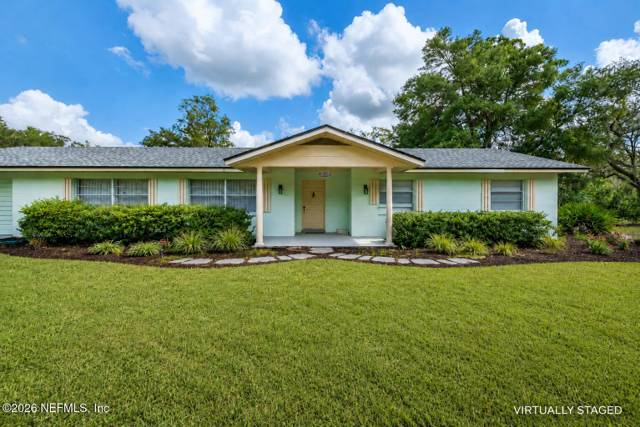
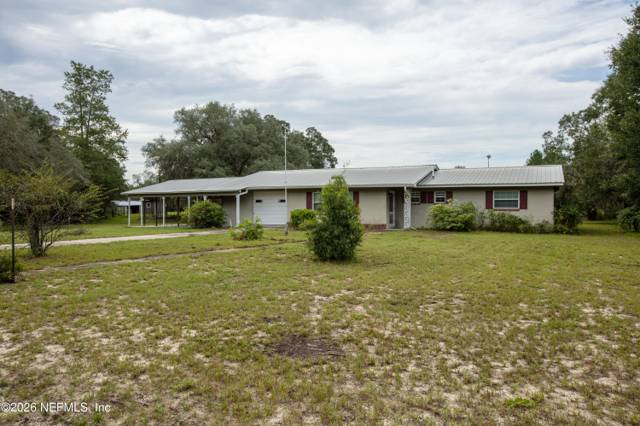
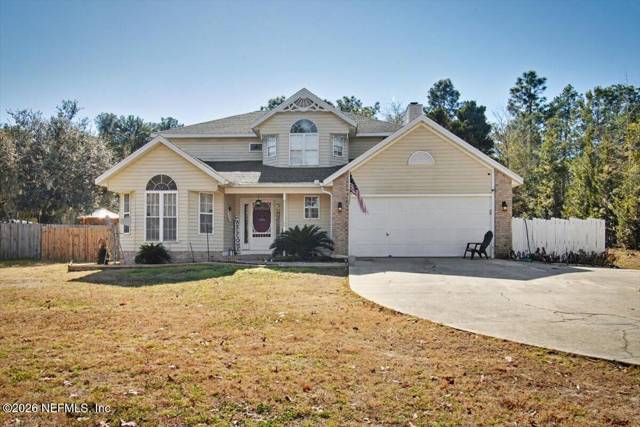
The stock layers a century and a half: a few survivors from the old Brooklyn settlement era, mid-century cottages and ranches, and a thin top tier of renovated and custom homes that set the high comps and rarely trade. No production builders, no spec inventory — the area’s only active new-build subdivision is Southern Oaks on the Bradford County side of town, and it is not on a lake.
Practical implications: appraisals are hard, renovation skills are an advantage, and patience wins. Keystone Heights listings spend roughly 99–111 days on market at the median. Sellers who have waited four months negotiate. Buyers who arrive with inspections pre-arranged and the stage homework done take the best of very thin inventory without ever facing a bidding war.
Schools: Small-Town K–12
The lake district feeds two Clay County schools in town: Keystone Heights Elementary (Cambridge program, gifted offering) and Keystone Heights Junior/Senior High — 5/10 on GreatSchools, about 1,169 students, 17:1 ratio. The honest read: small, community-anchored schools where belonging is the strength and test metrics are average. Families chasing top-decile academics look to Clay’s suburban zones or Gainesville; families who want K–12 within minutes of their dock are exactly who these schools serve.
School fit is family-specific. We will pull current ratings, programs, and the actual zoning map for any address you are considering.
Ask us about zoningDaily Life on Lake Brooklyn
Groceries and basics in town; everything else is a drive — Starke (24 minutes) for big-box, Gainesville (42) or Orange Park (48) for hospitals, malls and airports. Camp Blanding, seven miles up SR-21, makes the lake district a quiet favorite of Guard families and DoD retirees. Day to day:
Weekends
The boat before noon, Keystone Beach and the pavilion on Geneva for the social scene, high-school sports in fall, Gold Head Branch State Park five miles north for ravine trails and springs.
Commuting
Gainesville/UF is the most common real commute (~42 minutes); Jacksonville works for hybrid schedules but is over an hour each way daily. Camp Blanding is 11 minutes.
Services & healthcare
Clinics in town and Starke; full hospitals in Gainesville and Orange Park. Factor the distance honestly if proximity to acute care is a requirement.
Connectivity
Fiber and cable reach much of the area but coverage is parcel-specific — verify the actual address with the provider before you buy.
The Five Buyer Mistakes We See on This Lake
All five come from real lake-district transactions, and all five are avoidable for free — before you sign.
Buying the photo, not the gauge
Brooklyn photographs spectacularly at high stage. Pull the USGS history (station 02244750) and price the shoreline across its range, not at its best week.
Treating the pipeline as a guarantee
Black Creek water arrives when the creek runs high — it is a backstop that banks wet years, not a tap that fills droughts. Buy elevation first, story second.
Skipping the septic money
A failed or undersized septic on an older cottage can cost more than the roof. Full inspection with permit history, every time.
Pricing off the town median
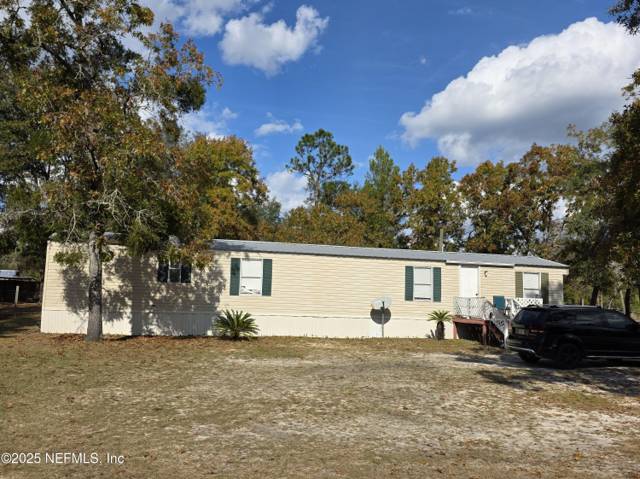
Citywide medians mix off-water mobiles with high-bank lakefront. Brooklyn homes need Brooklyn comps, adjusted for stage at sale — thin as they are.
Discovering insurance at closing
Flood-zone status on a 20-foot-swing lake is lot-specific and drives premiums hard. Quote insurance the week you offer, not the week you close.
We run this checklist on every lake-district deal. It costs you nothing as a buyer — our fee comes from the transaction either way.
Put us to workFrontage & Lots: Where Value Lives
Not sure which shelf a listing sits on? Send us the address — we will tell you which bar it belongs to.
Get the frontage readThe Lake Brooklyn Buyer Checklist
- Pull the USGS stage history (station 02244750) and compare today’s level to the 2004 low and the long-term range.
- Order a survey showing the ordinary high-water line, platted lot line, and any shoreline reservations or easements.
- Check the FEMA flood panel and get an elevation certificate if the lot touches any mapped zone.
- Inspect well and septic fully — yield test, water quality, tank and drainfield, permit history.
- Verify deed restrictions from recorded plat documents — not the listing’s “no HOA” line.
- Quote insurance early — flood, wind and age-of-home surcharges, the same week you offer.
- Confirm dock status — permitted, grandfathered, or neither; and what reaches water at low stage.
- Comp against Brooklyn sales only, adjusted for frontage type and stage at sale — not the citywide median.
Brooklyn is the lake I tell water-savvy buyers about first. It swings hardest, it scared the market longest, and it is the one lake in North Florida with a nine-figure engineered inflow pointed directly at it. The fear discount is still in the prices; the pipeline is already in the ground.
We represent you, not the seller. On a thin-comp, high-variance lake like this one, that means pricing the shoreline and the stage history — not the photo — and walking away when the elevation math does not work.
Lake Brooklyn vs. the Alternatives
If you are considering Brooklyn, you are almost certainly weighing Geneva and the broader Clay County options too. The honest matrix:
| Community | Setting | Typical entry | Fees | The trade |
|---|---|---|---|---|
| Lake Brooklyn | Deep-basin comeback lake | Often below Geneva | None on most lots | First in line for Black Creek water; biggest swings |
| Lake Geneva | Big-water lake with the city beach | ~$300s lakefront | None on most lots | More lake, more social shoreline, second for project water |
| Keystone Heights (off-water) | In-town and rural plats | ~$150s–$280s | None to minimal | Lake lifestyle by proximity, not frontage |
| Lake Asbury | Suburban lake area near Green Cove Springs | Higher | Varies by plat | Shorter Jacksonville commute, less old-Florida |
| Magnolia Point | Gated golf, Green Cove Springs | Higher | HOA + club | Amenities and gates instead of frontage |
The verdict: Geneva buys you the bigger lake and the town’s social shoreline; Brooklyn buys you the recovery story at a discount. Between the two, the deciding factors are elevation on the specific lot and how much hydrology homework you are willing to enjoy.
Torn between the lakes? We will walk both shorelines with you and tell you which fits — even if the answer is neither.
Compare with usHonest Pros & Cons
What Lake Brooklyn gets right
- First lake in line for the Black Creek project’s 10 MGD
- Lakefront pricing that still carries the fear-years discount
- No HOA/CDD on most parcels; no fee stack, no committee
- Deep, clear, sand-bottom water at healthy stages
- Public ramp on King Street; Camp Immokalee heritage shoreline
- K–12 schools minutes from the basin
What it asks of you
- The chain’s biggest water-level swings — 20+ feet across cycles
- Pipeline inflow depends on Black Creek running high
- Well-and-septic rural living, long drives to hospitals and retail
- Very thin inventory and scarce comps
- Insurance and flood questions are sharply lot-specific
- Two-lane roads to everywhere; commutes are commitments
Our Buyer Playbook for Lake Brooklyn
The sequence we actually run for Brooklyn buyers, in order:
- Define the frontage type first — high-bank, deep-shelf, shallow-shelf, or lake-access — before touring a single house.
- Build the stage overlay for each candidate shoreline from USGS station 02244750.
- Pre-quote insurance and inspections so offer terms reflect real costs, not hopes.
- Comp on Brooklyn sales adjusted for stage, and write the offer with appraisal strategy in mind.
- Negotiate the slow-market way — 99–111 days on market is leverage if you use it and a trap if you rush.
Questions We Ask Before You Offer
Six questions that decide whether a Lake Brooklyn listing is a deal or a story:
- Where did the waterline sit in 2004, and what did this lot look like then?
- Is the dock permitted, grandfathered, or neither — and does it reach water at low stage?
- What do the recorded plat documents actually restrict, regardless of the listing copy?
- What will well, septic and roof age do to insurance and lending on this house?
- Which Brooklyn comps support the price after adjusting for frontage and stage at sale?
- If Black Creek runs dry for three years, does this purchase still make sense at this price?
Is Lake Brooklyn For You?
No community fits everyone, and Brooklyn is the most opinionated lake in the chain. The honest sort:
Consider elsewhere if you want
- A lake that never moves
- Turnkey new construction with a warranty
- HOA-maintained everything and amenity centers
- A short daily commute to Jacksonville
- Hospitals, malls and dining within 15 minutes
- A liquid market you can exit in 30 days
Lake Brooklyn fits if you want
- The chain’s best risk-reward story, bought at a discount
- No HOA, no CDD, no design committee
- Deep, clear water off your own dock at healthy stages
- A renovation or hold play with engineered tail-risk protection
- Small-town schools and a real lake-district community
- Old Florida, on purpose, with the hydrograph read