

Plantation At Leesburg
Homes for Sale in Leesburg, FL
All 684 homes for sale in Leesburg, FL · median $284,900 · 524 homes for sale in 34748 · Lake County homes for sale
True comps, carrying-cost math, and listings before the portals.
Market Heat
As of October 2026, Plantation At Leesburg in Leesburg, FL has 8 homes for sale and 2 pending, asking from $160,000 to $334,900 (median $239,000). Over the 12 months ending 2026-09-20, 29 recorded sales closed at a median of $199,850, $143 per square foot, a median 79 days on market, sellers accepting 84% of original asking (-8% versus the prior year). Homes listed or recently sold were built 1987 - 2004; 22 of 22 report an HOA (median $180/mo); 6 of the 22 geocoded homes sit in a FEMA special flood hazard zone (median elevation 93 ft). At the median price and Lake County's FY2025-26 rate of 16.65 mills, annual property tax runs about $3,330 ($2,660 with the full homestead exemption).
Last 30 days in Plantation At Leesburg: 4 new listings (median asking $239,000), 2 under contract right now, 5 closed sales (median $174,900). As of October 24, 2026, Listings courtesy of Stellar MLS as distributed by MLS GRID.
Homes For Sale Right Now in Plantation At Leesburg
Live MLS inventory for Plantation At Leesburg. Every active listing, what is under contract right now, and the last 12 months of closed sales, refreshed twice a day. Closed comps beat an algorithm's guess every time.
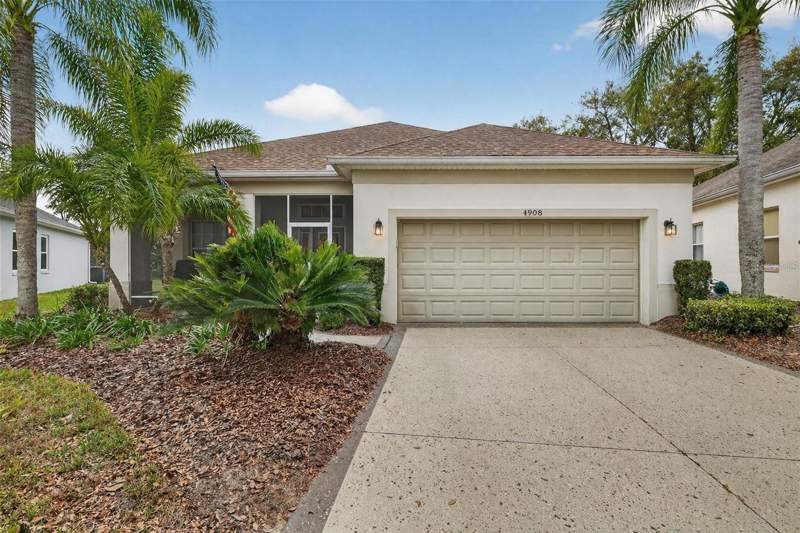 Active · 177 daysTop listing
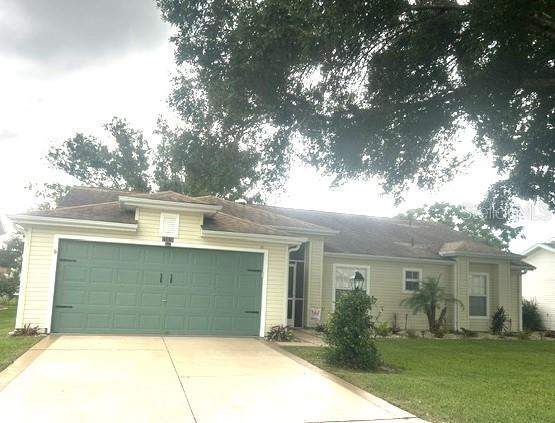 Active · 45 days
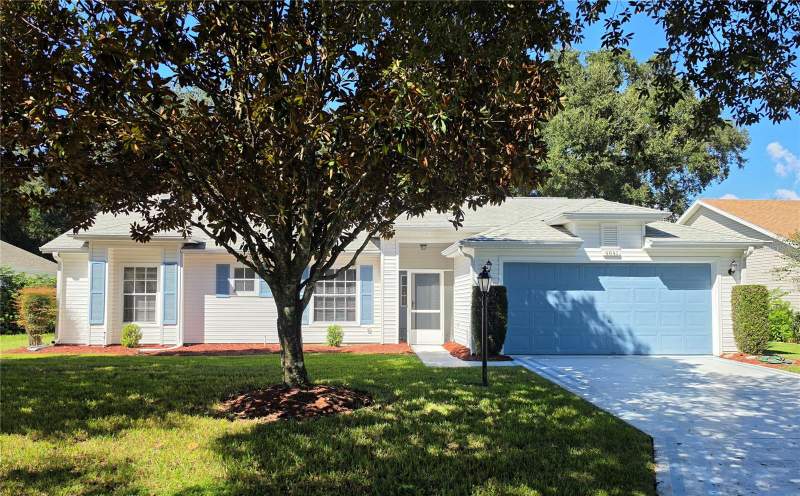 Active · 5 days
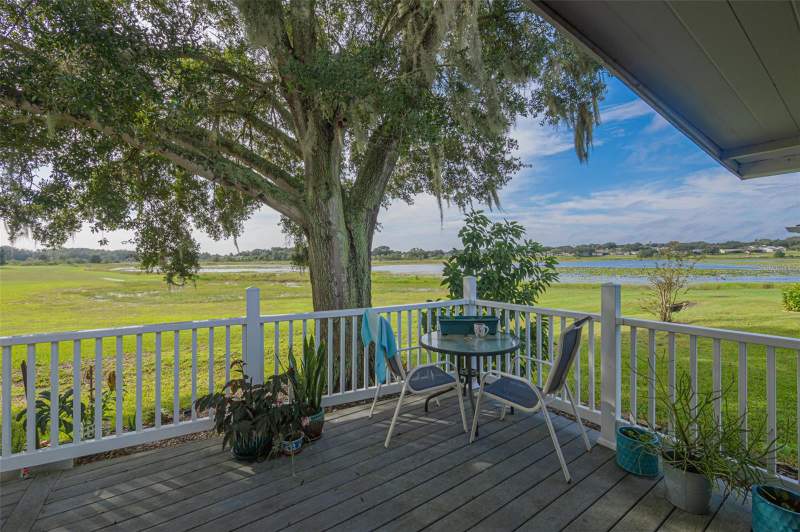 Active · 12 days
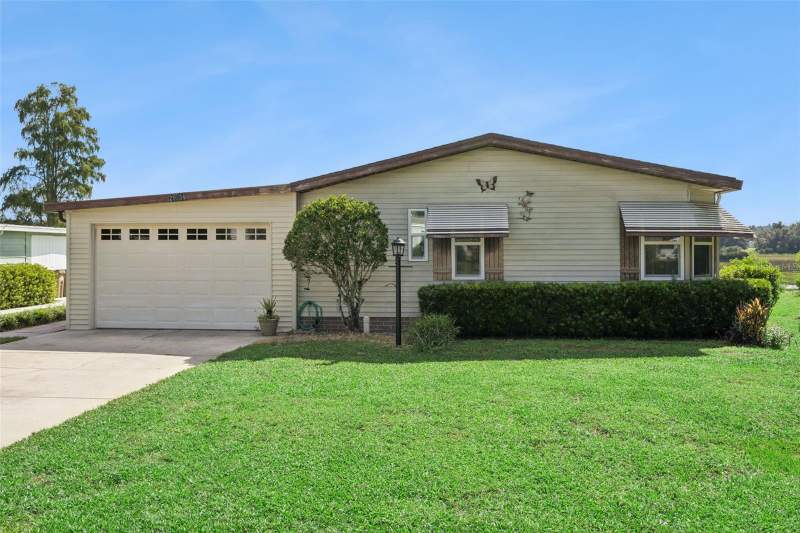 Active · 12 days
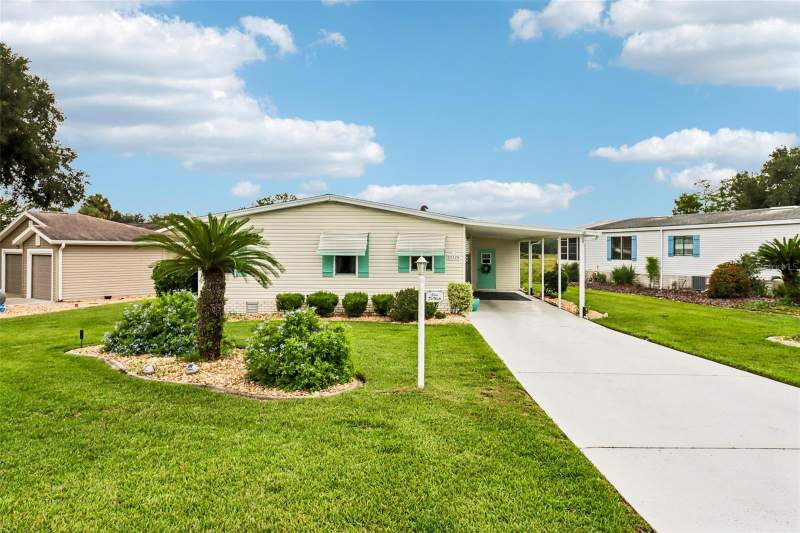 Active · 41 days
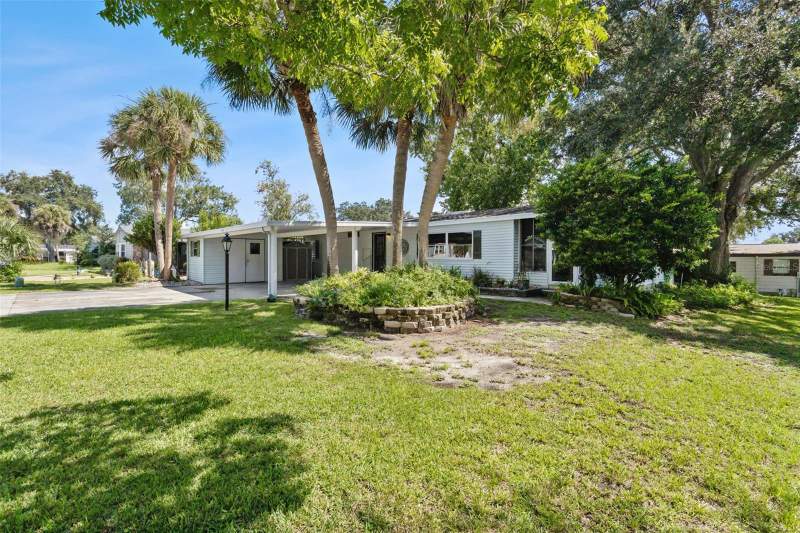 Active · 36 days
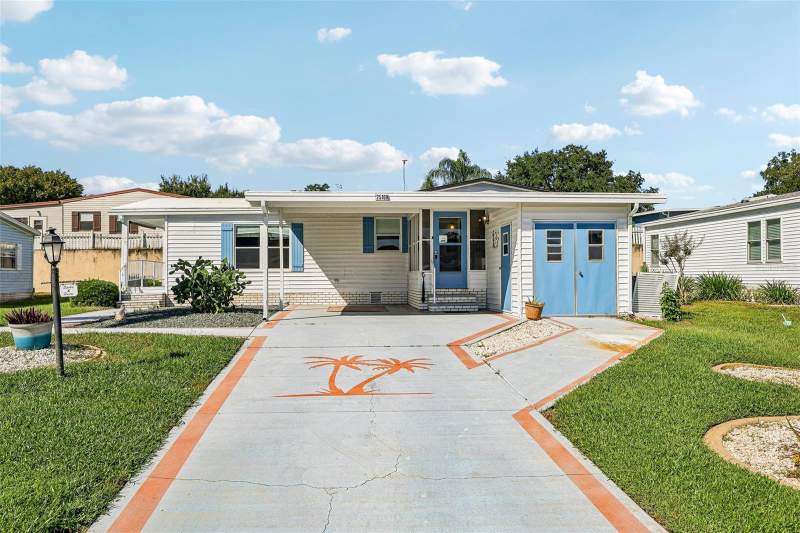 Active · 9 days
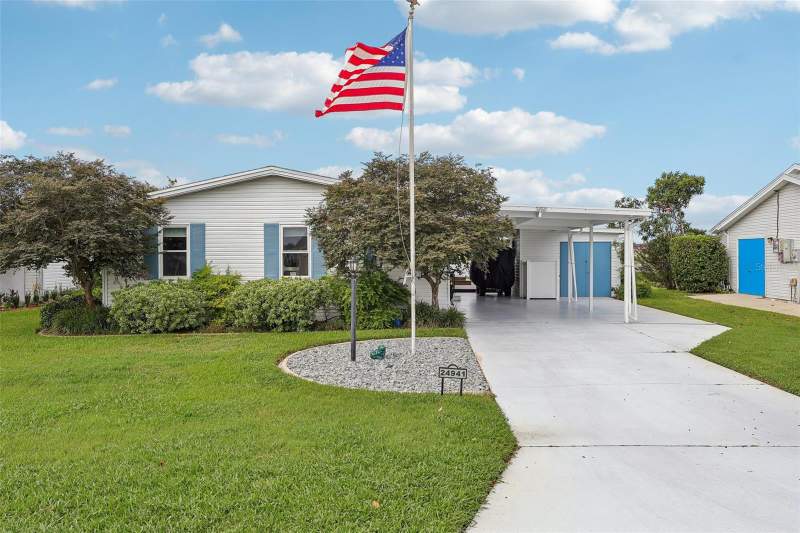 Pending · 22 days
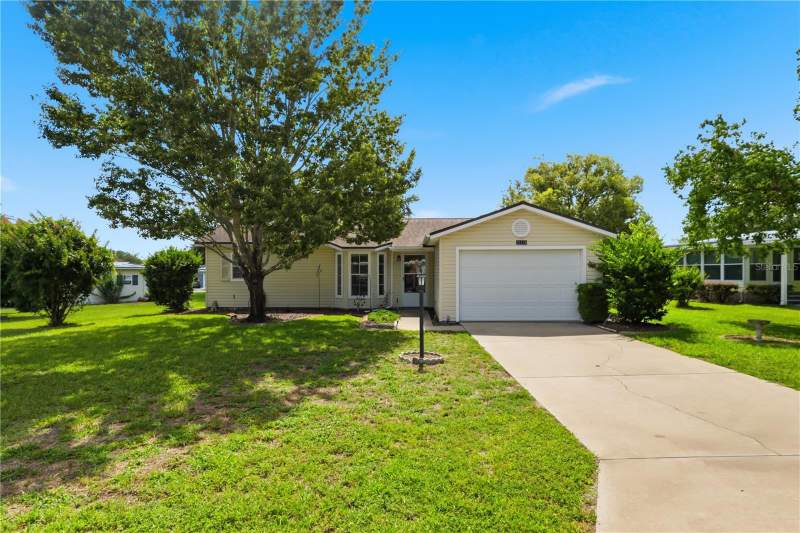 Pending · 119 days
Active and pending Plantation At Leesburg listings as of 2026-10-23, priced high to low. Based on Stellar MLS data distributed by MLS GRID for the period 2007 through 2026. Tap any home to ask about it.
Plantation At Leesburg right now
🟡 Balanced market. 1.9 months of supply and 55% of the inventory already under contract put buyers and sellers on roughly even footing.Why it matters: months of supply is how long today's inventory would last at today's sales pace; under-contract share is the portion of homes for sale that already have a buyer.Momentum Research analysis of Stellar MLS records, as of September 20, 2026. Confidence: Very High (11 active and pending listings, 29 closed sales in 12 months).
🟡 Off the recent peak. The trailing-12-month median ($200K) is down 7.9% from the prior 12 months ($217K). With about a dozen sales a year, a single closing can swing this number, so read the level and the decade, not one year's move.Momentum Research, record-level Stellar MLS closed sales, 12-month windows ending September 20. Confidence: High (29 and 29 sales in the two windows).
Jump to: Price history & scorecard · Homes for sale · Schools · FAQ
· Updated October 24, 2026 · Live data: Stellar MLS, refreshed twice daily · MLS facts carry their source; interpretation lines are Momentum Research · Data sources & freshness
The 60-Second Overview
Plantation At Leesburg market snapshot (as of September 20, 2026): the median sale price is about $200K ($143 per sq ft over the trailing 12 months of closed sales), a median 79 days on market for closed sales, and 1.9 months of supply, a balanced market. The trailing-12-month median is down 8% from the prior 12 months, computed from record-level Stellar MLS closed sales (29 closings in the current window).
In ZIP 34748 (Leesburg), 1,072 homes closed in the last 12 months at a median of $290K ($161/sq ft), down 2.6% year over year, with a median 70 days on market. Right now 240 active and 63 pending listings put supply at about 5.0 months - a buyer's market. See the live ZIP 34748 housing market and the Lake County market.
County records show 26 qualified sales in Plantation At Leesburg across 2024 - 2025 (22 in 2024, 4 in 2025), median $195,000 - the last recorded sale per parcel on the Florida DOR 2025 assessment roll, independent of the MLS.
Flood zones in Plantation At: of 21 listing addresses checked against the FEMA National Flood Hazard Layer, 71% sit outside the FEMA Special Flood Hazard Area (Zone X); 29% are in an A-series high-risk zone where flood insurance is required with a federally backed mortgage. Individual parcels vary - verify any specific address at msc.fema.gov. See flood zones by neighborhood in Leesburg.
Plantation At Leesburg is a community of 240 homes in Leesburg, Lake County, built between 1986 and 2006 (median 1990.0), with a median living area of about 1,440 square feet. 69% of parcels are homesteaded, the owner-occupancy proxy in the Florida DOR assessment roll (2025 roll, public records).
The setting & the homes.
Aerial and on-site photos of Plantation At Leesburg. Swipe to explore the community.
Swipe or use the arrows → tap any photo to enlarge
Plantation At LeesburgPlantation At LeesburgPlantation At LeesburgPlantation At LeesburgPlantation At LeesburgPlantation At LeesburgPlantation At LeesburgPlantation At LeesburgPhotos from Stellar MLS listings in Plantation At Leesburg; content deemed reliable but not guaranteed.
Price History: What Homes Here Have Actually Sold For
Median sale price over the trailing 12 months ending September 20 of each year, from record-level Stellar MLS closed sales. Same methodology as every appreciation figure on this page: the 2026 point ($200K) IS the median in the snapshot above, and the move from 2025 ($217K) IS the -7.9% one-year change.
Windows contain 0 to 29 sales each (29 in the current window); every figure carries its sample size, and thin markets swing on single closings. Based on Stellar MLS data distributed by MLS GRID for the period 2007 through 2026. Deemed reliable but not guaranteed.
The real cost & risk here
Before the list price, the Florida math the portals skip. These are Lake County typicals — your exact home, flood zone, and insurance quote will vary, so verify each before you offer.
Check it for your address: look up your flood zone (FEMA) · insurance by county · true-cost calculator · Lake County scorecard.
County typicals from Momentum’s Florida housing data (Zillow & Realtor.com aggregates, Census, FRED), updated monthly; insurance modeled. Flood zone is property-specific — always confirm via FEMA.
20% of homes for sale in Plantation At Leesburg are already under contract (under contract ÷ under contract + active listings) — a read on how much of the available inventory buyers have already claimed. Source: MLS data (2026-10-25).
Plantation at Leesburg Market Scorecard
Plantation at Leesburg is currently a seller's market. About 2.7 months of supply, a median asking price of $239,000, and homes go under contract in about 24 days.
Typical home value in the 34748 ZIP is $272,230, about 2.3% above the Florida norm (Zillow Home Value Index).
Go deeper: ZIP market scorecard · county scorecard · true cost calculator · affordability calculator.
Live data: Stellar MLS, distributed by MLS GRID, refreshed twice daily. Typical value: Zillow Research. Market metrics only; these describe homes for sale and recent sales, not residents.
Plantation At Leesburg on the map.
Every active, pending, and recently sold home, plotted. Toggle the layers and tap a home for the details.
Listing locations from Stellar MLS. Map data © OpenStreetMap contributors.
Life at Plantation At Leesburg
- Pool · reported on 22 of 23 listings
- Tennis Court(s) · reported on 22 of 23 listings
- Deed Restrictions · reported on 21 of 23 listings
- Gated Community - Guard · reported on 21 of 23 listings
- Fitness Center · reported on 21 of 23 listings
- Golf · reported on 21 of 23 listings
- Buyer Approval Required · reported on 20 of 23 listings
- Golf Carts OK · reported on 20 of 23 listings
- Clubhouse · reported on 18 of 23 listings
- Community Mailbox · reported on 16 of 23 listings
- Restaurant · reported on 15 of 23 listings
- Gated · reported on 14 of 23 listings
Community amenities as reported across Stellar MLS listings in this community; deemed reliable but not guaranteed. Verify current amenities and access with the HOA.
Schools
- Lake County Public Schools
- Verify the zoned schools by address
- Magnet and choice options may be available
- Leesburg Elementary · Elementary
- Oak Park Middle · Middle
- Leesburg High · High
Zoned schools reflect the assignments reported on recent Plantation At Leesburg listings and can change; always confirm with Lake County Public Schools for a specific address.
Buying with schools in mind? We can confirm the exact zoned schools for any Plantation At Leesburg address.
Shop the zone: Homes zoned for Leesburg High High School
The Plantation At Leesburg buying strategy.
If we were buying in Plantation At Leesburg today, this is the order of operations we would run for our clients.
Underwrite the condition first. Price the roof, HVAC, and systems honestly before judging any list price; condition swings value here more than square footage alone.
Match the home to real comps. Recent sales of similar condition and lot, not the asking price, tell you what a home is worth.
Move deliberately, not desperately. Neither side has a decisive edge, so a well-prepared, fairly-priced offer wins without overpaying.
Line up financing and inspection early. A pre-approval and an inspection plan let you act fast and negotiate from evidence.
Keep an agent in your corner. The listing agent works for the seller; we represent you and prepare a hand-built valuation before any offer in Plantation At Leesburg.
A closer look at the Plantation At Leesburg market
At a median of $143 per square foot, Plantation At Leesburg prices sit in a fairly defined band, so condition and updates — more than the list price — tend to separate one home from the next.
Inventory runs at 1.9 months of supply, a balanced market and the trailing-12-month median down 8% year over year. Homes that do trade take a median 79 days on market, useful leverage on any listing that has lingered.
The housing stock is 240 homes built between 1986 and 2006, and 69% of parcels are homesteaded — the owner-occupancy proxy in the Florida DOR assessment roll.
The location and the amenities are priced into every listing in Plantation At Leesburg. The deal is won or lost on condition, the comps, and the renovation math.
Momentum Buy Score.
Our proprietary 0 to 10 read across the factors that decide how a home in Plantation At Leesburg buys, holds, and resells. Momentum Research; not an appraisal.
Momentum Intelligence Scores are our proprietary, qualitative assessment on a 0 to 10 scale, built from the record-level market data on this page. They are a framework for comparing communities, not a guarantee of future value and not advice on a specific home; unlike an automated value estimate they do not price your home, they grade the community on evidence you can inspect. Composite is the plain average of the 4 factors (4.8). Basis: Recent Direction -7.9% year-over-year; Liquidity & Demand 1.9 months of supply; Owner Commitment 69% owner-occupied; Pricing Power 84.5% sale-to-list. Refreshed with each data update.
Tools for a Plantation At Leesburg buy.
Free calculators to pressure-test the real cost before you tour.
Selling here is won on condition and pricing to real comps, not an automated estimate. The right number comes from closed Plantation At Leesburg sales matched to your home.
Price it to the comps and condition, not an automated estimate.
If you are thinking about selling in Plantation At Leesburg, the right list price comes from recent comparable sales matched to your home's condition and location, not an automated estimate.
What is your Plantation At Leesburg home worth?
Get a no-obligation home value based on real comparable sales in Plantation At Leesburg, not an automated guess. Tell us about your home and we will personally prepare your numbers and a pricing strategy. No obligation, no spam.
See all homes for sale in Leesburg →
Recently off market in Plantation At Leesburg
Homes in Plantation At Leesburg that recently left the market. Each address opens its public-record profile: county-recorded value, property taxes, the last recorded sale, community sales history, and what is for sale nearby now. 11 on record.
- 25014 Pine Hill · off market
- 25034 Betton Hill · off market
- 25035 Bellevue · off market
- 25047 Bellevue · off market
- 25069 Riverwalk Drive · off market
- 25100 Pine Hill · off market
- 25143 Barrow Hill · off market
- 25201 Clifford · off market
| Location | Leesburg, Lake County, FL · ZIP 34748 |
|---|---|
| Homes in the community | 240 (FL DOR 2025 assessment roll) |
| Years built | 1986–2006 (median 1990.0) |
| Typical living area | 1,440 sq ft (median) |
| Home types (current listings and sales) | manufactured homes 64%, single-family 36% |
| Amenities listed by sellers | Pool, Deed Restrictions, Gated Community - Guard, Golf Carts OK, Golf, Tennis Court(s) |
| Sale prices, last 12 months | $199,850 median across 29 closed sales · $143 per sq ft · -7.9% vs the prior 12 months |
| Days on market (closed sales) | 79 median |
| For sale right now | 5 active, 6 pending · median asking $191,000 · 1.9 months of supply |
| Owner-occupied (homestead) share | 69% |
Data as of September 20, 2026. Based on Stellar MLS data distributed by MLS GRID for the period 2007 through 2026; housing-stock figures from Florida Department of Revenue public records. Market figures describe homes, not residents. Cite as: Momentum Realty, “Plantation At Leesburg key facts,” movewithmomentum.com/neighborhoods/plantation-at-leesburg, data as of September 20, 2026.
Housing distress & ownership in Plantation At Leesburg, Leesburg
Who owns here, how much is not owner-occupied, and how much for-sale inventory is under distress.
Source: Momentum Realty Research. Ownership & parcels from the FL DOR 2025 tax roll; distress from MLS active-listing status/remarks; price from MLS closed sales. Based on Stellar MLS data distributed by MLS GRID for the period October 2026 through October 2026. Deemed reliable but not guaranteed.
Just listed in Plantation At Leesburg
The newest homes for sale in Plantation At Leesburg right now, newest first. Each link opens the full listing with every photo, the price history and a tour request.
- 25109 Clifford Hill $160,000 · 2 bd · 2 ba · 1,056 sq ft · listed Oct 13, 2026 Courtesy of COLDWELL BANKER VANGUARD EDGE REALTY
- 25038 Clifford Hill $230,000 · 2 bd · 2 ba · 1,388 sq ft · listed Oct 10, 2026 Courtesy of CHASE AARON REAL ESTATE LLC
- 25007 Bellevue $248,000 · 2 bd · 2 ba · 1,352 sq ft · listed Oct 10, 2026 Courtesy of HOMESTEAD REAL ESTATE LLC
- 25040 Betton Hill $179,000 · 2 bd · 2 ba · 1,428 sq ft · listed Sep 16, 2026 Courtesy of CHARLES RUTENBERG REALTY ORLANDO
- 25120 Clifford Hill $188,000 · 2 bd · 2 ba · 1,349 sq ft · listed Sep 11, 2026 Courtesy of COLDWELL BANKER VANGUARD EDGE REALTY
- 25078 Riverwalk Drive $279,900 · 2 bd · 2 ba · 1,549 sq ft · listed Sep 7, 2026 Courtesy of PROPERTY SHOWCASE HOMES REALTY
Checked against the MLS nightly. All new listings in this market.
Every Home for Sale in Plantation At Leesburg Right Now (9)
All 9 active and pending Plantation At Leesburg listings with a detail page, newest first, refreshed twice a day from the MLS.
- 25109 Clifford Hill · $160,000 · 2 bd / 2 ba · listed Oct 13, 2026 · listed by Coldwell Banker Vanguard Edge Realty
- 25007 Bellevue · $248,000 · 2 bd / 2 ba · listed Oct 11, 2026 · listed by Homestead Real Estate Llc
- 25038 Clifford Hill · $230,000 · 2 bd / 2 ba · listed Oct 10, 2026 · listed by Chase Aaron Real Estate Llc
- 25040 Betton Hill · $179,000 · 2 bd / 2 ba · listed Sep 16, 2026 · listed by Charles Rutenberg Realty Orlando
- 25110 Bellevue · $197,450 · 2 bd / 2 ba · pending · listed Sep 10, 2026 · listed by Florida Plus Realty, Llc
- 25078 Riverwalk Drive · $279,900 · 2 bd / 2 ba · listed Sep 7, 2026 · listed by Property Showcase Homes Realty
- 25120 Clifford Hill · $191,000 · 2 bd / 2 ba · listed Aug 31, 2026 · listed by Coldwell Banker Vanguard Edge Realty
- 24941 Pine Hill · $225,000 · 3 bd / 2 ba · pending · listed Aug 26, 2026 · listed by Redfin Corporation
- 4908 Cypress Head Court · $334,900 · 3 bd / 2 ba · listed by Re/Max Realty Unlimited
Recently sold in Plantation At Leesburg
- 5036 Sawgrass Lake Circle · sold $333,229
- 25100 Pine Hill · sold $120,000
- 5540 Hamlin Court · sold $260,000
- 25201 Clifford · sold $165,000
- 25035 Bellevue · sold $174,900
- 25224 Wild Heron · sold $85,000
- 25047 Bellevue · sold $170,000
- 25014 Pine Hill · sold $199,850
- 25034 Betton Hill · sold $108,000
- 25143 Barrow Hill · sold $170,000
Closed sales from the MLS; each page shows the sold price, taxes and value history.
More Leesburg home searches
- All homes for sale in Leesburg, FL
- Homes for sale in Lake County, FL
- Leesburg pool homes for sale
- Leesburg waterfront homes for sale
- Gated communities in Leesburg
- Leesburg golf course homes
- Homes under $300K in Leesburg
- Homes from $300K to $500K in Leesburg
- 4-bedroom homes for sale in Leesburg
- Leesburg home values: what is my house worth?
Leesburg guides & data
- Market data
- Cost of living
- Best neighborhoods
- Flood zones
- Property taxes (Lake County)
- Homestead exemption (Lake County)
- Home insurance cost
- New construction
Florida buyer guides
- Florida home insurance rates by county
- Florida property tax by county
- Florida property tax calculator
- What flood zone X means
- The 4-point inspection, explained
- Florida flood insurance calculator
Real estate agent in Leesburg? Join Momentum in Leesburg: 100% commission, one $12K cap.
Streets in this community
Street-level pages: every home on record, what sold and what is for sale on each street.
- Pine Hill (37 homes on record)
- Bellevue (22 homes on record)
- Clifford Hill (20 homes on record)
- Pine Hill (12 homes on record)
- Riverwalk Drive (6 homes on record)
- El Destino Drive (5 homes on record)
- Tara View Road (5 homes on record)
- Amberleaf Court (3 homes on record)
- Astor Street (3 homes on record)
- Oak Alley (3 homes on record)
- Tangelo Street (3 homes on record)
- Cranes Roost Circle (2 homes on record)
What it really costs to own in Plantation At Leesburg
The parts of the monthly number a mortgage calculator leaves out, from the tax roll, the MLS, Citizens and FEMA. Property facts only.
| HOA dues | Median $180/month across 21 MLS listings (most billed monthly; 2026-10-24). Dues cover what the documents say they cover; ask for the budget and reserve study. |
|---|---|
| Home and flood insurance | The average Citizens Property Insurance premium in Lake County is $1,756/yr (3,500 policies, Citizens detail by county, April 2026); private-market quotes depend on roof age, wind mitigation and construction. Flood: of 21 listing addresses checked against the FEMA flood map, 71% sit outside the high-risk zone and 29% inside one, where flood insurance is required with a federally backed mortgage. Statewide, a Zone X flood policy runs about $500-$700/yr and a high-risk zone $1,200-$2,500/yr (FEMA Risk Rating 2.0 averages, not quotes). |
| Roof and age | Median build year 1989 across 21 listings. An original roof here would be about 37 years old; under Florida's 2022 reform (SB 2-D) carriers may require an inspection past 15 years, so budget for a roof report, and for replacement where it fails. |
Email me new listings in Plantation At Leesburg
One e-mail a day, only when a home lists here, with price, beds, baths and a link to every listing. Straight from the MLS feed; no account needed.
Ask an agent about Plantation At Leesburg
Have a question about the homes, fees, rules or commute here? A Momentum agent who works Plantation At Leesburg will answer, and the answer is published on this page for the next buyer.
Frequently Asked Questions
What is the median home price in Plantation At Leesburg?
How long do homes in Plantation At Leesburg take to sell?
Is Plantation At Leesburg a buyer's or seller's market right now?
How many homes are in Plantation At Leesburg?
What share of Plantation At Leesburg is owner-occupied?
When were the homes in Plantation At Leesburg built?
Who is the best real estate agent for Plantation At Leesburg?
How do I find a top Leesburg real estate agent who knows Plantation At Leesburg?
Can Momentum Realty connect me with an agent for Plantation At Leesburg?
Where is Plantation At Leesburg, and what county is it in?
Is Plantation At Leesburg in a flood zone?
Is Plantation At Leesburg a good place to live?
Data sources & freshness
| Live listings | Stellar MLS, refreshed twice daily (last: October 23, 2026) |
| Community market stats | Stellar MLS closed sales, 12-month windows ending September 20, 2026 |
| Housing stock & ownership | Florida DOR assessment roll (street-list match (6 streets, ZIP 34748)) |
| Under-contract shares | Stellar MLS records, as of 2026-09-20 |
| Historical depth | Closed-sale records back to 2007 (165 transactions analyzed) |
Verify the primary sources yourself: Florida DOR · U.S. Census · FEMA flood maps · Citizens Property Insurance.
Momentum Research figures are our own analysis of Stellar MLS records; MLS data is deemed reliable but not guaranteed. Methodology: how Momentum market scores are computed. Market metrics describe homes for sale and recent sales, not residents.
Own a home here?
You just read the data. Now see what your home is worth.
The numbers on this page move markets in the aggregate. The number that matters to you is what a buyer pays for your address. Momentum sells for 1.25% above the Stellar MLS member average and 8 days faster, and we’ll price yours against live local comps.
Looking to buy here? Search homes for sale →
What’s your home worth in your area?
A real valuation with real comps from a local listing agent, not an instant algorithm. Response within one business day.
See how Plantation At Leesburg fits the bigger picture — live prices, inventory, and Momentum Scores:
More on Plantation At Leesburg
- Home values · What homes in Plantation At Leesburg actually sell for
- Find an agent · How to choose the best real estate agent in Plantation At Leesburg
Nearby Communities
Explore more neighborhoods near Plantation At Leesburg with Momentum Realty’s local guides.