The 60-Second Overview
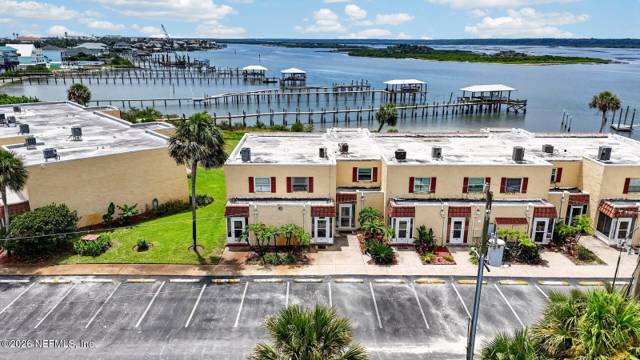
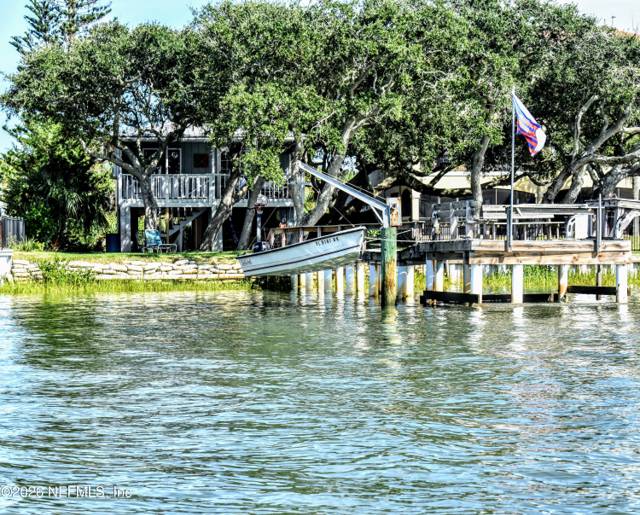
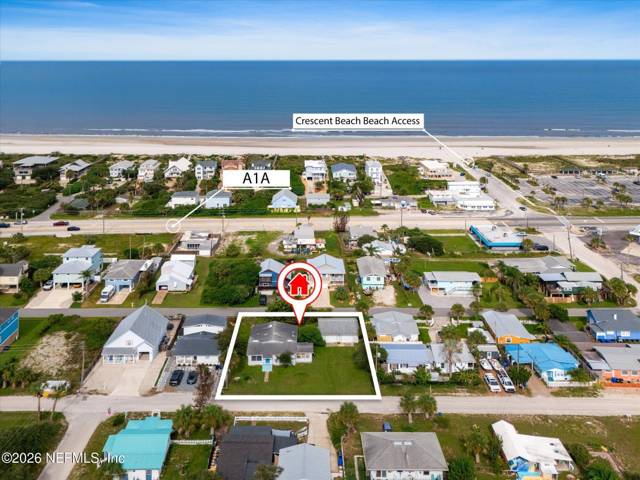
Trade Winds is a 60-unit, three-story, U-shaped oceanfront condominium at 7750 A1A South on Crescent Beach, built in the early 1970s on one of the stranger and better parcels on Anastasia Island: a narrow stretch where the property runs from the Atlantic dune line clear back to the Intracoastal Waterway. The east side gets the oceanfront pool and the dune walkover; the west side gets a fishing dock, a boat launching ramp, and secure boat storage. The units in between are one- and two-bedroom plans of roughly 950 to 1,254 square feet, in both single-level flats and two-level townhomes, behind a gated entry with ample uncovered parking.
Two things define buying here. First, density: 60 units is tiny for direct oceanfront. The big names nearby stack hundreds of doors on their parcels; Trade Winds gives you the same Atlantic, the same Crescent Beach sand, and a community small enough that the U-shaped courtyard works like a shared front porch. Second, era: an early-1970s, three-story coastal building sits squarely inside Florida's milestone-inspection and SIRS framework, which makes the association's structural reports, reserves, and insurance posture the real inspection on any purchase.
Trade Winds is low-density direct oceanfront at Crescent Beach prices, with a boat ramp on the back door. The deal is won or lost on the view-position ladder and the association's milestone-era paperwork.
The typical trading band runs roughly $300,000 to $550,000, a wide range for one small community, because position, format, and renovation level do enormous work here. An on-site rental office operates and owners have historically had broad rental flexibility, so the community carries a genuine mix of full-time owners, second homes, and rental units, which shapes both the lifestyle and the lending picture.
The Fee, the Reserves & the Milestone-Era Math
There is no CDD and no club here; the cost structure is one condominium association fee covering the building envelope, the master insurance policy, grounds, the pool, and the common areas, with on-premises laundry and the dock and ramp maintained as community assets. We are deliberately not printing a fee amount, because coastal-building budgets move with the Florida insurance market every year and a stale number is worse than none. Confirm the current fee, the full inclusion list, the budget, and the reserve schedule in writing as a condition of your offer.
Now the part most listings gloss over. Florida's post-Surfside condo-safety framework requires milestone structural inspections and structural-integrity reserve studies (SIRS) for older buildings of three stories and taller, and a three-story oceanfront building from the early 1970s, among the oldest condo stock on this coast, is precisely what the law was written to examine. That is not a reason to avoid Trade Winds; a small building that has completed its inspections and funded its reserves is arguably a safer purchase than it has ever been, and with only 60 owners the politics of getting work done are simpler than in a 300-unit campus. It is a reason to read the reports before you price the unit: the milestone status and findings, the SIRS, the reserve-funding plan, and any completed or planned special assessments tell you whether the sticker price is the whole price.
The 1972 Question: Buying the Oldest Stock Honestly
Trade Winds belongs to the first generation of oceanfront condos on this coast. Community data lists the build year as 1972; some sources cite 1974; either way, this is early-1970s masonry construction that has stood through five decades of salt air, nor'easters, and named storms, and we confirm the exact year against St. Johns County records during diligence. Buying the oldest stock is neither brave nor foolish by itself. It is a documents question, and here is how we read it.
First, the structural file. Ask where the association stands on its milestone inspection: completed, scheduled, or pending; what the engineers found; and what repairs followed. Concrete restoration, balcony and railing work, roof cycles, window and slider replacement, and seawall or dune-walkover maintenance are the normal life of a building like this; the only question is whether the association has handled them proactively or deferred them, and the maintenance history answers that in black and white. Second, the reserves. The SIRS and the reserve study show whether future work is funded by the fee or waiting to land as a special assessment across 60 doors. Third, the insurance trajectory. An older oceanfront building's master policy is the single most volatile line in its budget; ask how the premium has trended over the past several years and whether coverage terms have tightened, because that trend flows straight into the fee.
The honest upside of the era: this parcel could not be assembled today. Ocean-to-Intracoastal land at Crescent Beach with a private dock and ramp is a 1970s artifact; modern coastal setback and density rules would never permit a 60-unit community to control both shorelines like this. Buyers who do the paperwork are buying something the market literally cannot reproduce, and buildings that have completed their post-Surfside obligations come out the other side with an inspection file newer buyers can rely on.
Crescent Beach: the Quiet-Sand Lifestyle
Crescent Beach is what people picture when they say they want the beach without the scene. It is the southern stretch of Anastasia Island, below the SR-206 bridge: wide, hard-packed sand with vehicle access points, long sightlines, a fraction of the pier-district crowds, and Fort Matanzas National Monument and the inlet a few minutes south, where the island simply ends in federal land and water. The neighborhood around Trade Winds is beach houses and a handful of condo communities, not hotel rows.
The practical geography: a small cluster of restaurants and services sits around the SR-206 bridge about four minutes north, the island's main grocery run is roughly ten minutes up A1A, the St. Augustine Beach pier district is about fourteen, and downtown St. Augustine, the restaurants, the historic district, the nights out, is a 20-25 minute drive over the Bridge of Lions. I-95 is about twelve minutes west via SR-206, which makes Jacksonville day trips and airport runs easier than the beach address suggests.
What the location asks of you is honesty about errands: everything is a drive, and in peak season A1A moves slower, though far less down here than near the pier. What it gives back is the reason people buy here: an uncrowded Atlantic out the front door and the Intracoastal out the back, sunrise over one and sunset over the other, from the same 60-unit community.
Views, Floors & Formats in a Small Building
With only 60 units, era held constant, value concentrates in three variables: position, floor, and format. Position is the big one. The U-shape was drawn around the ocean, so the front-row positions face the Atlantic head-on, the courtyard units catch the ocean over the pool deck at a discount, and the west-side units trade the head-on ocean view for Intracoastal glimpses and the lowest entry prices in the community. Floor is the second variable: in a three-story walk-up with no elevator, the third floor buys the best horizon and breeze at the cost of stairs, and ground floors trade view for step-free living and the fastest walk to the sand.
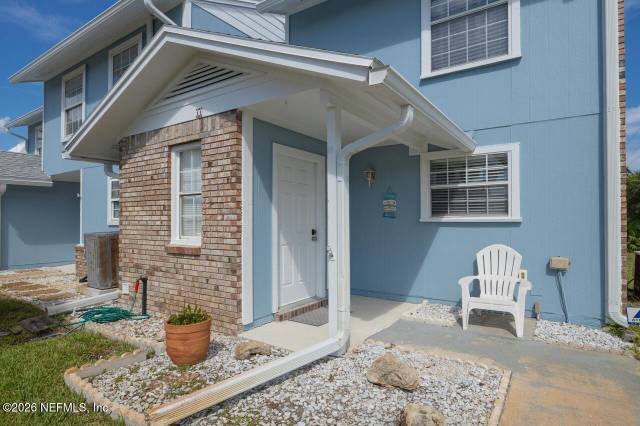
Format is the wrinkle most small communities do not offer: Trade Winds has both single-level flats and two-level townhomes, with the townhomes living more like small beach houses, bedrooms upstairs, living space below. The two-bedroom townhomes on oceanfront positions are the scarcest product here and the most durable on resale. Shop it in that order, position, then floor, then format, and let renovation level set the price inside the lane; on plans this size, a quality renovation moves price meaningfully, and the portal photos will not tell you which position you are looking at. We will.
Schools
Trade Winds is zoned to St. Johns County public schools on the south-county feeder pattern, typically W.D. Hartley Elementary, Gamble Rogers Middle, and Pedro Menendez High. Most buyers in a small oceanfront community are not enrolling children, but the zoning still supports resale: St. Johns County is one of Florida's strongest districts overall, and the family buyer who wants a beach base inside it is part of your future buyer pool.
The honest read: if top-rated schools at every level are the deciding factor, the county's powerhouse zones are on the mainland growth corridors, not the south island. Confirm exact zoning for any unit with the district, since St. Johns County rezones periodically.
More on Living at Trade Winds
The depth without the wall of text. Open what matters to you.
Location and commute
Hurricane, flood, and insurance reality
Boats, the dock, and the ramp
The seasonal rhythm
5 Mistakes Buyers Make at Trade Winds
Same small community, same five traps. Every one of them is avoidable with the right read before you tour.
Pricing the unit without the milestone and reserve file
An early-1970s, three-story oceanfront building lives or dies on its structural reports and reserves, split across only 60 owners. Request the milestone status and findings, the SIRS, the reserve study, and any planned assessments in writing before you price your offer, not after the inspection period starts.
Paying an oceanfront price for a courtyard view
The position ladder is real and portals flatten it. The same floor plan one row back from the dune line trades meaningfully below the front row. Price from comps matched to position and format, never from community averages.
Assuming the rental flexibility instead of verifying it
Rentals operate here today with broad flexibility, but association rules and county registration requirements evolve. If your math depends on rental income, get the current rules, minimums, and any caps in writing from the association before contract.
Ignoring the lender questionnaire until underwriting
Older coastal communities with rental activity get extra lender scrutiny: reserves, insurance, occupancy ratio, litigation. Pull the condo questionnaire early with a condo-experienced lender, or watch a financed deal wobble three weeks in.
Calling the listing agent
The agent on the sign works for the seller. In a 60-unit community where every listing is somebody's negotiation and the paperwork is the product, walking in unrepresented is how you pay the ask and inherit the surprises.
Which Positions Hold Value Best
In a small oceanfront community, the position is the lot
Interiors can be renovated; a unit's position in the U cannot. Direct-oceanfront townhomes and upper-floor front-row flats carry the most durable premiums and the strongest rental calendars, ocean-view courtyard positions hold the middle, and west-side units are the value tier, priced for what they deliver and quietly closest to the dock and ramp.
The mistake is paying a front-row price for a courtyard view because the kitchen dazzled. We position-match every comp so your money lands where the market gives it back.
What to Check Before You Offer
Before you write an offer on any Trade Winds unit, run this list. Missing any one of them is how buyers overpay or inherit a problem.
- Milestone-inspection status and findings, SIRS, reserve study, and any planned special assessments, in writing
- Current fee and full inclusion list from the association, not from the listing
- Current rental rules and owner-occupancy ratio, minimum stays, registration, caps
- Position- and format-matched closed comps, never community averages
- Master insurance declarations and premium trend plus a real HO-6 quote for the unit
- Flood-zone determination for a parcel that touches both the ocean and the Intracoastal
- Early-1970s-era systems in the unit: sliders and windows, HVAC age, panel, plumbing updates, and what the association has replaced building-wide
- Dock, ramp, and boat-storage rules if the water access is part of why you are buying
Trade Winds is the community we point to when someone says they want to actually live on the ocean at Crescent Beach without buying into a 300-unit machine, because almost nothing else on this coast offers it: 60 units, a front row on the quiet sand, and a parcel that runs clear back to the Intracoastal with a dock and a boat ramp. That land could not be assembled under today's rules, and 60 units is all there will ever be.
But it is an early-1970s oceanfront building in the milestone era, and the association paperwork is the inspection. Read the milestone status, the SIRS, and the reserves before you fall in love with a sunrise; cross-shop it honestly against Summerhouse if you want the amenity machine and Pelican Inlet if the boat matters more than the front row; and price from position-matched closed comps. Buy the position first. That is the whole game in a small building.
Trade Winds vs. Comparable Communities
The honest way to place Trade Winds is against the other Crescent Beach and island condo communities a buyer is realistically weighing. Each trades something different.
| Community | How it compares to Trade Winds |
|---|---|
| Summerhouse | The big gated oceanfront community just up A1A: four pools, tennis, racquetball, and a powerful on-site rental engine across hundreds of units. Trade Winds counters with one-fifth the density, a true front-row dune line, and the Intracoastal dock and ramp Summerhouse cannot offer. |
| Pelican Inlet | The boat-first cross-shop on the west side of A1A: RV and boat storage, a ramp, and townhome living at a lower entry, but no direct oceanfront. Trade Winds is the only answer that puts the boat and the beach on the same parcel. |
| Colony Reef Club | Oceanfront at Crescent Beach with larger floor plans, an indoor pool, and bigger buildings. Choose Colony Reef for interior space and amenities, Trade Winds for low density and the ocean-to-river grounds. |
| Four Winds | Oceanfront closer to St. Augustine Beach with strong rental flexibility and a bigger community. Trade Winds trades the closer-to-town address for the quiet sand and the smallest owner roster on this stretch. |
| Anastasia Condominiums | The seven-story tower play: elevated panoramas, bigger single-level plans, elevators, and a closer downtown commute. Trade Winds answers with ground-level beach intimacy, the boat access, and a lower entry price. |
| Crescent Beach | The full area guide: where the quiet sand, the SR-206 corridor, Fort Matanzas, and the condo stock fit together, and where Trade Winds sits inside the bigger picture. |
Trade Winds' case against this field is simple: the lowest-density direct oceanfront on the quiet beach, with boat access nothing else in the band can match. The case against it is the early-1970s era, the milestone-era diligence load, the walk-up format, and an amenity list that is honest rather than resort-scale.
The Honest Trade-offs
Pros
- True direct oceanfront with one-fifth the density of the big communities nearby.
- Ocean-to-Intracoastal parcel: dock, boat ramp, and boat storage with the beach out front.
- Both flats and two-level townhomes, rare variety in 60 units.
- Rental flexibility with an on-site rental office widens the buyer pool.
- Crescent Beach quiet sand, minutes from Fort Matanzas and the inlet.
- A parcel and density today's coastal rules would never permit again.
Cons
- Early-1970s construction: milestone/SIRS diligence is non-negotiable.
- Three-story walk-up; no elevator, no covered parking.
- One pool and one tennis court, not a resort amenity deck.
- Fee and insurance costs move with the coastal market and must be verified.
- Everything is a drive; downtown is 20-25 minutes.
- Thin inventory makes timing and comps tricky without help.
The Trade Winds Playbook
If we were buying here, this is the order of operations we would run, and the one we run for our clients.
- Define the use first. Investor, second home, or full-time: it determines the right position and format before the right unit.
- Get the association file. Milestone status and findings, SIRS, reserves, budget, fee inclusions, rental rules, occupancy ratio, dock and storage rules, all in writing, before pricing.
- Pick position and floor, then format. Front row for premium and rental power; courtyard for value with an ocean glimpse; west side for the lowest entry and the shortest walk to the dock.
- Run the all-in monthly. Fee + taxes + HO-6 + assessment exposure across 60 doors, compared honestly against Summerhouse, Pelican Inlet, and Colony Reef.
- Price from closed, position-matched comps. Thin inventory means the active listings are not the market; the solds are.
Questions We'd Ask Before Buying Here Ourselves
The questions a local who knows Trade Winds asks are different from the ones a portal answers. On any specific unit, we want to know:
- Where does the association stand on the milestone inspection and SIRS, and what did the engineers actually find?
- How are reserves funded, and is any special assessment completed, underway, or planned across the 60 doors?
- What is the current fee, what exactly does it include this budget year, and how has the master insurance premium trended?
- What are the current rental rules and the owner-occupancy ratio, and what do lenders say about it right now?
- Which position, floor, and format is this, and what did position-matched units actually close at?
- How do the dock, ramp, and boat-storage assignments work, and is there a waitlist?
Trade Winds May Not Be Right For You If
We would rather tell you the truth than sell you the wrong community. Trade Winds may not be the right fit if any of these are deal-breakers, and that is a property question, not a personal one.
Consider elsewhere if you want
- New construction with current-code envelope, systems, and warranties.
- An elevator building or covered parking; this is a three-story walk-up with open lots.
- Resort-scale amenities: multiple pools, fitness, clubs; this is one pool, one court, and the Atlantic.
- Walkable restaurants and nightlife; everything here is a drive.
- Fee certainty without reading budgets and reserve studies; this one demands the documents.
Trade Winds fits if you want
- Direct oceanfront in a community small enough to know every neighbor.
- The beach out front and a dock, ramp, and boat storage out back.
- The quiet Crescent Beach sand instead of the pier-district scene.
- Rental optionality inside a managed, gated, low-density community.
- A scarce asset class that coastal rules will never reproduce.