

Newberry Oaks
Homes for Sale in Newberry, FL
All 154 homes for sale in Newberry, FL · median $390,245 · Alachua County homes for sale
True comps, carrying-cost math, and listings before the portals.
Market Heat
As of October 2026, Newberry Oaks in Newberry, FL has 6 homes for sale and 1 pending, asking from $320,000 to $485,000 (median $381,445). Over the 12 months ending 2026-08-02, 14 recorded sales closed at a median of $328,500, $188 per square foot, a median 34 days on market, sellers accepting 96% of original asking (-8% versus the prior year). Homes listed or recently sold were built 2005 - 2019; 7 listings state no HOA; none of the 19 geocoded homes sit in a FEMA special flood hazard zone (median elevation 83 ft). At the median price and Alachua County's FY2025-26 rate of 16.56 mills, annual property tax runs about $5,440 ($4,790 with the full homestead exemption).
Last 30 days in Newberry Oaks: 2 new listings (median asking $354,995), 1 under contract right now, 1 closed sale (median $395,000). As of October 20, 2026, Listings courtesy of Stellar MLS as distributed by MLS GRID.
Homes For Sale Right Now in Newberry Oaks
Live MLS inventory for Newberry Oaks. Every active listing, what is under contract right now, and the last 12 months of closed sales, refreshed twice a day. Closed comps beat an algorithm's guess every time.
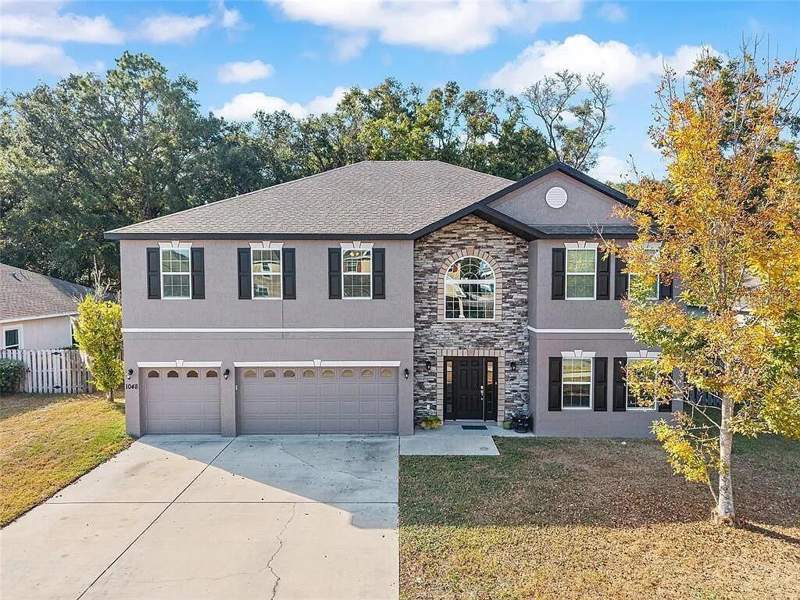 Active · 32 daysTop listing
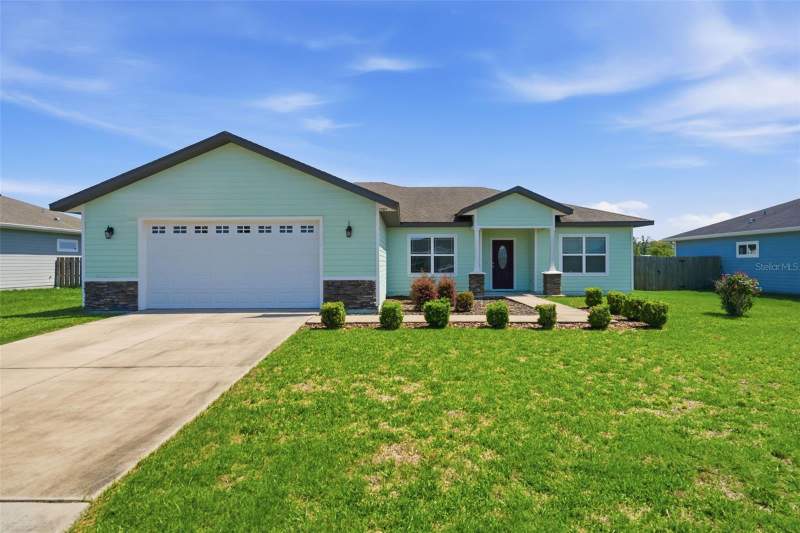 Active · 88 days
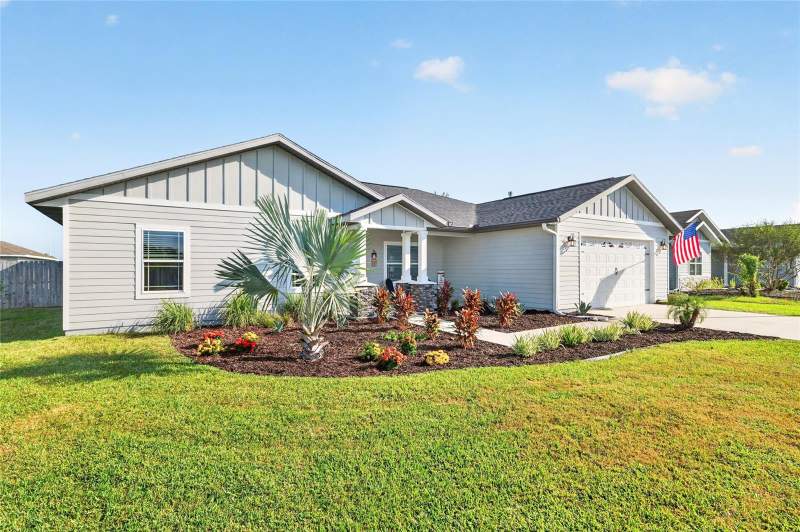 Active · 12 days
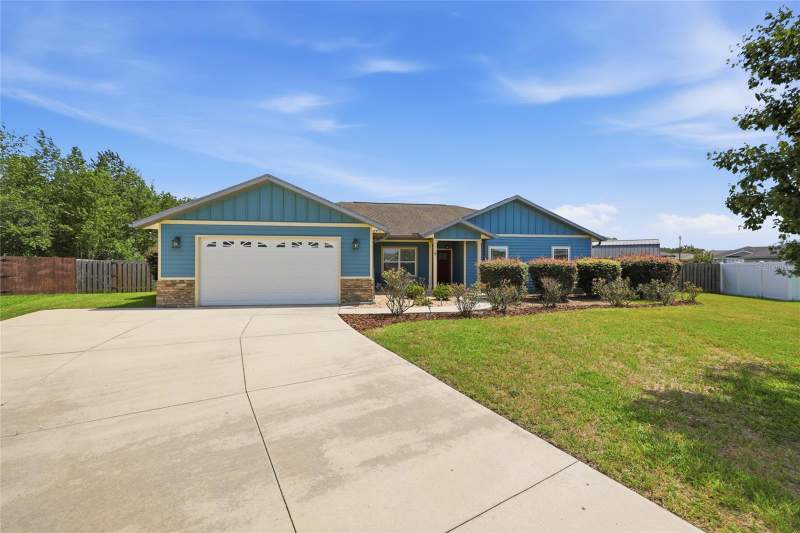 Active · 49 days
 Active · 151 days
 Active · 1 days
 Pending · 22 days
Active and pending Newberry Oaks listings as of 2026-10-19, priced high to low. Based on Stellar MLS data distributed by MLS GRID for the period 2003 through 2026. Tap any home to ask about it.

Newberry Oaks is a small, tightly held community - 342 homes total and only 5 active listings at last count. With that little inventory, months of supply sitting at 4.0 still reads as a balanced market, but the math is fragile: one or two additional listings or a slow week of contracts can swing the posture in either direction fast.
Pricing here is going to be shaped more by individual home condition and lot than by broad market trends, simply because there isn't enough turnover to establish a tight comp set. Sellers with an updated, well-maintained home have real leverage in a market this shallow. Buyers should expect to move decisively when something suitable comes up, because the next comparable listing may not appear for a while.
Figures in this note are as of July 22, 2026. The live market numbers elsewhere on this page update nightly and are newer.
Newberry Oaks right now
🟡 Balanced market. 1.5 months of supply and 50% of the inventory already under contract put buyers and sellers on roughly even footing.Why it matters: months of supply is how long today's inventory would last at today's sales pace; under-contract share is the portion of homes for sale that already have a buyer.Momentum Research analysis of Stellar MLS records, as of August 2, 2026. Confidence: High (4 active and pending listings, 14 closed sales in 12 months).
🟡 Off the recent peak. The trailing-12-month median ($328K) is down 7.5% from the prior 12 months ($355K) and up 107% since 2012. With about 27 sales a year, a single closing can swing this number, so read the level and the decade, not one year's move.Momentum Research, record-level Stellar MLS closed sales, 12-month windows ending August 2. Confidence: Medium (14 and 10 sales in the two windows).
Jump to: Price history & scorecard · Homes for sale · Schools · FAQ
· Updated October 20, 2026 · Live data: Stellar MLS, refreshed twice daily · MLS facts carry their source; interpretation lines are Momentum Research · Data sources & freshness
The 60-Second Overview
Newberry Oaks market snapshot (as of August 2, 2026): the median sale price is about $328K ($188 per sq ft over the trailing 12 months of closed sales), a median 34 days on market for closed sales, and 1.5 months of supply, a balanced market. The trailing-12-month median is down 8% from the prior 12 months and up 107% since 2012, computed from record-level Stellar MLS closed sales (14 closings in the current window).
In ZIP 32609 (Newberry), 172 homes closed in the last 12 months at a median of $297K ($213/sq ft), down 2.9% year over year, with a median 36 days on market. Right now 35 active and 15 pending listings put supply at about 6.4 months - a balanced market. See the live ZIP 32609 housing market and the Alachua County market.
Flood zones in Newberry Oaks: of 15 listing addresses checked against the FEMA National Flood Hazard Layer, 100% sit outside the FEMA Special Flood Hazard Area (Zone X). Individual parcels vary - verify any specific address at msc.fema.gov.
Newberry Oaks is a community of 342 homes in Newberry, Alachua County, built between 2003 and 2020 (median 2008), with a median living area of about 1,864 square feet. 90% of parcels are homesteaded, the owner-occupancy proxy in the Florida DOR assessment roll (2025 roll, public records).
Newberry Oaks is a deed-restricted community in Newberry built out mostly between 2003 and 2020, with a median home from 2008 - old enough to have some equity and update history, young enough to avoid major systems replacement as a given.
The setting & the homes.
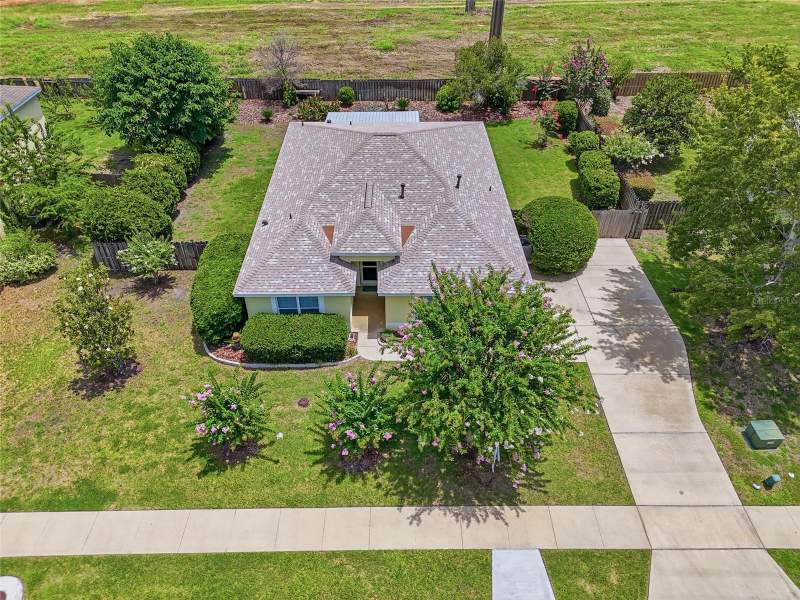
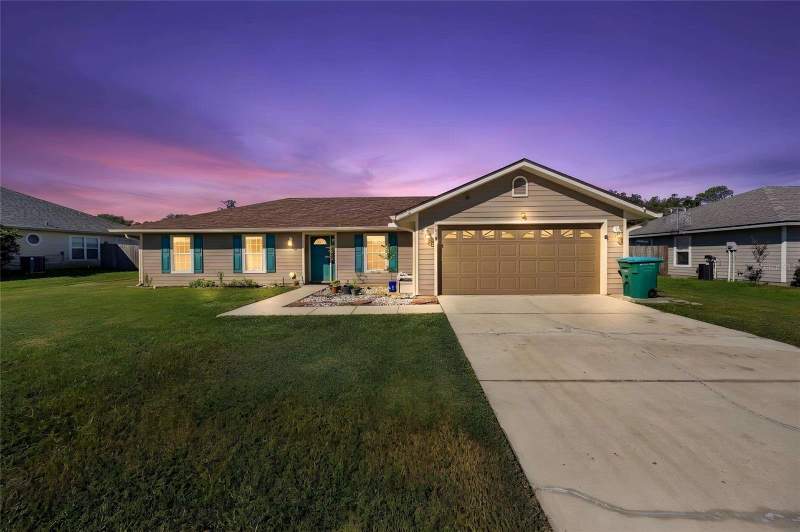
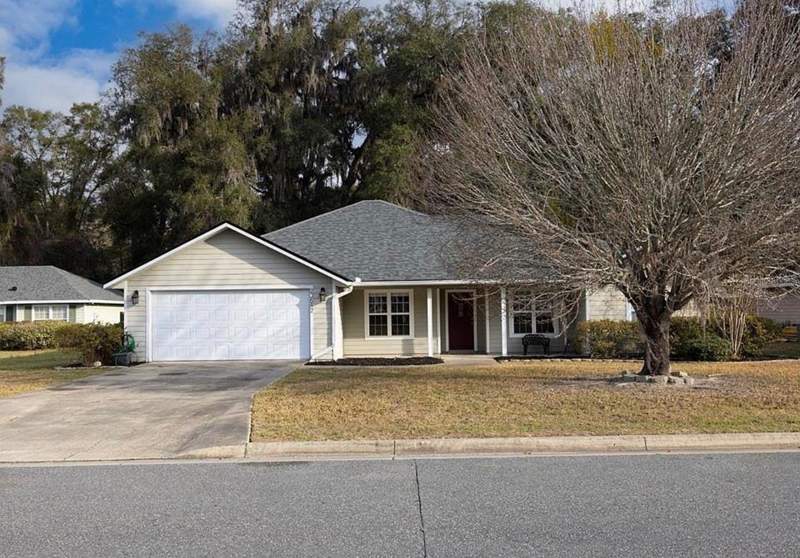
Aerial and on-site photos of Newberry Oaks. Swipe to explore the community.
Swipe or use the arrows → tap any photo to enlarge
Newberry OaksNewberry OaksNewberry OaksNewberry OaksNewberry OaksNewberry OaksNewberry Oaks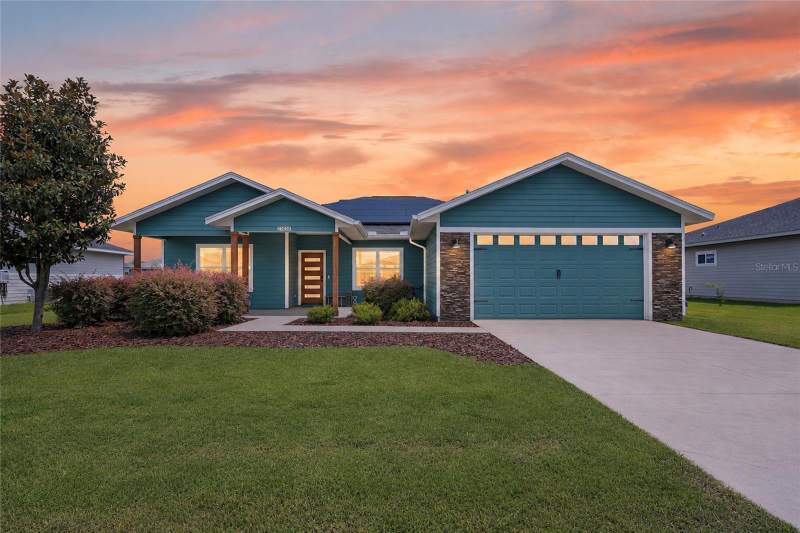 Newberry Oaks
Photos from Stellar MLS listings in Newberry Oaks; content deemed reliable but not guaranteed.
Who Newberry Oaks is best for.
Best for
- Buyers focused on a single, well-maintained home rather than shopping a large active inventory
- Buyers comfortable with a deed-restricted community and willing to confirm current HOA terms directly
- Buyers prioritizing an established build era (2003-2020) over new construction
Probably not for
- Buyers who want to compare many active listings side by side before deciding
- Buyers seeking new-construction homes built after 2020
- Buyers who need a fast, high-volume resale market for a future sale
Price History: What Homes Here Have Actually Sold For
Median sale price over the trailing 12 months ending August 2 of each year, from record-level Stellar MLS closed sales. Same methodology as every appreciation figure on this page: the 2026 point ($328K) IS the median in the snapshot above, and the move from 2025 ($355K) IS the -7.5% one-year change.
Windows contain 4 to 49 sales each (14 in the current window); every figure carries its sample size, and thin markets swing on single closings. Based on Stellar MLS data distributed by MLS GRID for the period 2003 through 2026. Deemed reliable but not guaranteed.
26% of homes for sale in ZIP 32669 are already under contract (under contract ÷ under contract + active listings) — a read on how much of the available inventory buyers have already claimed. Source: MLS data (2026-10-20).
Newberry Oaks Market Scorecard
Newberry Oaks is currently a balanced market. About 4.5 months of supply, a median asking price of $381,445, and homes go under contract in about 40 days.
Typical home value in the 32669 ZIP is $345,897, about 31.7% below the Florida norm (Zillow Home Value Index).
Go deeper: ZIP market scorecard · county scorecard · true cost calculator · affordability calculator.
Live data: Stellar MLS, distributed by MLS GRID, refreshed twice daily. Typical value: Zillow Research. Market metrics only; these describe homes for sale and recent sales, not residents.
Newberry Oaks on the map.
Every active, pending, and recently sold home, plotted. Toggle the layers and tap a home for the details.
Listing locations from Stellar MLS. Map data © OpenStreetMap contributors.
Life at Newberry Oaks
- Deed Restrictions · reported on 1 of 8 listings
Community amenities as reported across Stellar MLS listings in this community; deemed reliable but not guaranteed. Verify current amenities and access with the HOA.
Schools
- Alachua County Public Schools
- Verify the zoned schools by address
- Magnet and choice options may be available
- Newberry Elementary School-AL · Elementary
- Oak View Middle School · Middle
- Newberry High School-AL · High
Zoned schools reflect the assignments reported on recent Newberry Oaks listings and can change; always confirm with Alachua County Public Schools for a specific address.
Buying with schools in mind? We can confirm the exact zoned schools for any Newberry Oaks address.
Shop the zone: Homes zoned for Newberry High School-Al
Recent Developments in Newberry Oaks
Development, infrastructure, retail, and school activity affecting Newberry Oaks, tracked by our team and summarized from public reporting and official sources, with links to the original coverage. Last updated August 2026.
- July 2026Civic
Gainesville starts building Southwest Public Safety Center
Gainesville is moving forward on a $22.2 million Southwest Public Safety Center on a 7.5-acre site in southwest Gainesville. The facility will house Fire Station 9 and a new police precinct, include a community space and four fire apparatus bays, and be storm hardened, with an expected opening by 2027. Funding comes from the county full-cent infrastructure surtax approved in 2022.
What it may mean for the marketA new fire and police facility strengthens local emergency infrastructure and reflects continued public investment in the southwest submarket. The site is about 2 miles south of Newberry Oaks.
Source: Mainstreet Daily News - July 2026Development
Gainesville approves grant loan for northeast affordable housing project
Gainesville commissioners unanimously approved a $460,000 ConnectFree grant loan for Hope at Debra Heights, a 96-apartment development in four three-story buildings along Northeast Second Street. The roughly $31 million project offers one, two, and three bedroom units and the funding supports its application for state low-income housing tax credits ahead of an August 11, 2026 deadline.
What it may mean for the marketA 96 unit apartment development adds new multifamily rental supply to the northeast Gainesville market. The project is about 5 miles east of Newberry Oaks, elsewhere in Alachua County.
Source: WCJB TV20 - July 2026Civic
Newberry approves land buy for regional fire training facility
The Newberry City Commission unanimously approved buying 8.83 acres for $600,000 west of Champions Park to build a regional fire training facility, with construction estimated near $1 million and $750,000 in state appropriations. Construction begins in fiscal year 2026-27, and Levy, Gilchrist, Dixie, and potentially Alachua counties have expressed interest in using the site, which could later convert to a fire station.
What it may mean for the marketA regional fire training facility adds public safety infrastructure and supports service capacity for continued growth in western Alachua County. The project is about 13 miles west of Newberry Oaks, elsewhere in Alachua County.
Source: Mainstreet Daily News - June 2026Development
Alachua approves Farmlands Commercial on US 441
The Alachua City Commission voted 3-2 to approve land use changes for Farmlands Commercial on US Highway 441 at NW 188th Street, part of a project spanning more than 200 acres. Proposed plans include two shopping centers, additional retail, six restaurants, a gas station, an auto center, and over 200 single-family homes, with shopping areas targeted for 2028 and residential by 2032. City staff disclosed a large big box store is planned within the center.
What it may mean for the marketA large mixed commercial and residential center adds major retail square footage and new housing lots to the north Alachua market. The project is about 12 miles north of Newberry Oaks, elsewhere in Alachua County.
Source: Mainstreet Daily News - June 2026Development
Alachua County approves zoning for UF golf course and conservation development
The Alachua County Commission unanimously approved a comprehensive plan change and rezoning for a University of Florida golf project on roughly 580 acres along Parker Road in southwest Alachua County. Plans include a 36-hole course, clubhouses, guest cottages, IFAS research facilities, public trails, and over 100 acres of permanently protected conservation land. A preliminary development plan is expected to return to the commission in fall 2026.
What it may mean for the marketA large university golf and conservation development adds a major recreational and land-use anchor to the southwest county market and signals long term investment in the area. The project is about 7 miles southwest of Newberry Oaks, elsewhere in Alachua County.
Source: WCJB TV20 - June 2026Infrastructure
Archer wastewater force main advances toward Newberry
Officials granted permission for an eight-mile wastewater force main running from Archer through unincorporated Alachua County toward Newberry. The $5.8 million line carries about 175,000 gallons daily, enough capacity for roughly 700 homes, with completion expected in 2029 on an accelerated timeline tied to a grant deadline.
What it may mean for the marketNew wastewater main capacity expands the serviced land available for future homebuilding along the Archer to Newberry corridor. The project is about 9 miles southwest of Newberry Oaks, elsewhere in Alachua County.
Source: Mainstreet Daily News
Summaries reflect public reporting and official sources linked above as of the dates shown. Project details, timelines, and approvals can change. Commentary on potential market effects is general observation, not investment advice or a prediction for any specific property. For the freshest items across the whole region, see This Week in Northeast Florida.
The Newberry Oaks buying strategy.
If we were buying in Newberry Oaks today, this is the order of operations we would run for our clients.
Underwrite the condition first. Price the roof, HVAC, and systems honestly before judging any list price; condition swings value here more than square footage alone.
Match the home to real comps. Recent sales of similar condition and lot, not the asking price, tell you what a home is worth.
Move deliberately, not desperately. Neither side has a decisive edge, so a well-prepared, fairly-priced offer wins without overpaying.
Line up financing and inspection early. A pre-approval and an inspection plan let you act fast and negotiate from evidence.
Keep an agent in your corner. The listing agent works for the seller; we represent you and prepare a hand-built valuation before any offer in Newberry Oaks.
A small, steady pocket of Newberry
At 342 homes, this is not a sprawling subdivision, and the market behaves accordingly. Five active listings represents a thin slice of total inventory, which means each sale carries more weight in shaping what comes next. The 2003 - 2020 build range with a median year of 2008 puts most homes in a similar construction era, so buyers comparing options are generally looking at similar-vintage construction rather than a mix of decades-old and brand-new stock.
Median living space of 1,864 square feet points to a standard single-family footprint - not oversized, not compact starter homes. Nearly 90% of homes here carry a homestead exemption, which tells you this is a community where owners tend to hold onto the property rather than cycle it through short-term rental or quick resale. That has a direct effect on inventory: fewer investor-owned units means fewer listings hit the market in any given stretch, reinforcing the tight-supply dynamic buyers will encounter.
The location and the amenities are priced into every listing in Newberry Oaks. The deal is won or lost on condition, the comps, and the renovation math.
Momentum Buy Score.
Our proprietary 0 to 10 read across the factors that decide how a home in Newberry Oaks buys, holds, and resells. Momentum Research; not an appraisal.
Momentum Intelligence Scores are our proprietary, qualitative assessment on a 0 to 10 scale, built from the record-level market data on this page. They are a framework for comparing communities, not a guarantee of future value and not advice on a specific home; unlike an automated value estimate they do not price your home, they grade the community on evidence you can inspect. Composite is the plain average of the 5 factors (7.3). Basis: Long-Term Appreciation +107% since 2012; Recent Direction -7.5% year-over-year; Liquidity & Demand 1.5 months of supply; Owner Commitment 90% owner-occupied; Pricing Power 96.1% sale-to-list. Refreshed with each data update.
Why work with Momentum here
In a community with only a handful of active listings at any time, timing and access matter more than usual. We track Newberry Oaks closely enough to flag a new listing, a price change, or a pending sale before it becomes common knowledge, and we can walk you through how condition and update history are actually driving value here, since there isn't enough turnover for surface-level comps to tell the full story.
Newberry Oaks in 15 seconds.
What it really costs to own in Newberry Oaks
The parts of the monthly number a mortgage calculator leaves out, from the tax roll, the MLS, Citizens and FEMA. Property facts only.
| Property tax | At today's median asking price of $381,445, the first-year bill with homestead is about $5,700/yr (Alachua County total millage 16.5552 mills, FY2025-26, Alachua County Property Appraiser, FY2025-26 adopted budget). |
|---|---|
| Home and flood insurance | The average Citizens Property Insurance premium in Alachua County is $1,020/yr (714 policies, Citizens detail by county, April 2026); private-market quotes depend on roof age, wind mitigation and construction. Flood: of 15 listing addresses checked against the FEMA flood map, 100% sit outside the high-risk zone. Statewide, a Zone X flood policy runs about $500-$700/yr and a high-risk zone $1,200-$2,500/yr (FEMA Risk Rating 2.0 averages, not quotes). |
| Roof and age | Median build year 2015 across 19 listings. An original roof here is about 11 years old: still inside the 15-year window Florida carriers use, but ask for the roof's permit date before you bind coverage. |
Email me new listings in Newberry Oaks
One e-mail a day, only when a home lists here, with price, beds, baths and a link to every listing. Straight from the MLS feed; no account needed.
Ask an agent about Newberry Oaks
Have a question about the homes, fees, rules or commute here? A Momentum agent who works Newberry Oaks will answer, and the answer is published on this page for the next buyer.
HOA, CDD & Fees
- HOA status not on record. Verify any dues before you offer
- Any club/amenity membership is billed separately
Confirm the current HOA dues, exactly what they cover, and any CDD bond or special assessment for a specific address before you offer.
Flood & Insurance Context
Of 15 sampled listing addresses in this community: 100% outside the FEMA Special Flood Hazard Area (Zone X/B/C).
Address-sampled; individual parcels vary - verify any specific address at msc.fema.gov. Check any address at FEMA's Flood Map Service Center, and see average home-insurance costs by Florida county.
Source: FEMA National Flood Hazard Layer, address-level lookups (n=15) · as of 2026-10
Tools for a Newberry Oaks buy.
Free calculators to pressure-test the real cost before you tour.
Selling here is won on condition and pricing to real comps, not an automated estimate. The right number comes from closed Newberry Oaks sales matched to your home.
Price it to the comps and condition, not an automated estimate.
If you are thinking about selling in Newberry Oaks, the right list price comes from recent comparable sales matched to your home's condition and location, not an automated estimate.
What is your Newberry Oaks home worth?
Get a no-obligation home value based on real comparable sales in Newberry Oaks, not an automated guess. Tell us about your home and we will personally prepare your numbers and a pricing strategy. No obligation, no spam.
See all homes for sale in Newberry →
Recently off market in Newberry Oaks
Homes in Newberry Oaks that recently left the market. Each address opens its public-record profile: county-recorded value, property taxes, the last recorded sale, community sales history, and what is for sale nearby now. 3 on record.
- 23038 NW 4Th Place · off market
- 23084 NW 11Th Road · off market
- 23284 NW 8Th Place · off market
| Location | Newberry, Alachua County, FL · ZIP 32269, 32609, 32669, 33669 |
|---|---|
| Homes in the community | 342 (FL DOR 2025 assessment roll) |
| Years built | 2003–2020 (median 2008) |
| Typical living area | 1,864 sq ft (median) |
| Home types (current listings and sales) | single-family 100% |
| Amenities listed by sellers | Deed Restrictions |
| Sale prices, last 12 months | $328,500 median across 14 closed sales · $188 per sq ft · -7.5% vs the prior 12 months |
| Days on market (closed sales) | 34 median |
| For sale right now | 2 active, 2 pending · median asking $366,950 · 1.5 months of supply |
| Owner-occupied (homestead) share | 90% |
Data as of August 2, 2026. Based on Stellar MLS data distributed by MLS GRID for the period 2003 through 2026; housing-stock figures from Florida Department of Revenue public records. Market figures describe homes, not residents. Cite as: Momentum Realty, “Newberry Oaks key facts,” movewithmomentum.com/neighborhoods/newberry-oaks-newberry, data as of August 2, 2026.
Housing distress & ownership in Newberry Oaks, Newberry
Who owns here, how much is not owner-occupied, and how much for-sale inventory is under distress.
Source: Momentum Realty Research. Ownership & parcels from the FL DOR 2025 tax roll; distress from MLS active-listing status/remarks; price from MLS closed sales. Based on Stellar MLS data distributed by MLS GRID for the period October 2026 through October 2026. Deemed reliable but not guaranteed.
Just listed in Newberry Oaks
The newest homes for sale in Newberry Oaks right now, newest first. Each link opens the full listing with every photo, the price history and a tour request.
- 404 NW 232Nd Terrace $320,000 · 4 bd · 2 ba · 1,722 sq ft · 4 days on market Courtesy of LIBRES REALTY LLC
- 23012 NW 4Th Place $389,990 · 4 bd · 2 ba · 1,964 sq ft · 18 days on market Courtesy of BOSSHARDT REALTY SERVICES LLC
- 1048 NW 233Rd Drive $485,000 · 6 bd · 4.5 ba · 3,894 sq ft · 39 days on market Courtesy of BEYCOME OF FLORIDA LLC
- 22971 NW 6Th Lane $372,900 · 3 bd · 2 ba · 1,982 sq ft · 56 days on market Courtesy of HOME ENV REALTY
- 23051 NW 4Th Place $399,000 · 4 bd · 2 ba · 2,009 sq ft · 133 days on market Courtesy of FLORIDA ADVANTAGE REALTY GROUP
- 23152 NW 11Th Road $324,999 · 3 bd · 2 ba · 1,825 sq ft · 200 days on market Courtesy of BROXSON REAL ESTATE GROUP
Checked against the MLS Oct 20, 2026. All new listings in this market.
Every Home for Sale in Newberry Oaks Newberry Right Now (7)
All 7 active and pending Newberry Oaks Newberry listings with a detail page, newest first, refreshed twice a day from the MLS.
- 404 NW 232nd Terrace · $320,000 · 4 bd / 2 ba · listed Oct 15, 2026 · listed by Libres Realty Llc
- 23012 NW 4th Place · $389,990 · 4 bd / 2 ba · listed Oct 2, 2026 · listed by Bosshardt Realty Services Llc
- 23582 NW 3rd Avenue · $325,000 · 3 bd / 2 ba · pending · listed Sep 16, 2026 · listed by Charles Rutenberg Realty Inc
- 1048 NW 233rd Drive · $485,000 · 6 bd / 4.5 ba · listed Sep 10, 2026 · listed by Beycome Of Florida Llc
- 22971 NW 6th Lane · $372,900 · 3 bd / 2 ba · listed Aug 30, 2026 · listed by Home Env Realty
- 23051 NW 4th Place · $399,000 · 4 bd / 2 ba · listed Jul 22, 2026 · listed by Florida Advantage Realty Group
- 23152 NW 11th Road · $324,999 · 3 bd / 2 ba · listed Jul 22, 2026 · listed by Broxson Real Estate Group
Recently sold in Newberry Oaks Newberry
- 23038 Nw 4Th Place · sold $395,000
- 23284 Nw 8Th Place · sold $388,000
- 23084 Nw 11Th Road · sold $349,900
- 23582 Nw 3Rd Avenue · sold $325,000
Closed sales from the MLS; each page shows the sold price, taxes and value history.
More Newberry home searches
- All homes for sale in Newberry, FL
- Homes for sale in Alachua County, FL
- Newberry pool homes for sale
- Homes under $300K in Newberry
- Homes from $300K to $500K in Newberry
- 4-bedroom homes for sale in Newberry
- Newberry home values: what is my house worth?
Newberry guides & data
- Market data
- Cost of living
- Best neighborhoods
- Property taxes (Alachua County)
- Homestead exemption (Alachua County)
- Home insurance cost
- New construction
- New construction (Alachua County)
Florida buyer guides
Streets in this community
Street-level pages: every home on record, what sold and what is for sale on each street.
- NW 3Rd Avenue (29 homes on record)
- NW 5Th Place (21 homes on record)
- NW 233Rd Terrace (20 homes on record)
- NW 4Th Place (18 homes on record)
- NW 7Th Road (15 homes on record)
- NW 4Th Place (9 homes on record)
- NW 8Th Place (8 homes on record)
- NW 3Rd Avenue (6 homes on record)
- NW 8Th Place (5 homes on record)
- NW 5Th Place (5 homes on record)
- NW 233Rd Terrace (5 homes on record)
- NW 3Rd Avenue (3 homes on record)
Frequently Asked Questions
What is the median home price in Newberry Oaks?
How long do homes in Newberry Oaks take to sell?
Is Newberry Oaks a buyer's or seller's market right now?
How many homes are in Newberry Oaks?
What share of Newberry Oaks is owner-occupied?
When were the homes in Newberry Oaks built?
Do cash buyers compete in Newberry Oaks?
Have Newberry Oaks home prices gone up?
Who is the best real estate agent for Newberry Oaks?
How do I find a top Newberry real estate agent who knows Newberry Oaks?
Can Momentum Realty connect me with an agent for Newberry Oaks?
Where is Newberry Oaks, and what county is it in?
Is Newberry Oaks in a flood zone?
Is Newberry Oaks a good place to live?
Should you buy in Newberry Oaks?
An honest fit check. We will tell you when it is not your community.
Data sources & freshness
| Live listings | Stellar MLS, refreshed twice daily (last: October 19, 2026) |
| Community market stats | Stellar MLS closed sales, 12-month windows ending August 2, 2026 |
| Housing stock & ownership | Florida DOR assessment roll (community parcel extract) |
| Under-contract shares | Stellar MLS records, as of 2026-08-01 |
| Historical depth | Closed-sale records back to 2003 (508 transactions analyzed) |
Verify the primary sources yourself: Florida DOR · U.S. Census · FEMA flood maps · Citizens Property Insurance.
Momentum Research figures are our own analysis of Stellar MLS records; MLS data is deemed reliable but not guaranteed. Methodology: how Momentum market scores are computed. Market metrics describe homes for sale and recent sales, not residents.
Own a home here?
You just read the data. Now see what your home is worth.
The numbers on this page move markets in the aggregate. The number that matters to you is what a buyer pays for your address. Momentum sells for 1.25% above the Stellar MLS member average and 8 days faster, and we’ll price yours against live local comps.
Looking to buy here? Search homes for sale →
What’s your home worth in your area?
A real valuation with real comps from a local listing agent, not an instant algorithm. Response within one business day.
See how Newberry Oaks fits the bigger picture — live prices, inventory, and Momentum Scores:
More on Newberry Oaks
- Home values · What homes in Newberry Oaks actually sell for
- Find an agent · How to choose the best real estate agent in Newberry Oaks
Nearby Communities
Explore more neighborhoods near Newberry Oaks with Momentum Realty’s local guides.