The 60-Second Overview
The Garden District is Wildlight's second act: 4,700 acres at Riverbluff Parkway and Pages Dairy Road, announced September 2025, where the design brief inverts the usual master-plan math, 2,000 acres conserved, a 19-mile trail network with public access to the 13-mile Green Ribbon Trail along the St. Marys River, and roughly 4,100 homes arriving over a county-approved, multi-decade build-out.
The first wave is named, dated, and partially priced: Bellflower (Perry Homes and Toll Brothers, from the low $500,000s, late summer 2026), Woodlyn (David Weekley, sales winter 2026, models early 2027), and Mayfield (Ashton Woods, tucked-away on 40-60 foot lots, 2027), with a future school site referenced in the plan.
The Garden District sells a decade, not a house: four builders, three launch dates, one conservation spine. The buyer's edge is entirely calendar-shaped, who launches when, at what price, with what assessments, verified in writing.
What makes this more than renderings is next door: Wildlight's Town District spent a decade proving the formula, the top-5-in-Florida elementary, the Publix-YMCA-UF Health village center, and absorbed neighborhood after absorbed neighborhood. The Garden District extends a working ecosystem westward; the diligence is making sure your contract reflects documents, not atmosphere.
Fees, the ENSD & the Per-Neighborhood Math
Wildlight runs on the East Nassau Stewardship District (ENSD), the special district that builds and maintains the community's infrastructure, with assessments collected on the property-tax bill, CDD-like in effect, layered under each neighborhood's own HOA. None of the Garden District's numbers are published yet, and they may differ by neighborhood and from the Town District's existing tiers.
The three written numbers to demand at every launch: the ENSD assessment estimate for that specific neighborhood, the HOA amount and scope, and the new-construction tax picture, the line that most surprises relocating buyers. Stacked, they routinely move a payment hundreds a month beyond the price-and-rate quote, and they are exactly what launch-day excitement skips.
The honest reference: Town District owners pay these stacks today and the neighborhoods absorbed anyway, the value proposition has carried the cost. The Garden District's job is to prove the same; your job is to price it before signing, not after.
The Three Neighborhoods, Compared Straight
Bellflower is the opener and the anchor: Perry Homes and Toll Brothers, from the low $500,000s, with Toll's product announced at 2,400-4,000+ square feet, opening late summer 2026. First district pricing, first lot maps, and the luxury tier's entry, read our Bellflower guide for the full breakdown.
Woodlyn follows in winter 2026: David Weekley's livability-first single-family, with models targeted early 2027 and first-release leverage for prepared buyers, our Woodlyn guide runs the launch playbook. Mayfield closes the wave in 2027: Ashton Woods' design-forward enclave on 40-60 foot lots near the referenced future school site, the purchase you make with two years of sibling evidence in hand, mapped in our Mayfield guide.
The honest selection advice: tour standing product from all four builders before any sheet drops, Weekley and Pulte build in the Town District today, and Toll, Perry, and Ashton Woods have active Jacksonville-area communities. Choose the house company first; the neighborhood follows.
The District Plan
The plan's distinguishing math: 43% of the district is conserved, with the 19-mile trail network and the Green Ribbon Trail's public access point making the St. Marys River a bikeable destination rather than a map feature. Nassau County's planning approval covers a multi-decade horizon, this is entitled, phased development by Raydient/Rayonier, the same developer whose Town District execution is the best predictor available.
Practical translation: green by design, under construction by reality. First-wave owners live with build-out, roads, sibling neighborhoods, and amenities phasing in, and are compensated in basis and lot selection. Buyers who need finished surroundings should buy them in the Town District; mixing up the two timelines is the classic regret.
The Homes
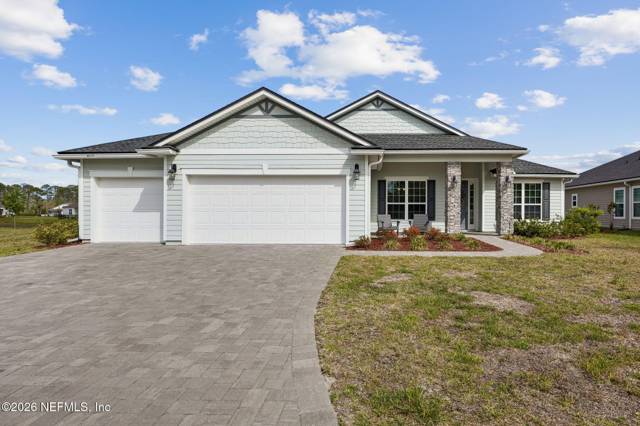
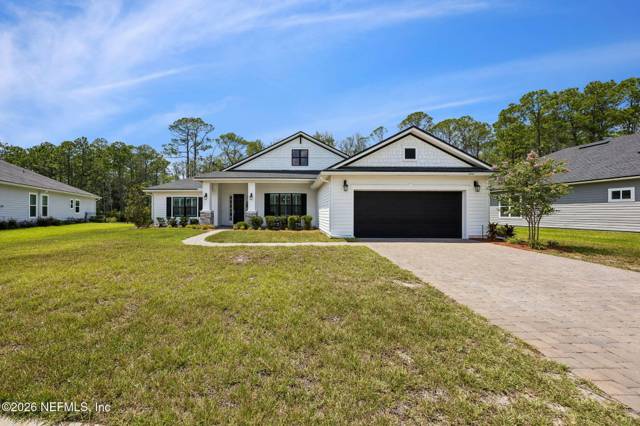
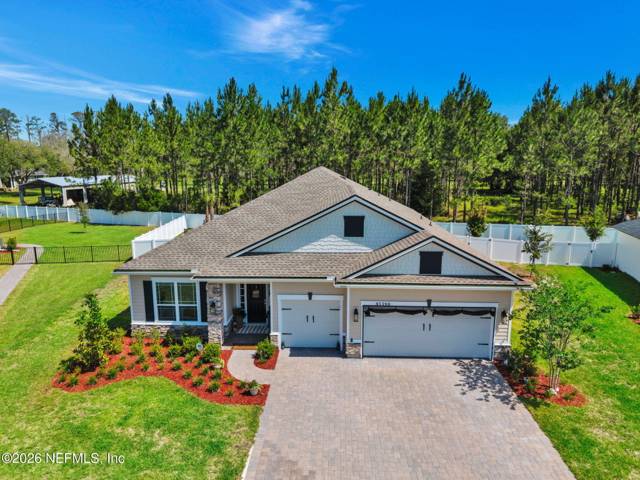
Published so far: Toll Brothers at 2,400-4,000+ square feet in Bellflower from the low $500s, Weekley and Perry plans publishing at launch, and Ashton Woods on 40-60 foot lots in Mayfield, a range that signals everything from efficient family single-family to genuine luxury spec inside one district.
Until each sheet drops, judge builders, not brochures: standing product, warranty terms, and contract templates are all inspectable today, and they are the diligence that carries across every launch. We run that file with clients through 2026-2027 as each neighborhood opens.
Schools
The district inherits Wildlight's calling card, Wildlight Elementary, ranked among Florida's top five public elementaries, and its plan references a future Garden District school site as the expansion grows. Yulee's middle and high schools serve the corridor in an A-rated county district.
The verification: zoning is set per neighborhood near delivery, and growth districts redraw lines. We confirm assignments in writing at contract, and track the future school's funding status, planning reference and ribbon-cutting are different facts.
More on Living in the Garden District
The depth without the wall of text. Open what matters to you.
Location and commute
The trail life
Build-out years
What exists today
5 Mistakes Buyers Make in the Garden District
District-launch seasons concentrate their mistakes in five places.
Signing without the assessment math
ENSD plus HOA plus new-construction taxes, per neighborhood, in writing, before contract. Launch-day excitement is engineered to skip exactly this.
Picking the neighborhood before the builder
Four builders, four philosophies, four warranties. Tour standing product first; the district is shared, the house company is not.
Paying premium for impermanent green
Conservation backing is forever; phase buffers are not. The district plan, not the sales map, says which is which.
Banking the school and amenities on renders
Committed-and-funded versus referenced-in-planning are different facts. Pay for the first; verify the second.
Walking into launch unrepresented
Builder registration rules reward early paperwork, and every sales office works for its builder. Free representation, or their terms.
Which Lots Will Hold Value Best
In a 43%-conserved district, permanence is the premium
Master-plan history is consistent: lots backing permanent conservation, then trail-corridor adjacency, then pond and green views hold premiums for decades, while interior lots facing future phases carry the construction years hardest. In this district, the conservation map is the investment map.
The mistake is paying preserve premiums for buffer strips later phases absorb. We read every lot release against the recorded district plan.
What to Check Before You Sign
Before you sign any Garden District contract, run this list, per neighborhood, at its launch.
- ENSD assessment estimate for that neighborhood, in writing
- HOA amount and scope, and who controls it during build-out
- Total monthly cost modeled: price, rate, taxes, assessments, insurance
- Contract terms: deposits, delivery windows, slip remedies, design-studio exposure
- Lot position against the recorded district plan, permanent green or future phase
- School zoning in writing, and the future school's funding status
- Amenity and trail-segment commitments: funded and scheduled versus conceptual
- Builder evidence: standing product toured, warranty and contract template read
The Garden District is the rare expansion we can underwrite on evidence: the same developer, district, and school system that made the Town District work, extended west with a conservation-first plan and four builders we can walk clients through today. Our conviction comes with a calendar discipline: every neighborhood's value will be decided in its first releases, by buyers who arrive with representation registered, financing ready, and the assessment math demanded in writing. The launch machine works on the unprepared; preparation is the entire edge.
Cross-shop the timelines honestly: Town District resales for certainty today, Tributary for amenities you can swim in this summer, and the Garden District's wave, Bellflower, Woodlyn, Mayfield, for the next decade's basis. We will run all of it with you.
The Garden District vs. Comparable Communities
The honest way to place the Garden District is against the corridor's other answers, and its own neighborhoods.
| Community | How it compares to the Garden District |
|---|---|
| Bellflower | The district's opener: Perry + Toll from the low $500s in late summer 2026, the price anchor and the luxury tier's entry, inside this district. |
| Woodlyn / Mayfield | The first wave's other two: Weekley's winter 2026 launch and Ashton Woods' 2027 enclave, builder preference and timing separate them more than geography. |
| Wildlight Town District | Finished streets, the village center, and proven values in the $300s-$600s, the certainty alternative to every Garden District timeline. |
| Tributary | Yulee's other master plan: resort amenities operating today and inventory now, the buy-it-this-year rival. |
| Del Webb Wildlight | The 55+ route into the same ecosystem from $344K, lifestyle programming included, age-restricted by design. |
The district's case: first-wave basis in a proven developer's conservation-first next decade, with real builder choice. The case against: nothing finished until 2027, assessments on every tax bill, and a build-out measured in years.
The Honest Trade-offs
Pros
- First-wave basis in a proven master plan's expansion.
- Four national builders, real choice inside one district.
- 43% conserved with a 19-mile trail spine to the St. Marys.
- The working Wildlight ecosystem minutes east.
- County-approved entitlements, not speculative renders.
- A launch calendar that rewards prepared buyers neighborhood by neighborhood.
Cons
- Nothing finished until 2027 at the earliest.
- ENSD assessments on every tax bill, per-neighborhood amounts TBD.
- Construction surroundings for years.
- School and amenity timing need verification, not faith.
- Resales compete with builders until build-out matures.
- Only one published price (Bellflower) as of mid-2026.
The Garden District Playbook
If we were buying in the Garden District, this is the order of operations we would run, and the one we run for clients.
- Pick the builder first. Standing product from all four, toured before launch season.
- Register representation now. Before any VIP list or sales-office visit; it costs nothing.
- Demand the math at each launch. ENSD, HOA, taxes, total monthly, in writing, per neighborhood.
- Read lots against the district plan. Permanent conservation or future phase, decided at the map.
- Move in first releases, prepared, with the discipline to pass when a sheet disappoints.
Questions We'd Ask Before Buying Here Ourselves
On any Garden District contract, we want to know:
- What is the ENSD assessment for this neighborhood, in writing, and how can it change?
- Is this lot's green permanent conservation on the recorded plan, or a future phase?
- What is committed and funded on trails, amenities, and the school site?
- What do the contract's delivery terms allow, and what are our remedies?
- How does this neighborhood's total cost compare to its siblings and a Town District resale?
- What will the zoned schools be at delivery, in writing?
The Garden District May Not Be Right For You If
We would rather tell you the truth than sell you the wrong timeline. The Garden District may not fit if any of these are deal-breakers.
Consider elsewhere if you want
- A finished neighborhood you can walk and price today.
- No special-district assessments on the tax bill.
- To close in 2026, the Town District and Tributary own that.
- Amenity campuses over trails and conservation.
- Certainty over first-wave upside.
The Garden District fits if you want
- First-wave basis in Wildlight's next decade.
- A choice of four national builders inside one plan.
- Conservation and trails as the neighborhood's spine.
- A proven developer and school system extending west.
- A prepared, document-driven launch purchase.